Welcome to the Industrial Heritage Networks and Support website. This site is maintained and updated by the Ironbridge Gorge Museum Trust who run the project and the networks. We aim to support industrial heritage in England through networking, information exchange, guidance, and training. Please explore the website and please contribute! For more information you can … Read more Welcome to the IHNs website!
Grace’s Guide Ltd is a charity (No.1154342) whose aim is to advance the education of the history of Industry and Engineering in the UK. Their website contains 169,231 pages and 247,697 images on early companies, their products, and the people who designed and built them. Much of this material is free to access.
The charity is keen to hear from potential contributors able to help with the building of this educational resource by adding something – big or small – to the information already online. You can suggest new information about anything they already have online, or suggest something that might need editing. To do this please email the Editor here: Editor@gracesguide.co.uk
Bookings are now open for the next in-person London Industrial Heritage Network meeting to be held at Merton Priory Chapter House, Wandle, on Thursday 8th August, 11am to 3pm.
Established in 2018, these regional meetings are designed to bring together those industrial heritage sites open to the public in each region, and local groups and individuals working or volunteering on industrial archaeology and heritage subjects and sites in the area. The format is a round-table discussion in the morning, with a tour of the site in the afternoon.
All IHN members are very welcome to attend. You can turn up on the day or follow this link to book a free place via Eventbrite:
Bookings are now open for the next in-person East of England Industrial Heritage Network meeting at the Royal Gunpowder Mill Mills, Waltham Abbey, on Thursday 7th August, 11am to 3pm.
Established in 2018, these regional meetings are designed to bring together those industrial heritage sites open to the public in each region, and local groups and individuals working or volunteering on industrial archaeology and heritage subjects and sites in the area. The format is a round-table discussion in the morning, with a tour of the site in the afternoon.
All IHN members are very welcome to attend. You can turn up on the day or follow this link to book a free place via Eventbrite:
The Mills Archive Trust need your help locating the records of past millers and millwrights, preserving them in their archive, and making them accessible to modern craftsmen. With this in mind they have launched a new crowd funding appeal – ‘Caring for an Icon’.
The Trust are looking to preserving these records in their archive and make them accessible to modern craftsmen, thereby helping to train the next generation. In order to do that they need to raise significant sums to safe guard the future of these archives.
The Mills Archive Trust is the custodian of the history of mills and milling. They safeguard the stories, skills, and traditions that mills embody. This expertise allows the Trust to protect, interpret, and open access to this rich history. Mills shaped the foundations of the modern world, and the Trust ensure’s that their legacy continues to inspire.
A millwright at work. Image courtesy of Mills Archive Trust.
Birmingham Museums are looking for someone with a background in science and industry, either through museum practice or industry experience, and an interest in connecting science and industrial heritage to audiences, to join their Curatorial & Participation team later this year.
The new Curator of Science and Industry will work collaboratively internally, and through participatory practice, to better research, document, and support access to Birmingham’s scientific and industrial collections. They will also contribute to continuing gallery developments, across Birmingham Museums Trust’s sites, with a particular focus on Thinktank, supporting the development and delivery of new displays that will engage existing and new visitors.
The Wandle Industrial Museum ‘s latest talk is by Wandle Industrial Museum volunteer and Trustee John Hawks. He will be speaking about the life, loves, and talent of Jane Morris, the often overlooked wife of William Morris.
This will be an in-peron, free, talk on 15th July 2025 at 10:30am at the West Barnes Library, Station Road, Motspur Park, New Malden. For more details about the society visit their website: www.wandle.org and on X, Instagram, Facebook, YouTube, and FlickR.
The Historic Environment Forum (HEF) has launched the new Heritage Sector Resilience Plan 2025-35 (“HSRP2”). This provides a clear roadmap for collaborative working to deliver a robust and resilient heritage sector, including industrial heritage.
HEF says that the new plan, funded by Historic England, is structured around four cornerstones that will significantly strengthen the resilience of the historic environment and heritage sector in England. These cornerstones are:
relevance
physical resilience
workforce & organisational resilience
and financial resilience.
You can find out more about the new plan for 2025-35 by following this link:
The Historic Environment Forum (HEF) is a collaborative initiative that brings together senior representatives from organisations working across the historic environment sector in England.
Beamish, The Living Museum of the North, has won the Art Fund Museum of the Year for 2025 and has been presented with £120,000 – the largest museum prize in the world. The 350-acre site impressed the judges away with its ‘joyous, immersive, and unique’ exhibitions.
Beamish’s commitment to preserving local heritage was recognised by the Art Fund, with Rhiannon Hiles, Chief Executive of Beamish, being presented with the award during a ceremony at the Museum of Liverpool.
Jenny Waldman, Director of Art Fund and chair of the judges for Art Fund Museum of the Year, said: “Beamish is a museum brought to life by people – a joyous, immersive and unique place shaped by the stories and experiences of its community. The judges were blown away by the remarkable attention to detail of its exhibits across a 350-acre site and by the passion of its staff and volunteers.”
Beamish, which opened in 1970, is an open-air museum that brings to life the North East of England’s Georgian, Edwardian, 1940s and 1950s history, through immersive exhibits where visitors engage with costumed staff and volunteers, and experience regional stories of everyday life. In 2024, the museum welcomed over 838,630 visitors and remains the region’s most visited attraction and museum.
The World of Glass (based around the 19th century Hotties furnaces) celebrates its 25th anniversary this year, but its immediate future is underthreat. The St Helens’ based industrial heritage attraction has launched an emergency funding campaign with the aim of raising £50,000 over the next three months.
The museum and art gallery is facing a combination of increasing competition for funding across the charity sector, and a steep rise in annual running costs.
Its closure would be a great blow to the town, not least because in 2026 the International Festival of Glass (ifg.org.uk) will be hosted in St Helens for the very first time. The Glass Art Society (GAS) (Glass Art Society – Glass Art Society) has invited The World of Glass to partner with them to deliver the International Festival of Glass and the British Glass Biennale in 2026.
The museum has welcomed over 1 million visitors since opening in 2000 and serves thousands of local schoolchildren each year. It’s an independent charity that offers free cultural and education experiences including historic furnaces, hands-on exhibits, and live glassblowing. It is home to the town’s library, community spaces, interactive galleries, meeting rooms, a café, shop, and live glass blowing demonstrations. The site also includes one of the finest examples of a regenerative furnace in England, the Grade II* listed Tank House No. 9, a Scheduled Monument.
The World of Glass is open Wed-Sun and Bank Holidays, 10-4pm. Entry is free, but with a recommended donation of £3. There is free parking on Sundays and Bank Holidays.
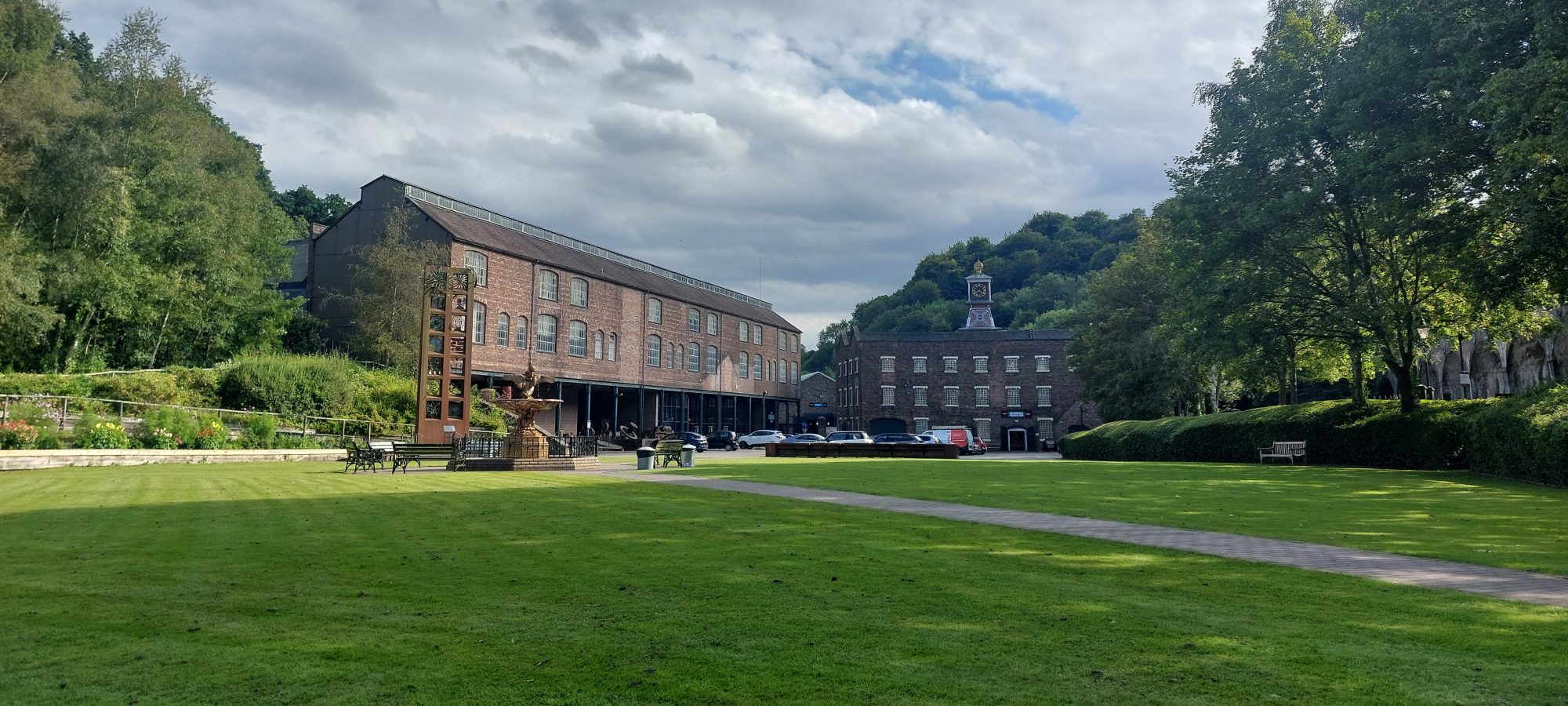
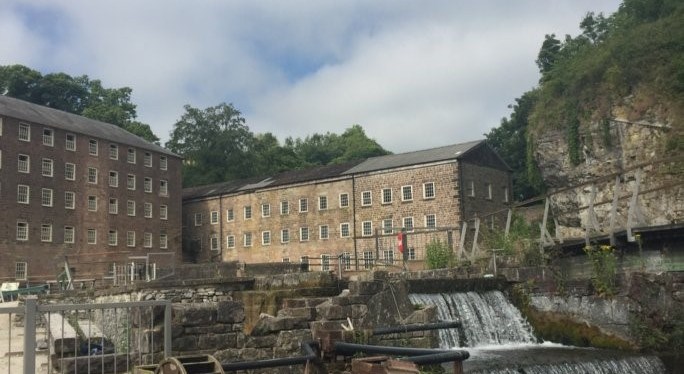
Bookings are now open for the next in-person East Midland’s Industrial Heritage Network meeting to be held at Cromford Mills, Derbyshire, on Friday 25 July, 11am to 3pm.
Established in 2018, these regional meetings are designed to bring together those industrial heritage sites open to the public in each region, and local groups and individuals working or volunteering on industrial archaeology and heritage subjects and sites in the area. The format is a round-table discussion in the morning, with a tour of the site in the afternoon.
All IHN members are very welcome to attend. You can turn up on the day or follow this link to book a place via Eventbrite:














 Industrial Heritage Networks