New ‘Spaces, Places and Belonging’ Community Hub Funding to Launch

The National Archives, in partnership with Leeds Museums & Galleries, The National Library of Wales, and the Community Archives & Heritage Group, is launching a new national grant progamme for libraries and museums called the ‘Spaces, Places and Belonging’ Community Hub.

Funded by the Arts & Humanites Research Council, the Community Hub will support inclusive, community-led, research across the UK’s galleries, libraries, archives, and museums and heritage sectors,so will be of interest to industrial heritage sites. There will be three grant schemes available, totalling £550,000 (click the blue links for more detail):

A programme of training, digital skills development, and network-building will run to support these grants. The Community Hub will also create a permanent digital platform to share resources, learning, and best practice.

Applications for Seed Corn Grants and Skills Bursaries open on the Monday 15 September 2025. There will be a launch webinar on Wednesday 17 September 2025 to take you through each grant scheme in detail, covering everything from eligibility, to assessment criteria, to budgets. There will also be a Q&A at the end to enable you to ask any extra questions you may have about this programme.

To book a place on the 17 September launch webinar follow this link to Eventbrite: https://www.eventbrite.co.uk/e/spaces-places-and-belonging-community-hub-launch-webinar-tickets-1524899849499

Historic England Launch Local Heritage Hub Webpages

Coinciding with this year’s Local History Month, Historic England has launched a new Local Heritage Hub. With nearly 400 locations, every county, city, district, major town, and national park in England now has a dedicated digital page that uncovers its rich and layered history.

Offering a wide range of content, from fascinating aerial photographs showing towns and villages through time, to curated selections of listed buildings, videos, blogs, and podcasts, the Local Heritage Hub invites members of the public to discover their local area through a new lens.

According to Savanta polling for Historic England in August 2024, 71% of those polled wanted to see more recognition of heritage in their area. Further Savanta polling for Historic England in February 2025 showed that 58% of those responding agreed that local heritage enhances their daily lives. The new platform will reflect what people are looking for in their local areas, and it’s designed not only to inform, but also to also encourage people to see familiar places in unfamiliar ways.

The new service – which will continue to expand with new places, information, and sections added over time – will make local heritage and histories more relevant, relatable, and engaging to more people’s everyday lives, inspiring conversations, unlocking memories, and sparking new interests.

To explore your local area on the Historic England website follow this link: https://historicengland.org.uk/local

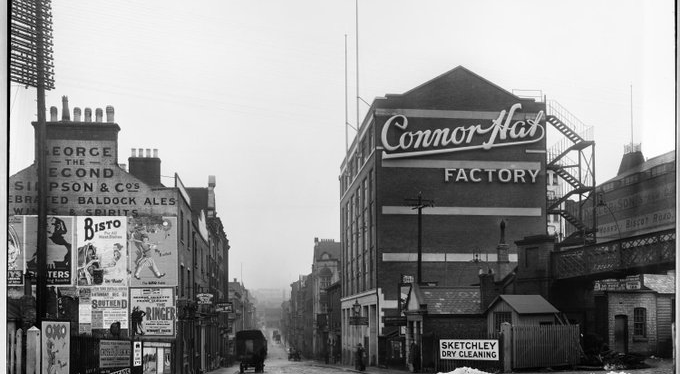
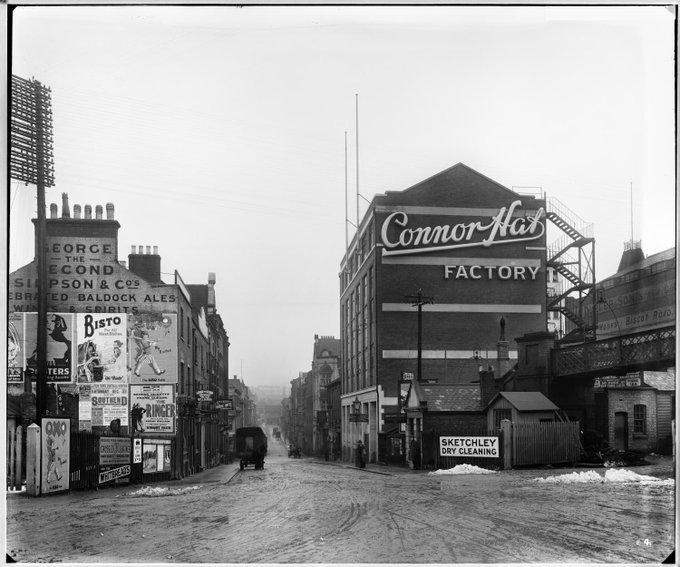
Connor Hat Factory, Bute Street, Luton. Image courtesy of Historic England

Mills Archive Trust Archival Skills Webinars

On 24 May and 7 June, between 2:00 pm and 4:00 pm, the Mills Archive Trust will be hosting a two-part webinar series covering the fundamental skills needed to protect and share archival records.

For over two decades, the Trust’s UK accredited archive has preserved the history of the traditional and modern milling industry. They want to share these skills, whether you are an individual collector or part of an organisation.

The first session will cover how to organise and catalogue archival records. The second session will help you preserve them, including old documents or digital files, from decay and make them accessible online. To join the Caring for Your Collection webinars and for more information, visit new.millsarchive.org/caring-for-your-collection/. For more information, email friends@millsarchive.org.

Historic England Consultation on Draft ‘Tool Kit for Managing the Ownship of Archaeological Finds’

Historic England has developed a draft Toolkit for Managing the Ownership of Archaeological Finds in England, as part of the Future for Archaeological Archives Programme. It has benefitted from initial advice from members of the programme’s Advisory Panel and from Queens Counsel legal advice.

The new toolkit is designed as a resource for individuals involved in the management, recovery, and archiving of archaeological materials. It offers guidelines to ensure the secure and legal transfer of ownership of archaeological material, thereby supporting effective archival practices and planning policy. The toolkit consists of a model deed of transfer and guidance covering principles of ownership, advice on transferring ownership of the material archive, procedures for arranging transfer of ownership, guidance for planners, landowners and planning applicants/developers and guidance where landowner consent cannot be obtained.

The Toolkit includes sections on:

  • Ownership – the principles of ownership of archaeological finds
  • Advice on transferring ownership of the material archive from an archaeological project
  • Procedures for arranging transfer of ownership
    • for a development project
    • for a research or community project
  • Guidance for planners, landowners and planning applicants/developers
  • Guidance where landowner consent cannot be obtained
  • Objects already in museum/repository collections
  • Material assemblages stored by archaeological contractors

The draft toolkit is subject to a consultation period of nine months between January and September 2025. Historic England very much welcomes all feedback, which can be submitted via this short form https://forms.office.com/pages/responsepage.aspx?id=RG4RMHlNwESowevAcH2jyWGl58Stc09CpJPQVx986upURTJWV0hYSEZURzFQMFFEQTJCNE5TMEpSVy4u&route=shorturl

or by emailing FAAP@historicengland.org.uk.

Results of the survey will be analysed in Autumn 2025 and will inform the toolkit’s further development.

Mills Archive Trust’s ‘Living Heritage Appeal’

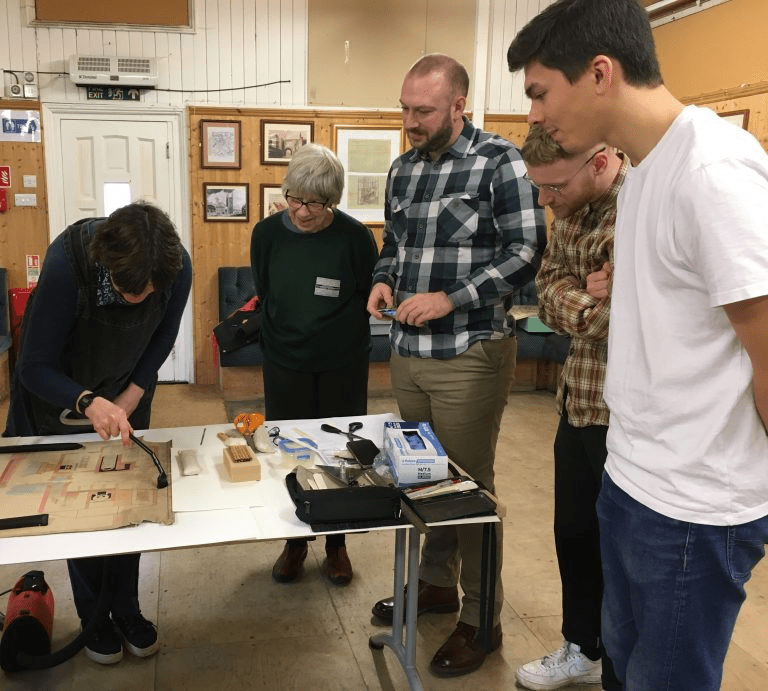
Milsl Archive Trust volunteers learning new archibing skills. Image couresy fo the Mills Archive Trust.

The Mills Archive Trust’s ‘Living Heritage’ appeal is designed to keep alive the legacy of millers and millwrights found within the Trust’s archives, sharing this knoweldge with the public and providing life-changing experiences for their volunteers.

The Mills Archive Trust is a permanent repository for the documentary and photographic records of traditional and contemporary mills and milling, as well as similar structures dependent on traditional power sources, in the UK and beyond. It makes that material freely available for public inspection and use in research and learning.

Their latest appeal is designed to help volunteers acquire the skills needed to catalogue archives relating to specific millers and wind and watermill restorers and experts, such as David Nicholls (1938-2020), and Alan Stoyel. Not only does that help to save these archives and improve public access to them, but the skills acquired help many volunteers to find work within the hertiage sector.

The Mills Archive is one of the world’s great mill collections. It has rescued over three million documents and images that might otherwise have ended up in a landfill site. It is an Aladdin’s cave filled with memories and is free to use. The collections show the rich and diverse crafts, buildings, machinery, equipment, and people involved with mills in the UK and around the world. There is an urgent need to record and make public the technical details of these crafts and the potential impact of the loss of this aspect of our shared cultural heritage.

To donate to the Trust follow this link: https://new.millsarchive.org/donate/

Caring for Your Collection Webinars From the Mills Archive Trust

The Mills Archive Trust are hosting a two-part webinar on fundamental archiving skills on Saturday 23 and 30 November, between 2:00 pm and 4:00 pm GMT. Whether you are an individual collector or part of an organisation, caring for old documents or digital files, their professional archivist will guide you through protecting and sharing your records.

The Mills Archive Trust is an accredited Archive and award-winning educational charity dedicated to caring for the history of mills and milling. They care for records ranging from centuries-old manuscripts to digital files. Their professional archivist, along with their archival volunteers, will help your industrial heritage site do the same in these two webinars.

To learn more about the Caring for Your Collection webinars and to join, visit https://new.millsarchive.org/caring-for-your-collection/ or email The mills Arcvhive Trust at friends@millsarchive.org.

GLIAS to Show Historical Films of London’s Industrial History

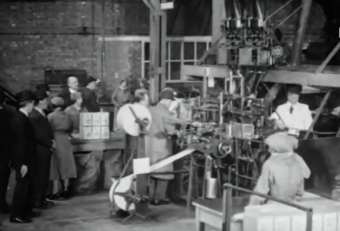
The Greater London Industrial Archaeology Society in conjunction with the Cinema Museum and Huntley Film Archives are running an evening showing films from the John Huntley Archive about London’s Industrial Heritage. The event will take place on the 27th November 2024, presented by Amanda Huntley, and there will be an optional tour of the museum afterwards.

John Huntley (1921 – 2003) was an English film historian, educator, and archivist. Born in Kew, London, he started in the the film industry as a teaboy at Denham Studios around 1938. He later worked for the British Filn Institute from 1952 to 1974, first for the information department, but from 1955 in distribution. In 1984 he and one of his daughters, Amanda, set up Huntley Film Archives. This is an archive of documentary, educational, industrial, medical, travelogue, and feature films, containing films of the lives of ordinary people around the world. For more details on the archive follow this link: https://www.huntleyarchives.com/aboutus.asp

To book your £10 ticket for the event follow this link: https://ticketlab.co.uk/event/id/28012.

Heritage Open Day at The Historic England Archive

The Historic England Archive will be participating in the Heritage Open Days 2023 events on 9 September. This event is FREE to attend. The Heritage Open Days theme this year is ‘Creativity Unwrapped,’ and runs from 8-17 September throughout England.

Historic England will be using the day to explore creativity in their collections. To book a place follow this link: https://historicengland.org.uk/images-books/archive/heritage-open-day/

John Lang Construction Archive Photos Now Online

Historic England’s ‘Breaking New Ground’ project has now finished the digitisation of 10,000 images from the John Laing Photographic Collection, a project supported by the John Laing Charitable Trust. The project conserved, catalogued, and digitised the images from the company and made them freely available in the Historic England Archive online.

The John Laing building company began in 1848 when James Laing and his wife Ann, along with some employees, built a single house in Carlisle. It remained a family business until the construction side of the business was sold in 2001. John Laing constructed the UK’s first major motorway, the Second Severn Crossing, and Sizewell B power station. They also built a number of important post-war buildings such as Coventry Cathedral and the Preston Bus Station, and built much of Milton Keynes new town. Amongst the other industrial buildings they constructed are the Walls Ice Cream Factory in Gloucester, Patons and Baldwins Knitting Factory in Darlington, and the Shoreham Cement Works in West Sussex.

As well as highlighting the projects undertaken by the company, the images provide a valuable insight into the work and play of the lives of the workers and their families during the post-war 20th century building boom. Further information on the project, and how to view the images using an interactive map, can be found here – https://historicengland.org.uk/whats-new/news/foundations-laid-then-buckets-and-spades/