Welcome to the Industrial Heritage Networks and Support website. This site is maintained and updated by the Ironbridge Gorge Museum Trust who run the project and the networks. We aim to support industrial heritage in England through networking, information exchange, guidance, and training. Please explore the website and please contribute! For more information you can … Read more Welcome to the IHNs website!
The Small Grants Scheme is provided by the Foyle Foundation to support smaller, grass-roots, and local charities in the UK with projects that have the potential to make a significant difference to their work. In the last three years recipients have included the Science Museum, the Mills Archive Trust, the Hull Maritime Foundation, and the Black Country Living Museum.
The Foyle Foundation was formed to implement the will of the late Christina Foyle. She was the daughter of William Foyle who, with his brother, founded the former family owned bookshop Foyles in Charing Cross Road, London. The Foyle Foundation will complete its grant giving programme in 2025, marking 25 years of giving to the fields of the Arts, Learning, Community Small Grants, State Schools Libraries and formerly Health. The Foundation awards funding in two main areas:
Applications are now open for the Association for Industrial Archaeology’s 2025 round of restoration, research, and other awards (including community, dissertaton, publication, and travel bursary). The deadline for most of these awards is the 31st Janaury 2025, although the deadline for the Restoration Grants is the 31st March 2025. Details and links can be found below.
Restoration Grants
The first of these grants were made in 2009, and from the initial modest beginnings we have, by 2024, been able to allocate nearly £1,500,000 since the scheme began. The industrial heritage sector, despite difficulties with volunteer projects during the Pandemic, has continued to be increasingly appreciative of this source of aid. A source which is entirely thanks to the continuing support of our anonymous donors. A brief history of the scheme and details of many of those projects can be found below. Regular updates on progress with these projects appear in I A News, our quarterly bulletin. From 2020 onwards the available Grants pot is divided into two categories:
Major projects where the maximum grant that can be awarded is £30,000. The grant from the AIA must be a significant part of the total project cost, not just a small contribution to a very large project, so that the AIA grant has real impact. The AIA would not normally fund projects where their grant represents less than 20% of the total project costs. Small projects where the grant limit is £10,000, for which the total cost of the project, excluding the value of volunteer labour, must not exceed £12,500.
The AIA research grant scheme underpins the study aim of the Association. It does that by:
Encouraging individual researchers to study industrial archaeology subjects
Encouraging the development of industrial archaeology skills within commercial units, the main repository of professional skills in the subject
Supporting local industrial archaeology and industrial heritage societies in exploring and understanding their local areas
Helping to develop the next generation of industrial archaeologists
The total fund available in any single year is £1,500 and multiple grants may be given up to this maximum in a single year. The AIA may consider part-funding a wider grant application or project as long as the AIA grant is a significant part of the larger application / project.
Click to download full details and an application form: (.pdf)(.docx)
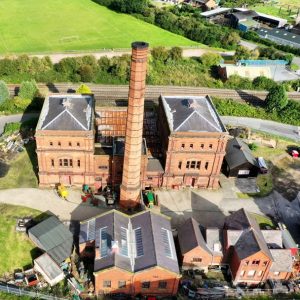
In 2024 Claymills Pumping Station received a major grant for the restoration of boiler No 1 to fully working condition. Image courtesy of Claymills Pumping Station Trust.
Historic England has announced (November 2024) new funding for 21 creative, youth-led, place-marking projects across England. The ‘History in the Making’ programme empowers under-represented young people to explore and celebrate their local hidden histories, finding original ways to commemorate them, helping to improve young people’s wellbeing, and increase pride in their local area.Amongst the 21 grants are several to industrial heritage themed projects.
‘Summat Creative’, in Bradford, focusses on the overlooked history of people with Learning Disabilities who worked in Bradford’s mills in the 1800s and 1900s. After historical research and creative exploration, Learning Disabled young people will help create a model of a mill and fill it with their own creative responses to the stories they’ve unearthed.
The ‘Multi-sensory accessible place marker for the Shipley Glen Tramway – Moor Time’ project will see young people with additional needs from across the Bradford district explore the social history around the oldest cable tramway in Britain, which still takes passengers from Saltaire/Baildon to Shipley Glen. Their findings will create a full accessible, multi-sensory, place marker to celebrate these histories.
‘Canal to Garden: Unearthing Greater Mamnchester’s Green Heritage’ project will engage young people in Greater Manchester to uncover and celebrate the hidden history of local canals and flora through hands-on gardening, historical research, and creative expression. It will result in a heritage garden that tells the story of our local environment.
The grade II listed Paradise Silk Mill, Macclesfield, Cheshire, is now open following a programme of restoration. This means that the guided tours around the historic 19th century silk mill are also back up and running. Each tour is led by one of the museum’s expert guides sharing their own individual take on aspects of Mill life. Pre-booking is reommended but but you can get tickets on arrival.
The Silk Museum will also be developing and expanding its resources for creative engagement over the coming months, thanks to an award of £165k from the Arts Council England’s Capital Investment programme. The Museum will be able to transform the building’s accessibility, increase sustainability and lessen its overall environmental impact. A Jacquard Studio will be created, improving storage facilities, and creating better access to the remarkable collection of Pattern Books. The award will also increase creative opportunities for artists by supporting co-curated displays inspired by the museum’s collections, as well as allowing more work with community groups with special needs, visual impairment, and low cultural engagement.
Guided Tour Details:
When: Wednesdays to Saturdays at 11am, 12.30pm and 2.30pm BOOK HERE Where: Come to the Silk Museum, Park Lane, Macclesfield, SK11 6TJ. Cost: £11.50 per adult and £10.50 concessions
In April 2024 the new Museum Development regions in England came into being, along with a new set of regional grants.The five English MD regions are now up and running delivering support to museums and heritage groups, including industrial heritage sites, though a variety of training, capacity building, networking, and grant support initiatives.
Details of the first round of grants for museums and heritage groups are as follows:
The deadline for the Society Post-Medieval Archaeology‘s 2024 Post-Medieval Archaeology Research Grant application is Friday, 1 March. The Society makes small research grants, twice a year.
SPMA grants enable research projects and publications to be undertaken on the post-medieval archaeology of Britain, Europe, and the wider world, from c.1500 to the present day. Deadlines are 1 March and 1 September each year and the total fund available in each round is £2000.
Applications are now open for AIM’s next round of Connected Communities funding, from which several industrial heritage sites have already benefitted. Grants of £15,000 – £100,000 are available to museums delivering projects in the eligible areas that will improve community connections through high-quality volunteering opportunities and/or reducing loneliness and increasing social bonds. Expressions of Interest must be made by Monday 27 November.
Over the last few years nearly £3 million has been distributed on behalf of the Government by Arts Council England via partners Libraries Connected, Creative Lives and AIM, through the AIM Connected Communities programme. This has created more than 1,000 volunteering opportunities and support more than 4,000 people experiencing, or at risk of, chronic loneliness.
Who can apply? Museums and partnerships or consortia including a museum in one of the 27 eligible areas in England. Organisations do not need to be members of AIM to apply. The scheme is also open to Accredited and non-Accredited museums. Eligible areas include several industrial connurbations, such as Barnsley, Barrow-in-Furness, Burnley, Doncaster, Kingston-upon-Hull, Middlesborough, Rochdale, Sandwell, South Tyneside, Sunderland, Tameside, Wakefield and Wolverhampton.
The ‘Places of Science’ grant scheme, run by the Royal Society, is now open for applications. Applications will close at 12pm on Friday 17 November 2023. The scheme provides grants of up to £3,500 to small museums, funding projects that tell the stories of science and scientists relevant to communities across the UK.
Through the ‘Places of Science’ grant scheme in 2022, 36 small museums across the United Kingdom have received up to £3,500 to run projects that tell stories of science to their local community. This included Industrial Heritage Network members Coldharbour Mill, Head of Steam in Darlington, and the Brunel Museum, as well as the Moira Furnace. The Royal Society is particularly interested in projects that:
explore the experiences of historically underrepresented people
are led by organisations that don’t normally feature scientific content
involve partners that can enhance the project’s outcomes, impact or quality
reach audiences who do not normally engage with science
enable possibilities for digital engagement, either as a main feature or as part of a contingency plan
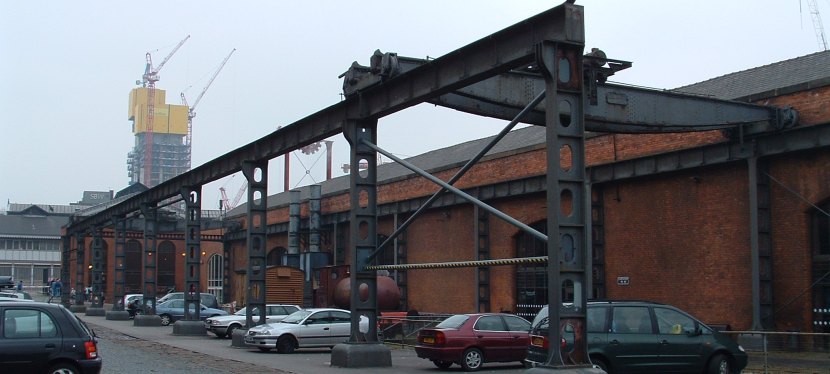
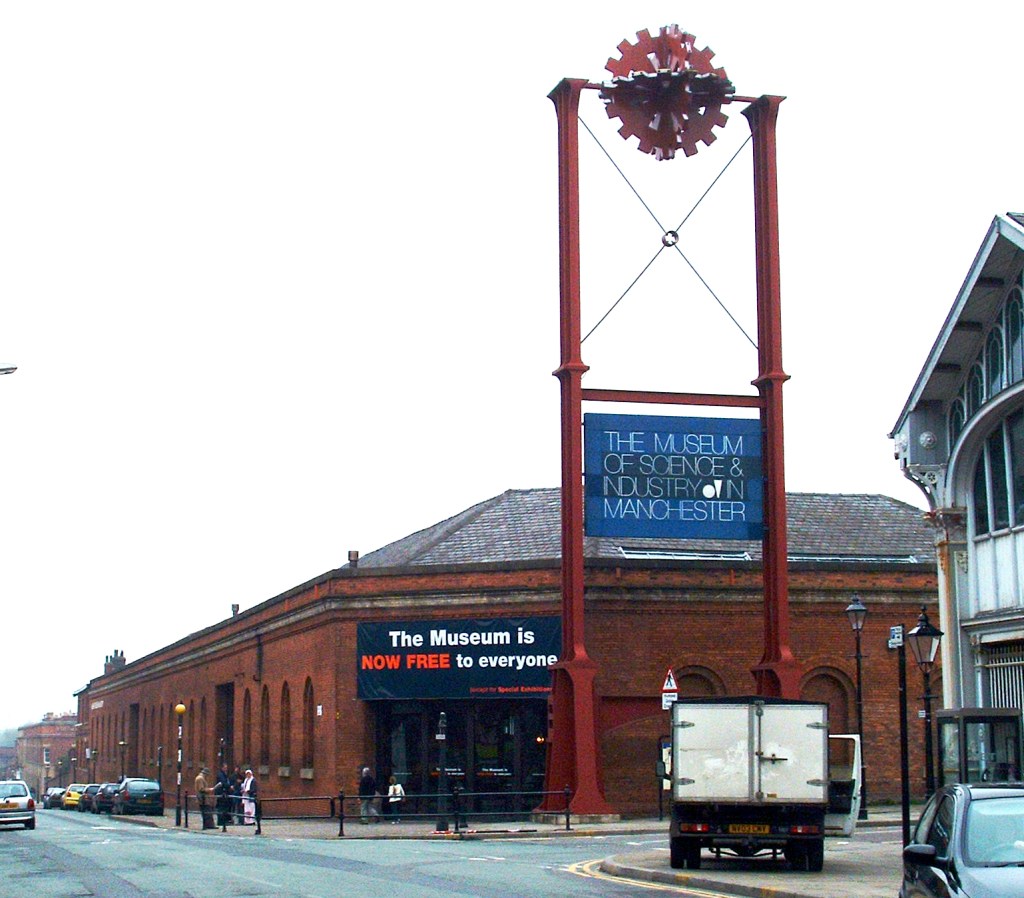
The Science and Industry Museum in Manchester has received a National Lottery Heritage Fund grant of £225,000 to support the regeneration of its Power Hall gallery. The Power Hall houses one of the UK’s largest collections of working steam engines, and has been temporarily closed since 2019 to allow for conservation works to the roof and an internal re-display.
The National Lottery Heritage Fund grant of £225,000 will see the introduction of a volunteer programme and green technology added to the regeneration project. The Heritage Fund grant will support the development of a volunteer programme dedicated to historic working machinery, and a decarbonisation scheme which will see the museum run its fossil fuel-powered engines with green technology. It will also aid the conservation and maintenance of the machines, keeping them operating in line with the museum’s net-zero goal.
The funding adds to and £14.2 million provided by DCMS to fund repairs to the building announced in February 2023, and the £3 million donation from The Law Family Charitable Foundation last June. The Power Hall’s restoration is part of a multi-million pound regeneration project taking place across the museum’s seven-acre site.
The Association of Independent Museums’ Brighter Day Grant Scheme, funded by the Arts Scholars Trust, is now open for applications from AIM members. The priority for this round of funding is ensuring that museums at risk of closure, losing vital skills and knowledge, or unable to provide effective collections care, are supported to ensure future viability. The scheme has a special focus on small museums and others that have found it difficult to access support.This is particularly relevant to Industrial Heritage Sites who are members of AIM.
The fund will support education, training, curation, and exhibition projects that address collections care and sustainability of historic and decorative arts collections. Grants can be applied for at a minimum of £1,500 and maximum of £8,000. Museums can only apply for one grant per round. Match funding is not required.















 Industrial Heritage Networks