The Northern Mine Research Society October Online Talk

Northern Mine Research Society is experimenting with a series of online lectures this autumn/winter. The first of these will take place on Tuesday 7th October at 7pm. This initial lecture will be given by Steve Grudgings on ‘From Calley to Curr: the development of the Newocmen Engine in the eighteenth century’.

Join Steve to hear how the Newcomen engine developed from a bespoke, artisan-built, item to a “commodity” product built from standardised components. Steve will highlight the key challenges early engine builders had to overcome and how their endeavours contributed to the recognition of the engineering profession.

Non-members are very welcome. For joining instructions contact NMRS President Len Morris at: lmorris768@btinternet.com

CBA Launches New Volunteer Opportunities Page

The Council for Britsh Archaeology (CBA) has launched a new volunteering page, listing opportunities across the UK. You can search by your region to find volunteering callouts near you. However, the page doesn’t just listed opportunities for volunteers, but also has a section where groups, sites, and museums can list their own volunteering opportunities in archaeology and heritage.

Current industrial archaeology and heritage volunteer openings include opportunities to help Kingswood Heritage Museum (a brassworks) in South Glouscestershire, digitising opportunities with the Food Museum, and helping out with the North Tynside Steam Railway.

To learn more about new volunteer opportunities sign up for the CBA volunteering newesletter by following this link:

https://www.archaeologyuk.org/get-involved/volunteering.html

A History of Stoke-on-Trent in 8 Places: New Historic England Blog

The latest Historic England blog, under their ‘Heritage Calling’ banner, looks at the historic and industrial heritage of Stoke-on-Trent.

The Potteries encompassed the towns of Burslem, Fenton, Hanley, Longton, Stoke, and Tunstall. Together, these towns created the world’s leading centre for ceramics production, with famous names such as Wedgwood, Royal Doulton and Spode centring their work there.

Eight site shave been chosen to highlight this industrial history. These are: Middleport Pottery; Chatterley Whitfield Pottery; Bethesda Methodist Chapel; the Former Wedewood Institute; Trentham Mausoleum; Hanley Park; Stoke-on-Trent townhall; and Price and Kensington Teapot Works.

The full blog can be found here:

https://heritagecalling.com/2025/05/02/a-history-of-stoke-on-trent-in-8-places/?utm_medium=email&utm_source=newsletter&utm_campaign=brand&fbclid=IwY2xjawKJZa1leHRuA2FlbQIxMQABHuIOlYHFQLuCVzlN5Is74h22tI-cCFn5H-TC1A_9qsFVoil3riZG12xL_qcM_aem_IyEcaG7deiYUiV6TrbcWKA

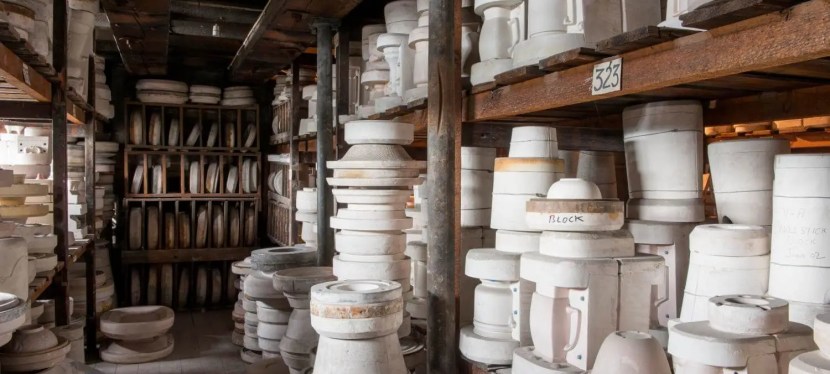
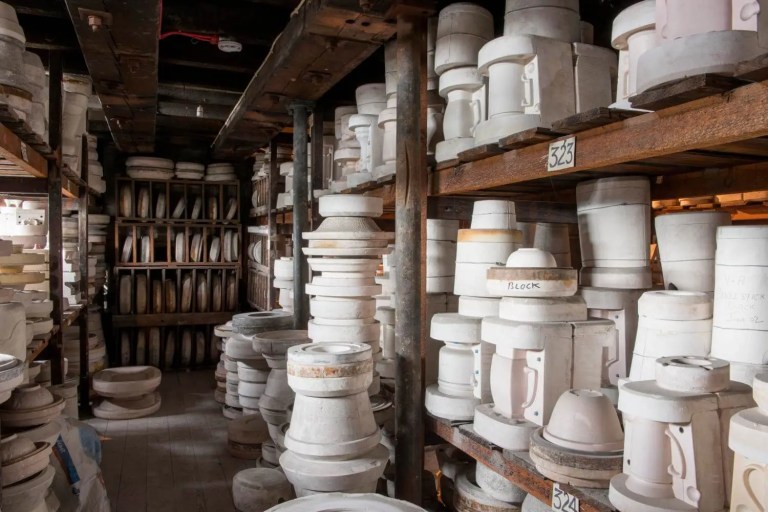
The interior of the pattern store at Middleport Pottery, Burslem, Stoke-on-Trent, Staffordshire. © Historic England Archive. View image DP157658. View List entry 1297939.
Chatterley Whitfield Colliery, Whitfield, Stoke-on-Trent, Staffordshire. © Historic England Archive. View image DP059964. View List entry 1015947.

King Edward Mine Museum Looking for More Volunteers Ahead of 2025 Season

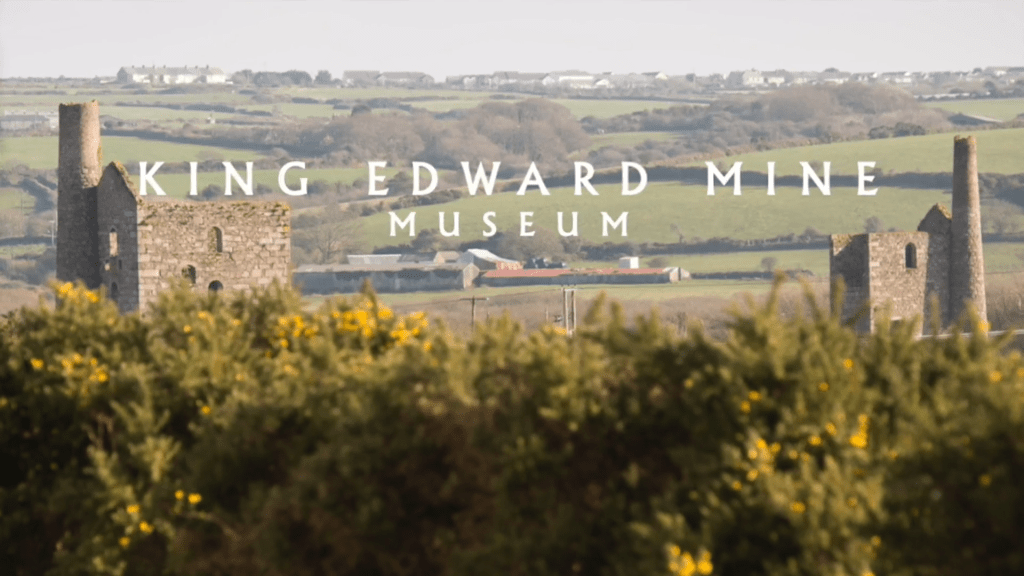
King Edward Mine Museum (KEM), a volunteer-led charity within the UNESCO Mining World Heritage Area of Cornwall, is looking for more tour guides when it re-opens for the new season on 20 April.

The site saw a significant rise in visitor numbers last year, many of whom travelled from overseas to explore the mine complex. The museum, which is dedicated to sharing the history of mining on the Great Flat Lode, and is Grade II* listed, lies in the village of Troon, near Camborne.

The mine tells the stories of Cornish miners and maintains a collection of historic mining equipment, including an operational Cornish tin mill, and a Holman winding engine. Originally worked under the name of Old Tye it was opened in 1844 together with Great Condurrow about 300m to the north, finally closing in 1921. However, the surface buildings continued in use for the teaching of mining, ore dressing, and surveying skills until 1974. In 1987 a volunteer group was formed with the aim of conserving the site as an educational resource for the future and the local community. 

If you would like to volunteer as a museum guide or help in the reception area in 2025, follow this link for more details: https://www.kingedwardmine.co.uk/about/volunteering

National Trust in Talks to Run Heartlands Industrial Heritage Site

The National Trust, Cornwall Rural Community Charity, and Cornwall Voluntary Sector Forum are in discussions with Cornwall Council over the future of the Heartlands mining heritage site at Pool in Cornwall.

The site opened in 2012 after more than £20m in lottery funding was used to regenerate the derelict mining area and retsore the listed mining pumping engine house and surrounding buildings as a visitor attraction with retail units. It was run by the Heartlands Trust, and leased from Cornwall Council, before it ran into financial difficulty, closing in January 2024. The Trust was wound up and the Council has took over the maintenance of the site, and has been seeking a partner to lease the entire site from it.

The National Trust said: “The National Trust, with partners, Cornwall Rural Community Charity (CRCC) and Cornwall Voluntary Sector Forum (VSF) are in discussions with Cornwall Council to look at how a sustainable future could be secured for Heartlands, an important cultural heritage and community site in Cornwall.”

Further details here: https://www.falmouthpacket.co.uk/news/25018765.national-trust-talks-heartlands-cornwall-lease/

https://www.bbc.co.uk/news/articles/c8e79608rg1o

Spring 2025 Online Industrial Heritage Network Meetings

The next round of online Industrial Heritage Network (IHN) meetings is taking place this Spring. The IHN networks are a chance to meet those working, volunteering, or researching in the industrial heritage sector.

Four lunchtime IHN meetings will be held in late March, and will run from 12noon to 1pm, and there will be an IHSO update followed by news and updates from members. The first round of 2025 IHN meetings will take place on the following dates and will include the following groups:

  • 21 March – East of England
  • 25 March – South East
  • 26 March -North East
  • 31 March – London

Zoom links for the meetings will be sent to each region nearer the dates. If you would like to join any of these Industrial Heritage Networks as a member please email the IHSO here: mike.nevell@mikenevell

Ironbridge Launches ‘Get Us Winding Again’ Appeal

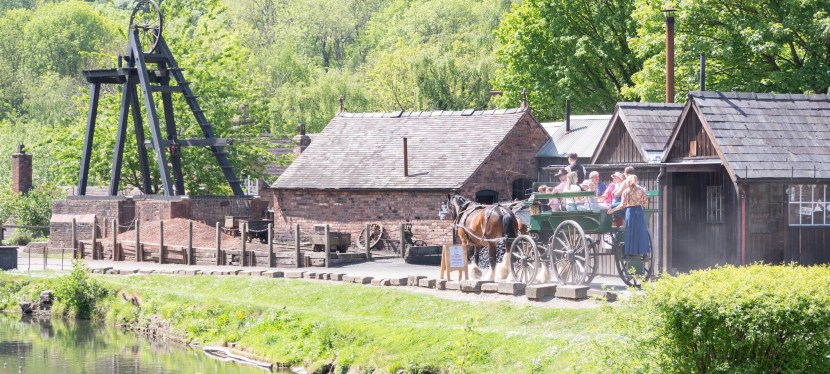
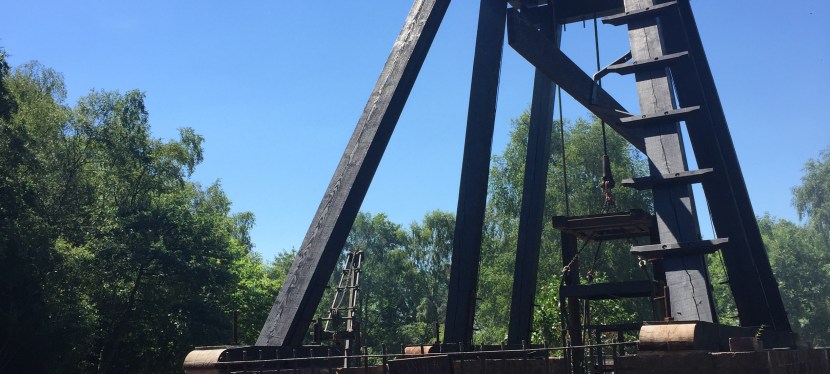
The Blists Hill winding engine

The Ironbridge Gorge Museum Trust has launched a new £100,000 fundraising appeal, Get Us Winding Again, to raise funds to repair the winding engine at Blists Hill Victorian Town. The steam-powered winding engine is one of the earliest and most significant exhibits in Blists Hill Victorian Town. 

Winding engines were used to carry people, equipment and horses up and down a mine shaft. The museum’s winding engine dates to the mid-19th century and was originally used at Milburgh Tileries, a mine in nearby Jackfield. The cage on the end of the cable would have carried one tub of coal or clay at a time or six men at winding speeds of up to 30mph (44 feet per second) without men and about half that with men on.

Today the winding engine at Blists Hill Victorian Town is capable of winding empty tubs a short distance up and down the original mine shaft. However, due to normal wear and ageing (the winding engine ran most days from its installation in 1973 to 2018) and due to an overwind incident that occurred in 2018, it has not been in operation for the last six years.

The new Get Us Winding Again campaign aims to raise £100,000 to repair and restore the winding engine so that visitors can once again see it in action. Find out more about the campaign, as well as seeing a video of the winding engine in action, on the IGMT website.  

The Blists Hill mining headstocks and centrte, the winding engine house. Image Coutesy fo IGMT.

Trials on Using Floodwater from Disused Mines as a Heat Source Move Forward

The use of water from abandoned coal mines to heat homes and historic sites has taken a further step forward. The Welsh government has agreed to spend £450,000 on a project which it hopes will help cut Welsh energy bills and Wales’ carbon footprint. The money will be used by the Coal Authority, who manage disused pits in Britain, to locate the best areas in Wales for such a project.

Potential sites will be tested for the effectiveness of extracting water from disused mines and putting it through a heat exchanger, where some heat is recovered, before it is amplified by a heat pump. This can then be used to heat homes and/or industrial heritage sites. Mine water heating is low-carbon, but not carbon-free because the water has to be further warmed using a heat pump, which operates like a fridge in reverse. A similar programme in Gateshead, England, developed by the Coal Authority at a cost of £9m, has become the largest mine water heat scheme in the UK.

For further details follow this link: https://www.bbc.co.uk/news/uk-wales-62154271

or this link for the Gateshead project: https://www.bbc.co.uk/news/science-environment-60772187

For the Coal Authority website follow this link: https://www.gov.uk/government/organisations/the-coal-authority