Museum of Making, Derby, Installs Flood Barriers

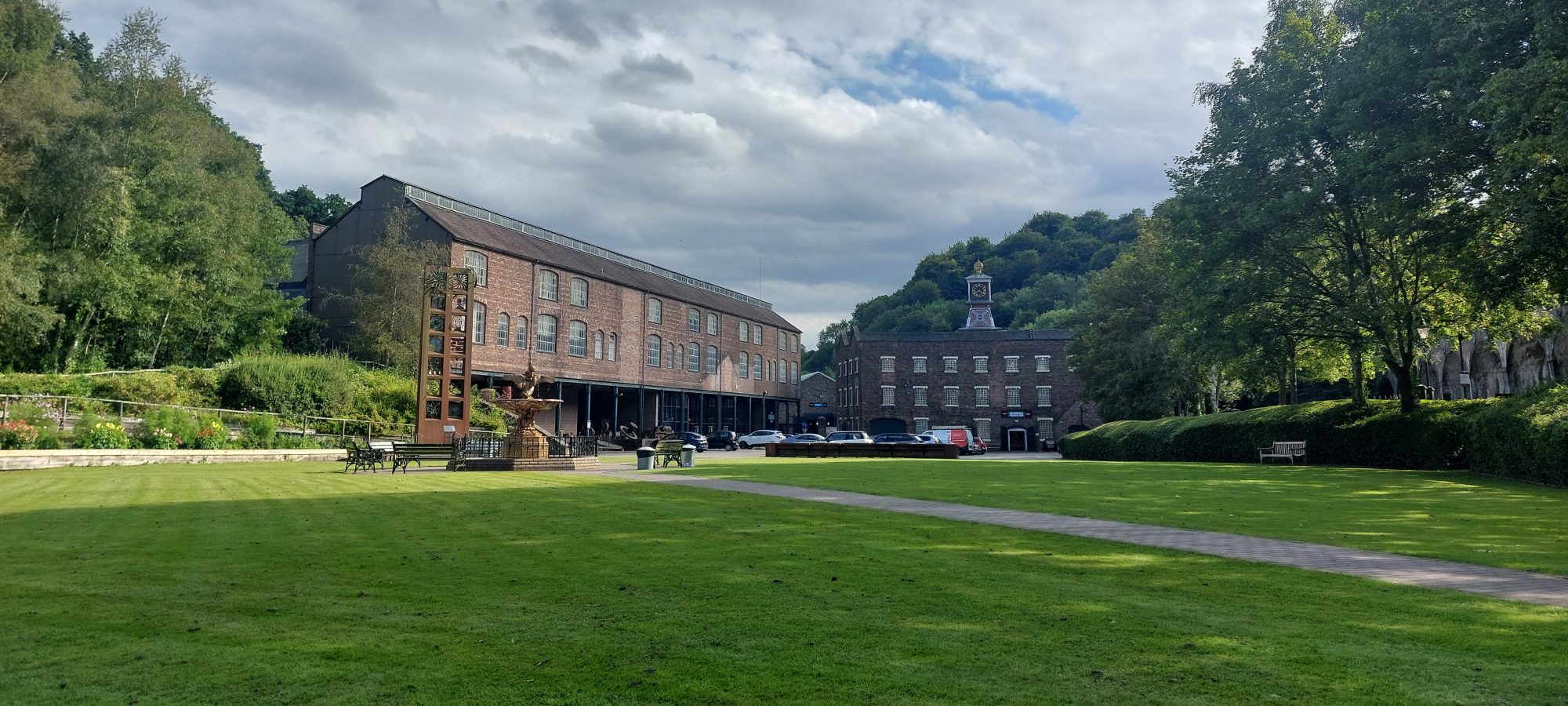
New flood defences have been installed at Museum of Making, Derby. The protective barriers have been placed inside the old Silk Mill, now the Museum of Making, which was flooded by waters from the River Derwent to a depth of 0.7m during Storm Babet in 2023.

Alex Rock, director of commercial and operations at Derby Museums Trust, said “We’re delighted to add further protection to our building, and very grateful for the support of Derby City Council’s planning team and their engineering colleagues. Both departments have been crucial in securing the relevant permissions and funding from DEFRA for this work. It adds another layer of protection to two key operational areas, which means that should a flood event occur again – and it is worth bearing in mind that Storm Babet was forecast as a once-in-a-century event for Derby – then we’ll be able to shorten the period of closure. It protects the two areas of the ground floor that are most impacted by flood events.”

As part of Derby City Council’s ‘Our City Our River’ scheme, flood defences are also to be improved around the museum. Work is underway to demolsih disused office buildings on the eastern bank of the river, close to the museum, at Stuart Street and Phoenix Street. This will allow the construction of a new flood wall, floodgates, and a riverside green area to provide a controlled corridor for flood waters fromt eh River Derwent to pass through the city.

More details here: https://www.msn.com/en-gb/news/world/derbys-museum-of-making-gets-flood-defence-boost-after-closure-cost-six-figure-sum/ar-AA1PA7v1?ocid=BingNewsSerp

and here: https://www.derby.gov.uk/environment-and-planning/regeneration-and-economic-growth/our-city-our-river/our-city-our-river-project-overview/

The Museum of the Making (the Old Silk Mill), Derby. Image copyright Dr Michael Nevell.

De Havilland Aircraft Museum is Recruiting a General Manager

The de Havilland Aircraft Museum, London Colney, is currently seeking a new General Manager due to the retirement of the present incumbent. The full time paid post offers many opportunities to the right candidate.

The Museum is the first aviation museum in the UK, established in 1959, and is dedicated to preserving the heritage of Geoffrey de Havilland and his contribution to UK Aviation history. The de Havilland Aircraft Museum is staffed mainly by volunteers.

Please apply to Tim Crichton (email tim.crichton@dehavilland museum.co.uk) for further details if interested.

Job Description attached.

Wandle Industrial Museum Talk 18 Feb: William Kilburn – Botanical Illustrator & Eminent Calico Printer

The Wandle Industrial Mseum ‘s latest talk is a chance to learn about a boy from Ireland, who became the most highly skilled, but little known, calico printer of his day. His designs were particularly loved by Queen Charlotte, wife of George III. This illustrated talk by Alison Cousins of the Wandle Industrial Museum, will reveal the legacy of Kilburn’s designs and the role he played in copyright law.

The talk is part of the Society’s monthly West Barnes Local History Group programme. This talk is free of charge: Tuesday, February 18, 10:30am-12:00noon, West Barnes Library, Station Road, New Malden, KT3 6JF.

For more details about the society visit their website: www.wandle.org

Chance Heritage Trust Secures Future Funding

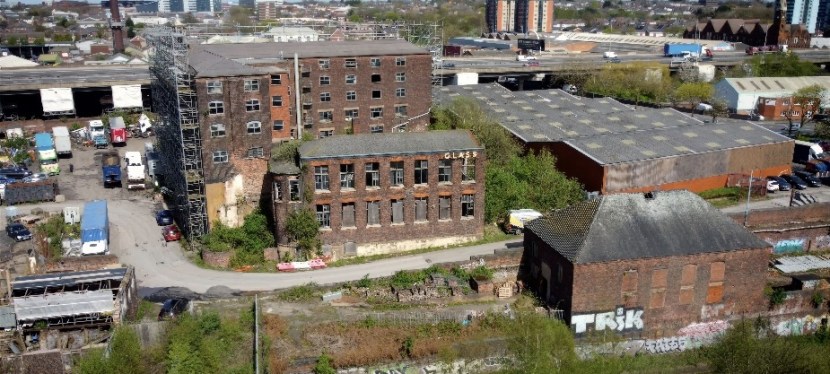
The Chance Heritage Trust has been awarded a grant of £250,000 from The National Lottery Heritage Fund, thanks to money raised by National Lottery players with a further grant of £165,000 awarded by Historic England. The combined capacity building grants will transform how the Trust operates and will help to drive the regeneration and repurposing of the Chance Glassworks in Smethwick in the West Midlands.

For over 150 years, the former Chance Brothers Glassworks in Smethwick was the world’s leading glass manufacturer and a pioneer of British glass-making technology, operating from 1824 to 1976 and finally closing in 1981. In that time, the factory produced glass used in places like the Houses of Parliament, Big Ben’s clockface, and the Crystal Palace in London. It also developed specialist glass for telescopes and lanterns and, in 1848, began working on lenses which were eventually used in around 2,500 lighthouses around the world.

The funding will enable the Chance Heritage Trust to employ a project director and a small support team. They will continue to work with stakeholders in pushing forward plans for the regeneration of both sites for the benefit of the local community. Working with volunteers and the local community the team will develop a programme of heritage and cultural activities using the rich industrial history of these sites as a resource for people of all ages and backgrounds.

For further details click this link

The Chance Brothers Glassworks, Smethwick, Birmingham. Image courtesy fo the Chance Heritage Trust.

Heritage Open Days 2024: Register Your Industrial Site

Every September thousands of volunteers across England organise events to celebrate our shared history and culture. It’s your chance to see hidden places and try out new experiences – all of which are FREE to explore. This year’s events take place from the 6th to the 15th September. Established in 1994, Heritage Open Days (HOD) is England’s contribution to the European Heritage Days and has since grown into the country’s largest community heritage festival. 2024 marks its 30th anniversary, which is this year’s theme.

Last year more than 200 industrial heritage sites took part in the free event. Participating sites can raise awareness about their activities and history through a popular national platform with 4.8 million website users every year. Heritage Open Days offers free access to organisers to a wide range of support materials and guidance including bunting and risk assessment templates. Finally, joining Heritage Open Days means that your industrial group or industrial museum can connect with people across the country, with over 2,000+ organisers meeting to share ideas.

To sign up for this year’s HODs follow this link: https://www.heritageopendays.org.uk/get-involved/how-to-get-involved.html

The colliery headstocks at Blists Hill, Ironbridge, one of the sites taking part in the 2024 Hertiage Open Days.

‘Our Leather industries’ New Exhibiton by the Wandle Industrial Museum

The latest exhibition by the Wandle Industrial Musuem opens on 9th June 2024. ‘Our Leather Industries’ looks at the history of leather making and some of the products produced in the Wandle Valley in the 19th and 20th centuries.

The exhibition can be found at the Vestry Hall Annexe, London Road, Mitcham, Surrey. Open on Wednesdays, 1-4pm and Sundays 2-5pm, the exhibtion is free to enter.

Historic England Funding More Projects to Uncover and Celebrate Working Class Heritage

Historic England’s Everyday Heritage Grant programme aims to shine a light on the diversity of heritage and is part of Historic England’s commitment to ensuring that a wider range of people are able to connect with, enjoy and benefit from the historic environment. Building on the success of Historic England’s  first round of Everyday Heritage Grants in 2022, they are funding an additional 56 projects that celebrate working class histories and the historic places that make up everyday life.

The grants are for creative projects that focus on heritage connecting people to historic places, specifically those people and places that are overlooked or underrepresented. The community-led projects will explore the diverse stories of people and places, such as homelessness in Waterloo, a pen factory in Newhaven, and roller-skating in Birmingham. The total amount of funding awarded by Historic England is £875,000, ranging from £6,800 to £25,000 per individual project.

For details of all these projects and those funded in 2023 follow this link: https://historicengland.org.uk/campaigns/help-write-history/everyday-heritage-grants/

Historic England Adds Interactive Map to its Historic Manufactured Gas Webpages

Historic England has added an interactive map to its Historic Gas Industry webpages. The new feature allows researchers to search for manufactured gas sites in England from the 19th and 20th centuries and to view summary details about each site. This new feature expands the resources already available for those wishing to research the local manufacture of gas, which already includes a detailed overview report on the history of the manufactured gas industry in England, a heritage assets guide, and advice on recording such sites.

The new interactive map shows the location of hundreds of sites including listed gasworks buildings and gasholders, non-designated surviving gasworks buildings and gasholders, possible surviving structures related to the industry, sites with only below ground evidence, and sites only known from map evidence. The map also has links to the relevant Aerofilms Collection of aerial photographs where these show these gas industry sites, a database which is held by Historic England.

To view the interactive map follow this link: https://historicengland.org.uk/research/current/discover-and-understand/industry-and-infrastructure/manufactured-gas-industry/

The base of the the 1864-5 gasholder at Quarry Bank Mill, Cheshire. Gas manufacture on the site ceased in 1904, but the gasholder was retained for several years thereafter to cope with periods of peak demand. Image copyright: Dr Michael Nevell.

Industrial History Research Event at the Discovery Museum, Newcastle-upon-Tyne, February 2024

Calling all family, social, and industrial historians! Together with Bluegrass Research, the Science Museum Group invite you to take part in-person in a free research workshop all about the Congruence Engine.

The Congruence Engine project uses the latest digital techniques to connect industrial history collections held in different locations. It aims to create a prototype ‘digital toolbox’ for everyone fascinated by industrial past, to connect items from the nation’s collection to tell the stories about history that they want to tell.

The free research event is being held at the Discovery Museum, Blandford Square, Newcastle- upon-Tyne, NE1 4JA, on Tuesday 13th February 6pm – 9pm. Attendees do not need to have any prior knowledge of the Congruence Engine project to participate, but active participation in event discussions will be required. As a thank you for time and participation, and to cover expenses, all registered attendees will receive £25 after the event.

As event numbers are limited, please register your interest by emailing lydia.neave@bluegrassresearch.co.uk with your phone number and a brief description of your area of historical interest. Following this, your place will be confirmed with a registration email on a first come first served basis.

New Book on The Buildings of the Malting Industry

The latest industrial heritage title by Historic England/Liverpool University Press has recently been published: ‘The Buildings of the Malting Industry: The production of malt from prehistory to the 21st century’ by Amber Patrick.

Malt is one of the main ingredients of beer, yet the buildings in which it was and is now produced have received very little attention. Although most towns and many villages had their own malthouse and kiln, this is the first book to address this important building type. Today, evidence for a malthouse may just be a name on a building or street, but where they survive the pyramidal roofs clearly demonstrate the presence of a malthouse as do other less recognisable features. This book shows how they changed over the centuries with accompanying illustrations, including those that have been converted to new uses. Further details can be found here – https://liverpooluniversitypress.co.uk/doi/book/10.3828/9781837644285

This complements our previous publications: ‘Built to Brew: The History and Heritage of the Brewery’ (https://www.liverpooluniversitypress.co.uk/doi/book/10.3828/9781848022386) and ‘Oasts and Hop Kilns: A History’ (https://www.liverpooluniversitypress.co.uk/doi/book/10.3828/9781789622515)