Online Petition Started to Save Museum of Cannock Chase

The news that Cannock Chase Council is proposing the closure of the Museum of Cannock Chase in April 2025, as part of proposed budgets cuts for 2025/2026, has led to the establishment of an online petition against the closure.

The Council is holding a public consultation on the closure of the museum, and the council’s Prince of Wales theatre, which runs from the 29 November 2024 to the 2nd January 2025. The council released a report in November regarding the closure of the msuem and theatre which estimated that closing the two cultural venues would save £350k per annum. This report can be download by following this link (see pages 179 – 187):
https://www.cannockchasedc.gov.uk/council/meetings/agendas-reports-minutes/cabinet/2024-11-28

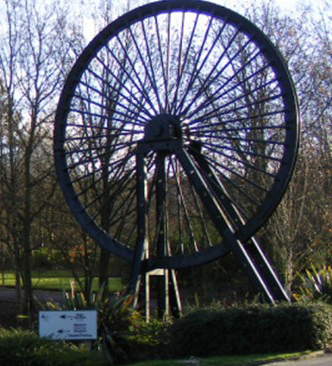
The Museum of Cannock Chase first opened in 1989 on the site of the former Valley Pit, a training pit for young coal miners. It covers the history of the Cannock Chase area across four galleries and also hosts a number of temporary exhibitions throughout the year. Although council-owned, it is operated by the charity Inspiring Healthy Lifestyles (IHL), who who also run the theatre, with a contract until 2027. Vistor numbers to the free musuem, before COVID, reached 46,500 in 2018/19. The number of visitors since the pandemic initially fell to 10,500 in 2021/22, but partially recovered to 21,000 in 2023/24.

The online petition notes that: ‘The museum’s collections tells over 300 years of history of the district and wider area and have become cherished resources. They have collected and safeguarded not only our industrial history but our social history, presenting and preserving the stories of people past and present – of those people who worked to create and shape our communities, and of the people who continue to do so. This entire collection is now at risk of being lost.’

The petition can be found here: https://www.change.org/p/save-the-museum-of-cannock-chase-protect-our-mining-heritage

Catalyst Science Discovery Centre & Museum Awarded £1 Million NLHF Grant

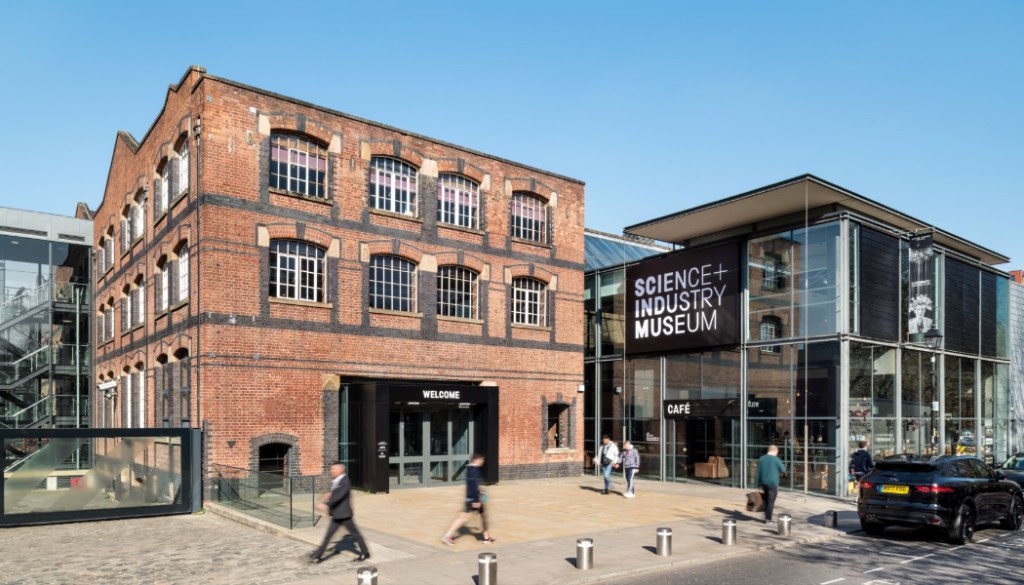
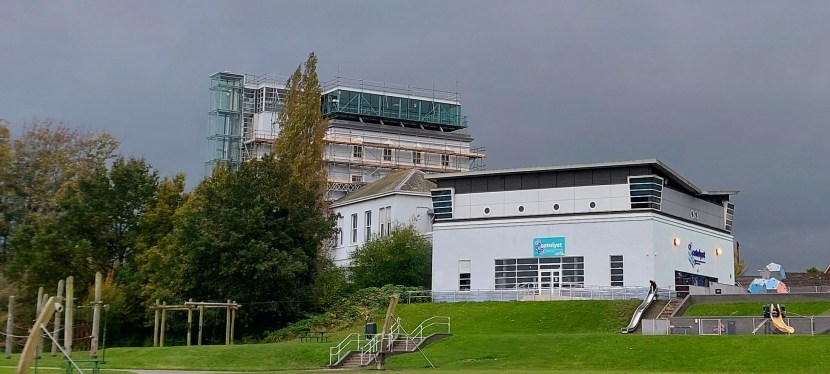
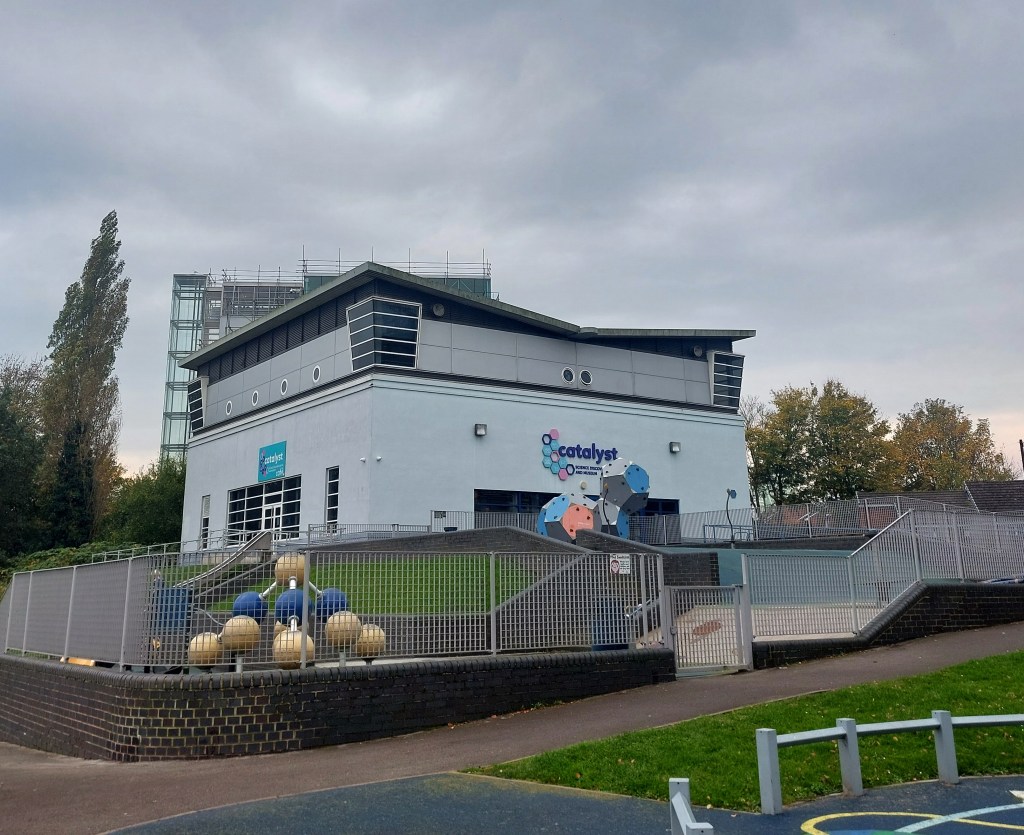
The Catalyst Science Discovery Centre and Museum in Widnes has been awarded a £1 million grant from The National Lottery Heritage Fund. This is to help it educate and excite an even wider audience about the relevance of chemistry, the town’s chemical heritage, and how this has shaped modern life today.

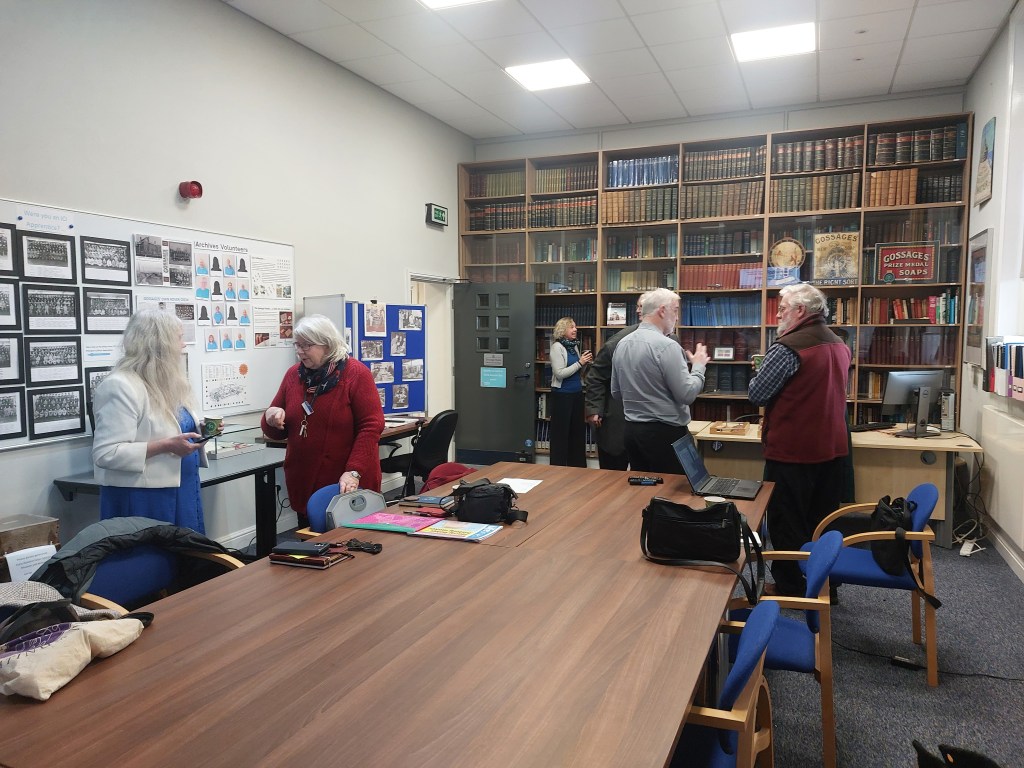
Delegates catching up at the North West IHN, October 2024. Copyright: Dr Michael Nevell

Half of the £1,009,930 National Lottery Heritage Fund grant will be used to refurbish two floors of the museum in order to showcase the history and heritage of the chemical industry from the 1800s to the present in a fresher, more engaging, and more accessible way. This includes the top floor Observation Gallery with its 360° views of the surrounding area including the River Mersey and two Halton bridges, which will be revamped with brand new interactive exhibitsd and audio handsets.

A proportion of the grant will be used to digitise the museum’s nationally important, and extensive, archive to both protect and make it more widely available. The remainder of the grant has been earmarked for an extensive activity plan including workshops, events, open days, and resources aimed at connecting audiences to the chemical industry in a new and meaningful way.

The Catalyst charity was launched in 1987. It celebrates the local chemical industry heritage and its influence at home and around the world with unique initiatives, hands-on experiences, and rich industrial heritage archives. The Discovery Centre and Museum welcomes visitors from the local area and beyond, with special events for schools, families, and SEN groups all year round. The museum hosted the North West Industrial Heritage Network meeting in October 2024.

For further details follow this link: https://www.catalyst.org.uk/catalyst-lottery-fund-win/

The Catalayst Science Discovery Centre andMseum, November 2024. Copyright: Dr Michael Nevell.

7th East-West Workshop on Industrial Archaeology: Weaving the Industrial Period

The production of fabric and its transformation into clothes was worldwide one of the first sectors to embrace modern industrialisation, even though continuities (of domestic working spaces, traditional production processes, manual technologies, etc.) often coexisted with changes (the factory, the factory system, the power loom). The 7th East-West Workshop on Industrial Archaeology revisits the capital importance of the textile sector in the development of the industrial period.

The East-West series of workshops aims to exchange ideas and knowledge among Western and Eastern colleagues to build a more international and diverse industrial archaeology. This edition focuses on the heritage and archaeology of the textile industry from the East, the West, and the world to explore its commonalities (transfer of technology, building materials, typologies, etc) and singularities (chronological disparities, heritage practices, etc.)

The event is organised jointly by the Institute for Cultural Heritage and History of Science & Technology (USTB, China), and the UK Association for Industrial Archaeology with its Young Members. IOt will trake place on Staurday 23rd Novemebr, between 10am and 12pm (GMT). The speakers are:

  • Yiping Dong (Xi’an Jiaotong-Liverpool University, China): “Complexity of the Conservation of Textile Heritage in China”
  • Ian Miller (The University of Salford, Britain): “Salford Twist Mill: Uncovering an Iconic Textile Factory”
  • Mark Watson (Historic Environment Scotland, Britain): “Global Textile Industries and their Built Heritage”

To register for FREE workshop and to get the Zoom link for the event, follow this link:
https://www.eventbrite.co.uk/e/7th-east-west-workshop-on-industrial-archaeology-tickets-1072988229679
 

New Dates Added for the Autumn 2024 Round of Industrial Heritage Network Meetings

Three new dates have been added to the next round of in-person Industrial Heritage Network (IHN) regional meetings taking place this autumn. These regional network meetings take place twice a year in the spring (online) and in the autumn (in-person). They are a chance to bring together volunteers and professionals from industrial heritage sites around England to exchange experiences, catch up with the latest news and practices, and make or renew contacts. There are ten regional networks in England run by the IHSO project at the Ironbridge Gorge Museum Trust, and funded by Historic England, with the support of the Association for Industrial Archaeology.

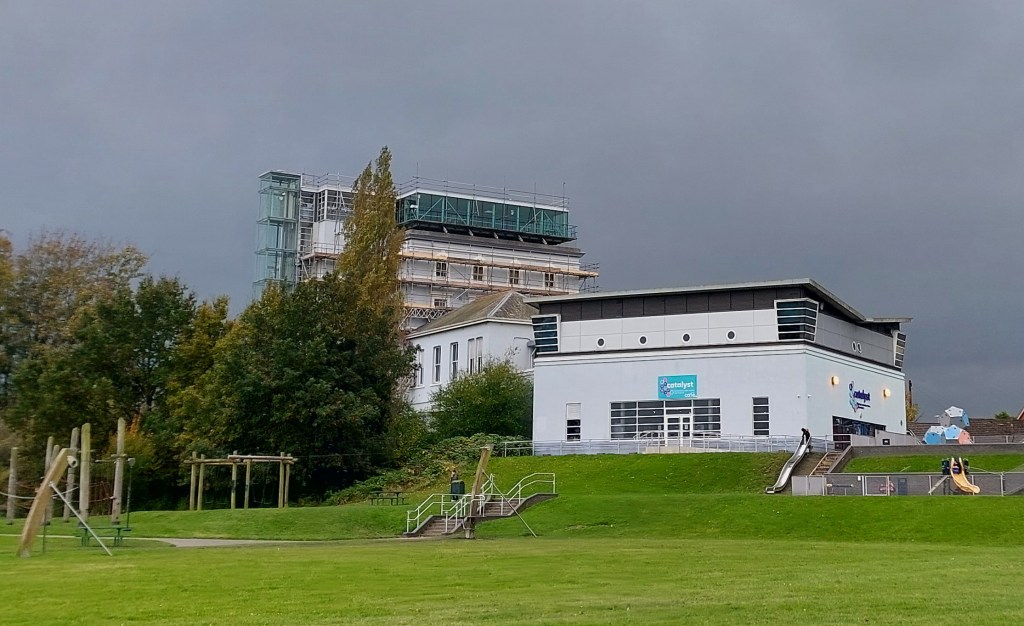
The first of the free autumn 2024 in-person network meetings took place for the North West IHN at The Catalyst Science Discovery Centre and Museum, Widnes, on the 25th October. After a lively disussion ranging across volunteers, maintenance costs, and visitor numbers, a group of us were given a tour of the museum finishing at the observation room at the top of the listed museum block, with its impressive views of Widnes and the Mersey estuary. Many thanks to the museum and its staff for hosting an excellent day and the chance to re-connect with colleagues from across the North West region.

The dates for the five further in-person IHN meetings to be held this autumn are as follows:

  • Cornwall & Devon, East Pool Mine, Redruth, 7th November 2024.
  • South West, Westonzoyland Pumping Station, Bridgewater, 8th November 2024.
  • West Midlands, Claymills Pumping Station, Burton-upon-Trent, 22nd November, 2024
  • East Midlands, Heckington Windmill, Lincolnshire, 3rd December, 2024
  • Yorkshire, National Mining Museum, Wakefield, 6th December 2024

Further dates for other regions will be published in the new year. Regional network members will be emailed details of the venues and how to attend. However, if you would like to join the networks and take part in any of these meetings please email the Industrial Heritage Support Officer for England: mike.nevell@ironbridge.org.uk

The Catalyst Science Dioscovery Centre and Museum, October 2024. Image copyright Dr Michael Nevell.

GLIAS to Show Historical Films of London’s Industrial History

The Greater London Industrial Archaeology Society in conjunction with the Cinema Museum and Huntley Film Archives are running an evening showing films from the John Huntley Archive about London’s Industrial Heritage. The event will take place on the 27th November 2024, presented by Amanda Huntley, and there will be an optional tour of the museum afterwards.

John Huntley (1921 – 2003) was an English film historian, educator, and archivist. Born in Kew, London, he started in the the film industry as a teaboy at Denham Studios around 1938. He later worked for the British Filn Institute from 1952 to 1974, first for the information department, but from 1955 in distribution. In 1984 he and one of his daughters, Amanda, set up Huntley Film Archives. This is an archive of documentary, educational, industrial, medical, travelogue, and feature films, containing films of the lives of ordinary people around the world. For more details on the archive follow this link: https://www.huntleyarchives.com/aboutus.asp

To book your £10 ticket for the event follow this link: https://ticketlab.co.uk/event/id/28012.

Tees Valley Museums Consortium Win ‘Best Museum Youth Group’ in Kids Family Friendly Museum Awards 2024

Tees Valley Museums Consortium has won one of this year’s ‘Kids in Museums’ awards for Best Museum Youth Group. The consortium’s Young People initiatives include their Young Producers strand. These are a group of 16-25 year olds who have a say and plan events and exhibitions at their museums. They currently have two active Young Producers groups – based at Hartlepool Art Gallery and Preston Park Museum. Further Young Producers are planned for the Stockton and Darlington Railway route and in Middlesbrough.

The Tees Valley Museums Consortium consists of the museum services of Stockton-on-Tees, Darlington, Hartlepool, Middlesbrough and Redcar & Cleveland. It was formed in 2017 to develop collaborative working for the purpose of delivering better services to the public. The five museum services of Tees Valley Museums Consortium hold extensive collections of art, archaeology, social, industrial and maritime history, as well as a wide array of world cultures. The museums work together to promote pride in the history of the Tees Valley.

Kids in Museums is an award-winning charity dedicated to making museums open and welcoming to all children, young people, and families. They support and champion family friendly organisations through wide-ranging initiatives, including the Family Friendly Museum Awards and Takeover Day. They invite heritage organisations to sign up to their Manifesto, which sets out simple guidelines for making museums easy to reach for all ages. For further details visit their website: www.kidsinmuseums.org.uk

For more details about the Tees Valley Museums Consortium and their Young People initiatives follow this link: https://teesvalleymuseums.org/young-people/

Historic England Publish New Data on Economic Value of the Heritage Sector

Each year, Historic England (HE) commissions a detailed economic study that aims to capture the economic ‘footprint’ of the heritage sector using national statistics disaggregated into subsectors, occupations, and local geographies. Using the latest available national statistics (2022), England’s heritage sector is estimated to have contributed £44.9 billion in Gross Value Added (GVA) to the UK economy in 2022 and supported the employment of over 523,000 workers (CEBR, 2024).

Like many sectors, the heritage sector has faced extraordinary challenges since 2020 due to macro-economic shocks, including the COVID-19 pandemic, growing cost-of-living costs, and escalating global energy prices. The post-pandemic evidence demonstrates a resilient and recovering heritage sector emerged in 2022.

The top three constituent sub-sectors of England’s Heritage Sector (construction; libraries, archives and museums; and architectural and engineering activities) accounted for over 80% of the total GVA of England’s heritage sector. The construction industry remained the largest constituent heritage sub-sector in 2022, generating £7.42 billion GVA. The next largest industry – Libraries, archives, museums and other cultural activities -contriubed almost £3.34 billion. Architectural and engineering activities contributed £1.86 billion. The heritage sector in the South East supported the largest number of workers in 2022, with 61,000 directly and indiretcly employed in the sector.

To read the Historic England overview of this research follo this link: https://historicengland.org.uk/research/heritage-counts/heritage-and-economy/economic-value/

Images courtesy of Historic England.

Festival of Archaeology 2024 Comes to Ironbridge

Next Saturday , 27th July, the Ironbridge Gorge Museum Trust (IGMT) will be joining museums, archaeology, and heritage organisations across the country to host a special day-long event as part of the national Festival of Archaeology. The festival is run by the Council for British Archaeology (CBA), the leading UK charity for archaeology, one of the first promotors of industrial archaoelogy. To find out more about the CBA and the festival, who celebrate their 80th birthday this year, follow this link https://www.archaeologyuk.org/festival.html

As in 2023, the IGMT day is sponsored by the Association for Industrial Archaoelogy. If you fancy joining IGMT staff and volunteers on the 27th July, here’s what’s happening:

  • The Coalbrookdale Museum of Iron will be free for all visitors for the entire day, thanks to sponsorship from the Association for Industrial Archaeology (AIA).
  • Fourteen local historical and archaeological societies and groups will be in the museum talking to the public about their work. There will also be a series of free one-hour walks and tours around Coalbrookdale and the local area.
  • The Association for Industrial Archaeology (AIA) will host a mini archaeological dig where visitors will be able to sift through spoils left over from recent conservation work at Broseley Pipeworks, funded by the National Heritage Memorial Fund, to level out the floor. While practising their archaeological skills they might find parts of pipes, other clay items, or pieces of bone.

Find out more: https://bit.ly/3L6QHes

Museum of Iron, IGMT, Coalbrookdale. Image copyright Dr Michael Nevell.

Industrial Heritage in England Survey Stage 1 Update

The Ironbridge Gorge Museum Trust and Heritage Innovation are undertaking a survey of the c.600 publicly accessible and protected industrial heritage sites in England. Funded by Historic England, the 2024 survey is gathering data on these sites which will be compared with similar reports undertaken in 2008 and 1998, and will inform Historic England’s draft Industrial Heritage Strategy and future strategy for the Industrial Heritage Support Officer (IHSO). Stage 1 of the Industrial Heritage Sites in England Survey 2024 the online survey, has been been completed. Stage 2, targetted interviews with selected sites, is now underway.

The survey is being undertaken by Heritage Innovation, who ran the online survey was in April and May. Some of the initial findings gathered by Heritage Innovation show that:

  • 48.3% of Industrial Heritage sites were owned by a preservation trust or society.
  • 83.6% of preservation trusts or societies had charitable status.
  • 44.8% of sites were accredited museums.
  • 52.6% of sites had found it ‘quite difficult’ to secure public sector funding in the last three years.
  • 73.7% of sites said they found it ‘fairly difficult’ or ‘very difficult’ to attract new volunteers.
  • 72.4% of sites had original plant and machinery in situ.

Stage 2 of the survey, which is running across July, is a series of up to 12 interviews of those running industrial heritage sites across England, from entitely volunteer run sites, to the largest industrial heriage trusts. The results of the project will be published later in the year, including a free online seminar in the autumn.

Graph courtesy fo Heritage Innovation

The Great Engine House Project: London Museum of Water & Steam

The London Museum of Water and Steam (LMWS) has launched a funding appeal for its ‘Great Engine House Project’. The Great Engine House is home to the Grand Junction 100 Inch and the 90 Inch beam engines which pumped clean water into the homes of millions of Londoners between 1838 and 1944. 

The Museum is based in a Georgian water pumping station in Brentford, West London, and is home to a large collection of steam engines. Described by DCMS as “the most important historic site of the water supply industry in Britain” the LMWS shares the history, science, and the stories behind London’s public water supply.

Now it needs public help to preserve this internationally important collection. The Museum has a funding and maintenance backlog due to the COVID lockdowns and lack of funds for expensive scaffolding. The Grade I listed Engine House and the two huge beam engines it contains have all suffered significant degredation over the last few years.

The ‘Great Engine House Project’ aims to return the engine house to a watertight state, remove damaging past repairs, conserve the engines and improve their environmental conditions, improve accessibility, remove any materials containing asbestos, and reduce carbon emissions from running the engines.

To donate follow this link: https://www.crowdfunder.co.uk/p/great-engine-house