Stroudwater Textile Trust is Looking for Guides, Demonstrators, and Welcomers

The Stroudwater Textile Trust are looking for volunteers at their two museums near Stroud. There are many ways of getting involved in volunteering with the Stroudwater Textile Trust. From welcoming visitors to their mills to sparing a few hours to work at home or to help restore historic machine, your support is really important to the Trust, and you will find volunteering both enjoyable and rewarding.

The Trust offers training in using both hand looms and power looms, as well as wider training. The museums are open from April to September on weekends and occasional weekdays. Information about the Trust is on our website, or e-mail chair@stroudtextiletrust.org.uk.

To get involved follow this link: https://www.stroudtextiletrust.org.uk/volunteering/

The Stroudwater Textile Trust is a Registered Charity run entirely by volunteers. The Trust was established in 1999 by local people wanting to promote awareness of the historic woollen industry in the Stroud valleys, to preserve some of its important machinery and to celebrate contemporary textiles. The Trust runs a fully-accredited museum at Dunkirk Mill in Nailsworth with a working waterwheel, and also a weaving shed at Gigg Mill nearby, which has a recently-restored vintage power loom. We also arrange visits to St Mary’s Mill in Chalford from time to time, where there is a Tangye steam engine. Dunkirk Mill and Gigg Mill are open regularly through the spring and summer months.

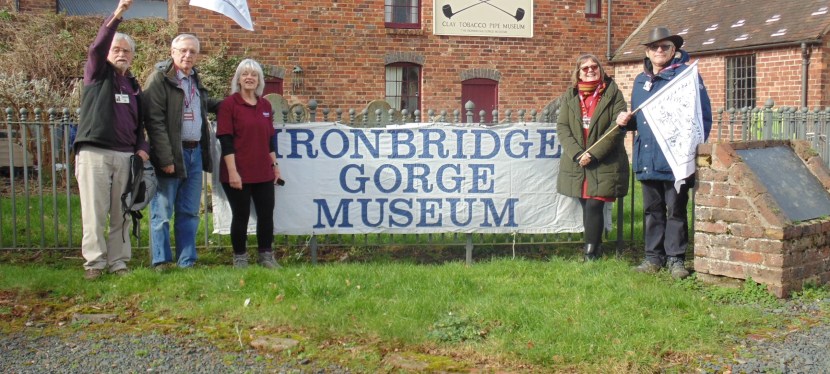
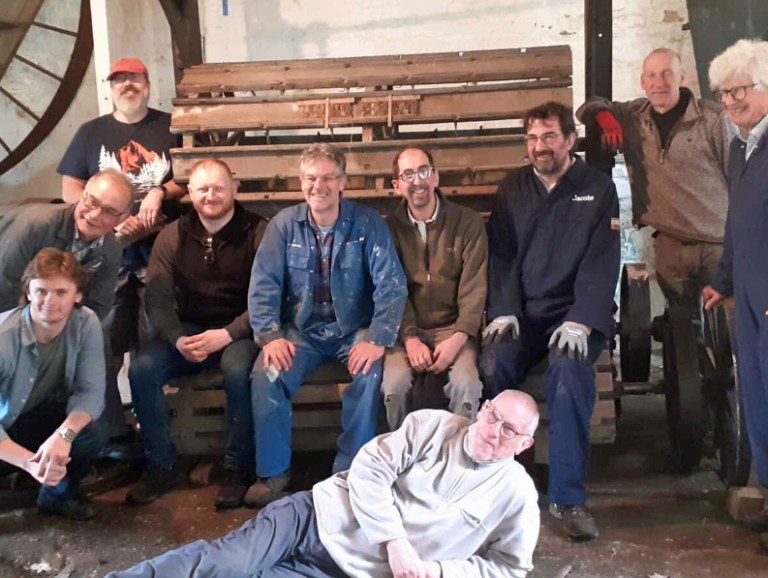
Volunteers at Stroudwater Textile Trust. Image courtesy of Stroudwater Textile Trust.

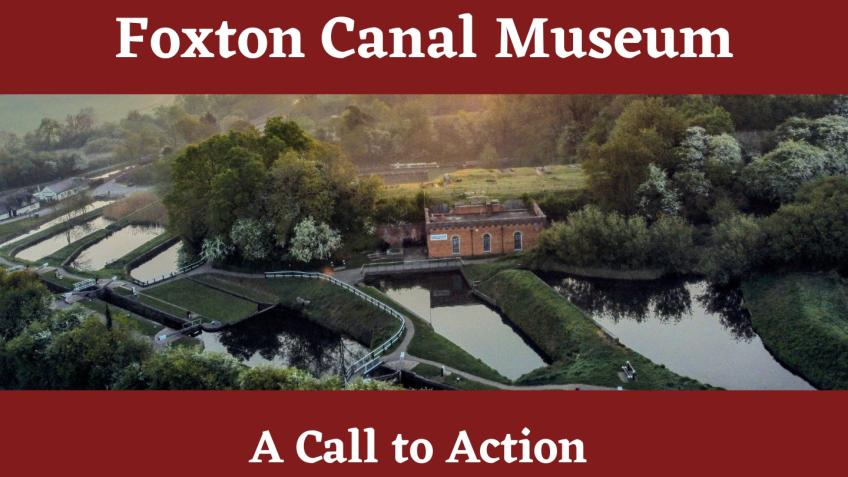
Foxton Canal Museum Launches Crowding Funding Campaign to Secure the Future of the Site

The Trustees of the Foxton Inclined Plane Trust have launched an urgent crowdfunding appeal to raise £20,000 by February so that the museum and site can open in 2026. A combination of rising costs, the long-term impact of COVID-19, and recent operational challenges—including lock closures that reduced visitor numbers this year—has left the Foxton Canal Museum, the beating heart of Foxton Locks and a vital guardian of Britain’s canal heritage, under threat. As a consequence, income has not kept pace with escalating expenses, making sustainability increasingly difficult.

The Museum tells the story of the Foxton Inclined Plane – a Victorian engineering marvel and a scheduled monument – and the people who shaped our waterways. Since its founding by the Foxton Inclined Plane Trust in 1982, the Museum has grown from a volunteer-led dream into a nationally recognized institution. It has hosted award-winning exhibitions, educational programs, and community events, becoming a hub for history, creativity, and learning.

From its humble beginnings – volunteers clearing overgrown inclines and rebuilding the boiler house – to achieving official museum status and welcoming thousands of visitors annually, Foxton Canal Museum has always been powered by passion and perseverance. Recent projects include Foxton Creates, a co-curated exhibition with local schools, and Ingenuity & Vision, exploring the 1950 Market Harborough Festival & Rally of Boats. The Museum also runs STEM workshops, artist residencies, and oral history projects, ensuring canal heritage remains relevant for future generations.

However, the Museum faces mounting financial pressure and without urgent support the Museum cannot guarantee opening in 2026.

To contribute to the Crowdfunding Appeal, and for more information about the site and the campaign to secure its future, follow this Link: https://www.crowdfunder.co.uk/p/save-foxton-canal-museum

South Wales & West England Regional Industrial Archaeology Conference (SWWERIAC) Announced for April 2026

The Worcestershire Industrial Archaeology & Local History Society is hosting the South Wales & West England Regional Industrial Archaeology Conference (SWWERIAC) on Saturday 18th April 2026 at Avoncroft Museum of Historic Buildings, Stoke Heath, Bromsgrove B60 4JR.

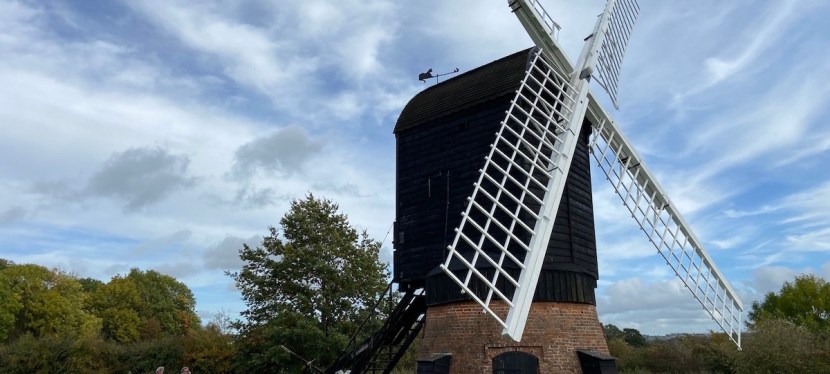
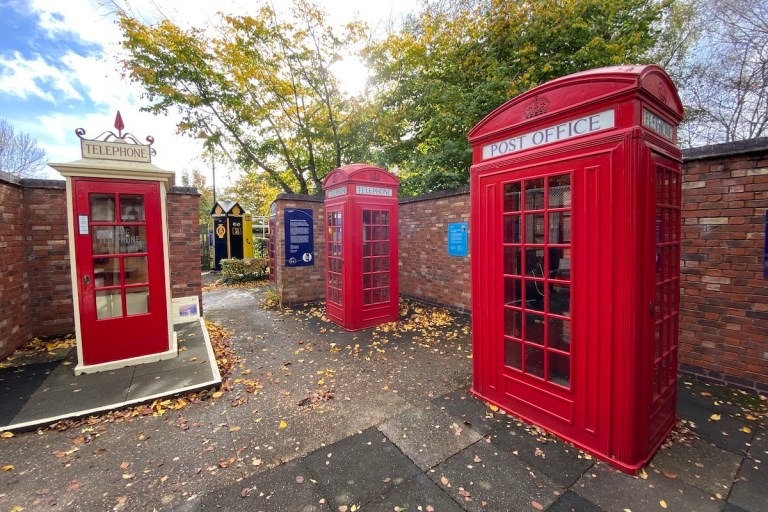
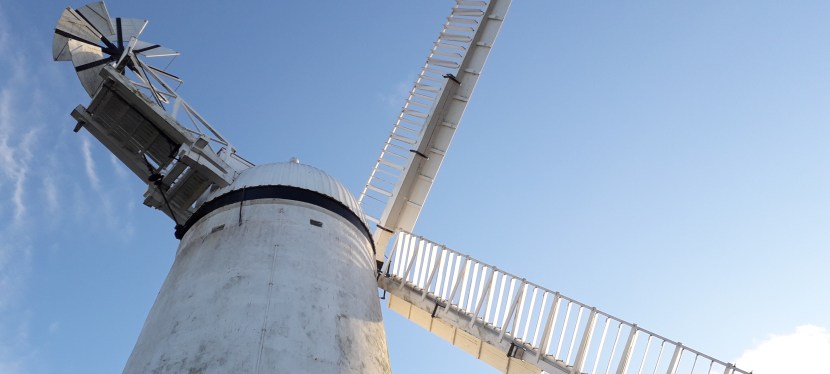
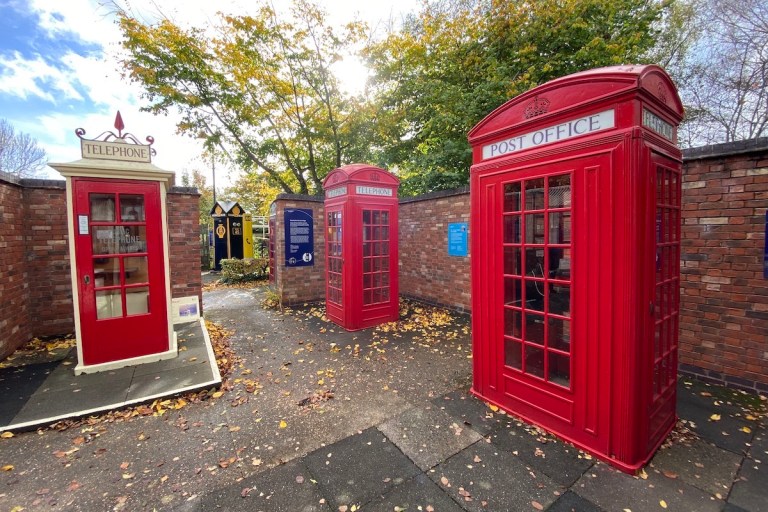
Get set for a day of engaging talks from leading speakers and a chance to explore Avoncroft’s remarkable open-air collection. The museum, home to over 30 rescued and reconstructed historic buildings spanning seven centuries, provides a unique backdrop. Highlights include the UK’s National Collection of Telephone Kiosks, working historic windmill, and a selection of timber-framed, brick, and prefabricated structures including a chain shop, nail workshop, sawmill, and icehouse. This inspiring setting promises a rich blend of learning, discussion, and heritage discovery.

Tickets cost £28 per person and include access to the museum’s entire collection, 30-minute dedicated tours, a buffet lunch including cold meats, new potatoes, crusty bread, and a selection of salads and cheese with unlimited hot and cold soft drinks plus free parking.

Society chairman Dr John Beale said “Avoncroft is home to 30 historic buildings and structures across a 19-acre site. For this reason, we have scheduled a 2-hour lunch break so that delegates can see the museum exhibits either self-guided and/or the dedicated tours of the 19th century windmill and the National Telephone Kiosk Collection. This marks a departure from the traditional arrangement of offsite visits as there is so much to see at Avoncroft.”

Get your tickets by completing an online or Microsoft Word booking form available at
https://wialhs.org.uk/swweriac2026/ or contact conference@wialhs.org.uk

Part of Avoncroft’s National Collection of phone boxes. Image corutesy of Avoncroft Musuem of Historic Buildings.

Petition Opened to Stop the Closure of the Walsall Leather Museum

A campaign has been set up to persuade Walsall Council not to close the Walsall Leather Museum. In September Walsall Council announced that Walsall Leather Museum will close next year (2026), despite a stay of execution earlier this year. They have approved plans for finding and purchasing a new town centre building for the museum and to sell off the existing museum building, itself a former leather works in Littleton Street West, to the nearby Walsall College.

The petition, which was launched at the beginning of November, accuses the council of “silently stripping away a cherished historical community asset that belongs to all of us”, and adds that “this decision is being made behind closed doors, with no meaningful public consultation and no transparency about how or when these choices were or are made. They have no formal plans to provide an alternative building or protect the museum’s historic collections.”

You can view the petition here: https://www.change.org/p/stop-the-closure-of-walsall-leather-museum?fbclid=IwY2xjawOAFPFleHRuA2FlbQIxMQBzcnRjBmFwcF9pZBAyMjIwMzkxNzg4MjAwODkyAAEeL5Bk-Bk9UQ43lgNee6A3W3BBJV7NMeeGP2WAhyHwfvmwBIOd5gplTNj7lzA_aem_0shgQFPzBOMV9TAKuQvQ2w

Museum of Making, Derby, Installs Flood Barriers

New flood defences have been installed at Museum of Making, Derby. The protective barriers have been placed inside the old Silk Mill, now the Museum of Making, which was flooded by waters from the River Derwent to a depth of 0.7m during Storm Babet in 2023.

Alex Rock, director of commercial and operations at Derby Museums Trust, said “We’re delighted to add further protection to our building, and very grateful for the support of Derby City Council’s planning team and their engineering colleagues. Both departments have been crucial in securing the relevant permissions and funding from DEFRA for this work. It adds another layer of protection to two key operational areas, which means that should a flood event occur again – and it is worth bearing in mind that Storm Babet was forecast as a once-in-a-century event for Derby – then we’ll be able to shorten the period of closure. It protects the two areas of the ground floor that are most impacted by flood events.”

As part of Derby City Council’s ‘Our City Our River’ scheme, flood defences are also to be improved around the museum. Work is underway to demolsih disused office buildings on the eastern bank of the river, close to the museum, at Stuart Street and Phoenix Street. This will allow the construction of a new flood wall, floodgates, and a riverside green area to provide a controlled corridor for flood waters fromt eh River Derwent to pass through the city.

More details here: https://www.msn.com/en-gb/news/world/derbys-museum-of-making-gets-flood-defence-boost-after-closure-cost-six-figure-sum/ar-AA1PA7v1?ocid=BingNewsSerp

and here: https://www.derby.gov.uk/environment-and-planning/regeneration-and-economic-growth/our-city-our-river/our-city-our-river-project-overview/

The Museum of the Making (the Old Silk Mill), Derby. Image copyright Dr Michael Nevell.

De Havilland Aircraft Museum is Recruiting a General Manager

The de Havilland Aircraft Museum, London Colney, is currently seeking a new General Manager due to the retirement of the present incumbent. The full time paid post offers many opportunities to the right candidate.

The Museum is the first aviation museum in the UK, established in 1959, and is dedicated to preserving the heritage of Geoffrey de Havilland and his contribution to UK Aviation history. The de Havilland Aircraft Museum is staffed mainly by volunteers.

Please apply to Tim Crichton (email tim.crichton@dehavilland museum.co.uk) for further details if interested.

Job Description attached.

AIA 9th East-West Workshop on Industrial Archaeology: Full Steam Ahead!

The East-West series of workshops aims to exchange ideas and knowledge among Western and Eastern colleagues to build a more international and diverse industrial archaeology. The activity is organised jointly by the Institute for Cultural Heritage and History of Science & Technology (USTB, China), and the UK Association for Industrial Archaeology.

The 9th East-West Wiorkshop takes as its theme the industrial archaeology of railways. Modern railways were born in Britain 200 years ago in 1825 with the opening of the Stockton & Darlington Railway (although the concept of using rails to move bulk goods around the landscape is much older). From there, they spread to the rest of the world, reducing travel and transportation times, and fostering modernisation, industrialisation and urbanisation.

Facing both continuity and continuous change (including the expansion and contraction of networks, new traction technologies, and instances of nationalisation and privatisation), in the 21st century, the railway is the most efficient and sustainable mode of transport and, particularly in the East and Global South, is expanding its tracks into the future. To honour its 200th anniversary, the 9th East-West Workshop on Industrial Archaeology travels to the railway past to examine the international circulation of treaties, technologies, materials, and people that defined the early development of railways in Eurasia.

Speakers & Talks

  • Yibing FANG (Chinese Academy of Sciences, China): “A Review of Research on China’s Early Steel Rails Heritage”
  • Paulina ROMANOWICZ (Polish Academy of Sciences, Poland): “Rediscovery of a Brickworks Narrow-Gauge Industrial Railway Tunnel in Stołczyn, Poland”
  • Arida Fitriana YASMIN (University of Groningen, Netherlands): “Follow the Tracks: Railway Heritage Management at the Ombilin Coal Mining Heritage of Sawahlunto, Indonesia”
  • Juan Manuel CANO SANCHIZ (University of Science and Technology Beijing, China / Association for Industrial Archaeology, UK): “European Early Railway Architecture in Beijing: A Perspective from Building Archaeology”

Date & Time

15 November 2025, Saturday. 10.00-12.00 (London time)

This ia free online workshop via Zoom. For more information and to book for free follow the below link:

North West Industrial Heritage Network Meeting, 17 October

The next in-person North West Industrial Heritage Network meeting will be held at the Lancashire Mining Museum, Astley, Wigan, on the 17th October, from 11am to 1pm. This will be followed, after lunch (please bring your own), by a tour of the site (2pm to 3pm). The themes for the 2025-26 IHN meetings are conservation and maintenance.

All IHN members are very welcome to attend. To book a place follow this link:

https://www.eventbrite.co.uk/e/north-west-industrial-heritage-network-tickets-1716173072859?aff=oddtdtcreator

The Lancashire Mining Musuem, which is entirely voluntary run, has origins going back to the 1970s, and first opened to the public in 1982, re-using buildings from the former Astley Pit, which closed in 1970. The museum has the last surviving headgear and winding house in the whole Lancashire coalfield. Apart from the steam winding engine and headgear, the museum also houses many exhibits, not least of which is the collection of 28 colliery locomotives, the largest collection of its type in the United Kingdom.

More details about the museum here: https://lancashireminingmuseum.org/

Grants for Two Mining Industrial Heritage Sites

Two mining industrial heriatge sites have recently received grants towards conservation and community engagement.

The headstocks at Woodhorn Museum, Ashington, has received extra money from Northumbrian County Council for the continuing conservation work at the industrial site. The £1.4m grant is in addition to earlier funds for the restoration of the site, including nearly £1m from the UK Government’s ‘Heritage at Risk’ support scheme. Further details can be found here: https://www.chroniclelive.co.uk/news/north-east-news/additional-14-million-agreed-save-32416167

The National Coal Mining Museum for England, Wakefield, has received a grant in the first round of the re-imagined Esmée Fairbairn Communities and Collections Fund. £98,561 will be used to celebrate the role of Miners’ Welfare by bringing together heritage, community, health, academic partners, and people living with marginalisation, mental and physical ill-health. This fund supports projects using museum collections to improve inclusion and equitable working with community partners. Further details can be found here: https://www.ncm.org.uk/news/funding-miners-welfare/

The headstocks at Woodhorn Museum. Image courtesy of North East Museums Development Trust.

Lancashire Mining Museum Secures NHLF Grant

The Lancashire Mining Museum at Astley, Wigan, had been awarded a grant of nearly £200,000 from the National Lottery Heritage Fund. The funding will be used to safeguard the ‘unique’ winding house of the former Astley Green Colliery in Wigan. The site’s 98ft high headgear is a prominent feature of the surrounding landscape.

The museum has also secured additional contributions from the Association for Industrial Archaeology, the Arts Council, Awards for All, the Pilgrim Trust, and Wigan Council, bringing the grant total to over £360,000. Sunk in 1908 to exploit coal reserves in the south Lancashire Coalfield, the colliery had a lifespan of only 62 years, finally closing in 1970. Because of its short and relatively recent history, a considerable number of written and photographic records have survived. The site includes a 98ft winding headgear, winding engine, colliery cottages, and a miner’s canteen.

Further details about the museum here: https://lancashireminingmuseum.lexington-staging-site.co.uk/visit-us

The Headgear at the Lancashire Mining Museum (Astley Pit). Image copyright Dr Michael Nevell.