Heritage and the Creative Industries – New ‘Heritage Creates’ Report

The Heritage Alliance have launched a new Heritage Creates report, updating work they did in the 2019 report Inspiring Creativity, exploring the relationship between the heritage sector and the creative industries in England.

Since the publication of Inspiring Creativity, the creative industries have continued to flourish, capturing the attention of the public and policymakers alike. Furthermore, the evidence base for heritage’s integral contribution to these industries has grown. The Heritage Alliance arges that the continued political and economic relevance of the creative industries under a new government, alongside the emergence of new technologies and bolder commitments to inclusion, makes 2025 a timely opportunity to update the 2019 report. 

The 2025 Heritage Creates report is organised into five thematic chapters, each of which focuses on a particular dimension of the relationship between the heritage sector and the creative industries. The themes are accompanied by case studies demonstrating how heritage delivers on each of these themes:

  • Heritage as a Host
  • Heritage as a Muse
  • Heritage as a Creative Practice
  • Innovative Partnerships
  • Inclusive Partnerships

Download the Heritage Creates report here: https://www.theheritagealliance.org.uk/wp-content/uploads/2025/03/THA_Heritage-Creates_2025.pdf

The 2019  Inspiring Creativity, Heritage and the Creative Industries report summarised available evidence and featured case studies showcasing partnerships from the breadth of the heritage sector and creative industries to highlight the mutual benefits of cross-sector working.


Museum Renewal Fund Opens & Timetable for MEND Round 5

Arts Council England (ACE) has opened a new £20 million fund to support local authority museums. ACE have also published the timetable for Museum Estate Development Fund (MEND) Round five.

The Museum Renewal Fund targets museums owned and directly maintained by local authority funding, or with a governance link to a local authority. The programme is intended to help museums meet the shortfall between operating costs and income throughout their 2025-26 budget, where the shortfall results in reduced programming, footfall, and days open to the public. 

Museums can apply for a minimum of £10,000 up to a maximum of £1million. The application deadline is 22 May with outcomes expected by 26 June latest. The funding period runs from August 4 to 31 January 2026.

ACE have also released the timetable of Round 5 of the Museum Estate Development Fund (MEND). This capital fund targets non-national Accredited museums and local authorities based in England. It covers funding to undertake vital infrastructure and urgent maintenance backlogs which are beyond the scope of day-to-day maintenance budgets.

The total fund is worth £25million and grants range from £50,000 to £5million. Expressions of Interest for Round 5 open at 9am on Monday 12 May 2025 with a deadline of Thursday 5 June.

For further details of both fund ing streams, including the application processes, follow this link: https://www.artscouncil.org.uk/our-open-funds

Mills Archive Trust Archival Skills Webinars

On 24 May and 7 June, between 2:00 pm and 4:00 pm, the Mills Archive Trust will be hosting a two-part webinar series covering the fundamental skills needed to protect and share archival records.

For over two decades, the Trust’s UK accredited archive has preserved the history of the traditional and modern milling industry. They want to share these skills, whether you are an individual collector or part of an organisation.

The first session will cover how to organise and catalogue archival records. The second session will help you preserve them, including old documents or digital files, from decay and make them accessible online. To join the Caring for Your Collection webinars and for more information, visit new.millsarchive.org/caring-for-your-collection/. For more information, email friends@millsarchive.org.

Marsh Awards for 2025 Now Open

The Council for British Archaeology is partnering with the Marsh Charitable Trust in delivering this year’s Marsh Community Archaeology Awards. The deadline for the Awards is noon on Monday 26 May 2025. The Trust supports organisations and people who make a difference within the charity sector. The Marsh Community Archaeology Awards celebrate the outstanding contributions of these people who are committed to social, cultural, and environmental causes. The Awards have two categories.

• Community Archaeologist of the Year – This award recognises an individual volunteer or professional who is going above and beyond their role to contribute to community archaeology.

• Community Archaeology Project of the Year – This award recognises and promotes the results of research and/or fieldwork led by community groups which have made a substantial contribution to knowledge and wellbeing.

Museum professionals and projects that work with communities are eligible, which of course includes industrial heritage sites. You can find out more about the upcoming awards here:

https://www.archaeologyuk.org/our-work/archaeology-awards/the-marsh-community-archaeology-awards.html

The Marsh Charitable Trust was founded in 1981 with the sum of £75,000 by its current Chairman, Mr Brian Marsh OBE. His aim was to create a sustainable way to give something back to society, by supporting the organisations and people who are making a difference, as best he could. From the outset the Trust has aimed to create long-standing relationships with the organisations it supports and partners through both its principal areas of work; the Grants Programme and the Awards Scheme. The Trust supports around 350 charities every year through the Grants Programme and gives around 80 different Awards to individuals and groups from across the charity sector, who make a difference to a cause that they believe in.

Adapting to Net Zero on Industrial Heritage Sites Online Seminar, May 2025

The Industrial Heritage Support project is running a free online seminar on 22 May 2025 focussing on climate change and Net Zero. The seminar is designed to give an overview of Net Zero adaptation strategies on industrial heritage sites in England. This is a follow-up seminar from an event on climate change and industrial heritage sites run in 2023.

The seminar will include a short presentation from Historic England covering their latest research and advice on reaching Net Zero in the Heritage sector. This will be followed by three industrial heritage site case studies from Cromford Mills, the National Mining Museum in Wakefield, and the Ironbridge Gorge Museum Trust discussing practical and future steps as these sites to achieve Net Zero. The seminar will finish with a discussion and questions.

The seminar is free and will run from 10:30am to 12 noon. To book via Eventbrite click here

Discovering the Industrial Revolution in Essex: 26 April 2025

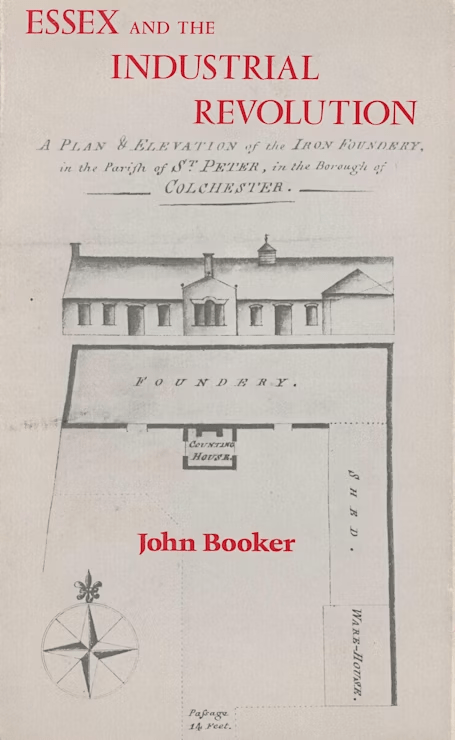
In 1974 Essex Record Office published John Booker’s ground breaking Essex and the Industrial Revolution. This highlighted the fact that significant industrial activity was going on in Essex, and not just those areas of the country traditionally associated with the Industrial Revolution, such as Ironbridge. To mark the 50th anniversary of its publication, Essex Record Office is running a series of short talks on various aspects of the industrial past of the county as well as celebrating this significant anniversary.

This event is run in conjunction with the Essex Society for Archaeology & History, Essex Industrial Archaeology Group, and Anglia Ruskin University. It is hoped that John Booker will be able to present one of the talks.

To review the programme and book form, follow this link: https://www.eventbrite.co.uk/e/discovering-the-industrial-revolution-in-essex-tickets-1217710758659?aff=erelexpmlt

English Heritage Hunting for Shrewsbury Flaxmill Bell as Site Opens to the Public

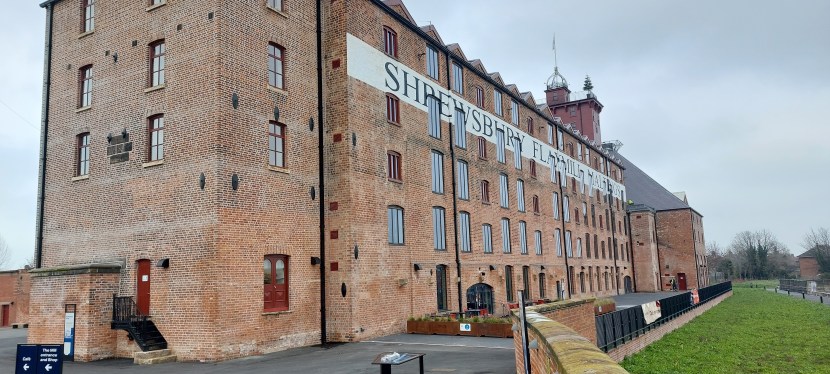
As English Heritage prepares to welcome visitors to the Flaxmill Maltings building in Shrewsbury, Shropshire, a hunt for the missing bell has been launched. Matt Thompson, the curatorial director of English Heritage, commented that “we believe the bell went missing in the late 1980s or early 1990s, when Shrewsbury Flaxmill Maltings was left derelict. Whilst it is possible that the bell could have been melted down, it is more likely that someone took it as a souvenir of this imposing, historic building which – at the time – looked close to ruin”

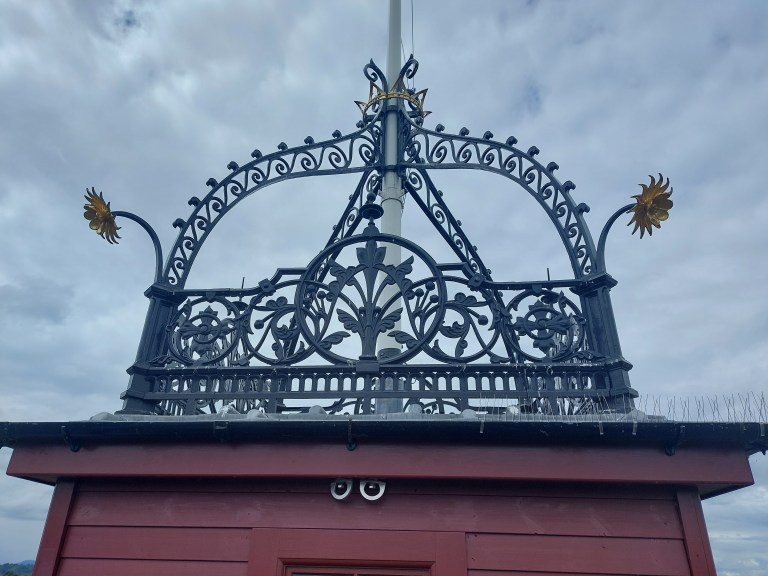
The empty bellcoate at Shrews Flaxmill Maltings. Image copyright Dr Michael Nevell.

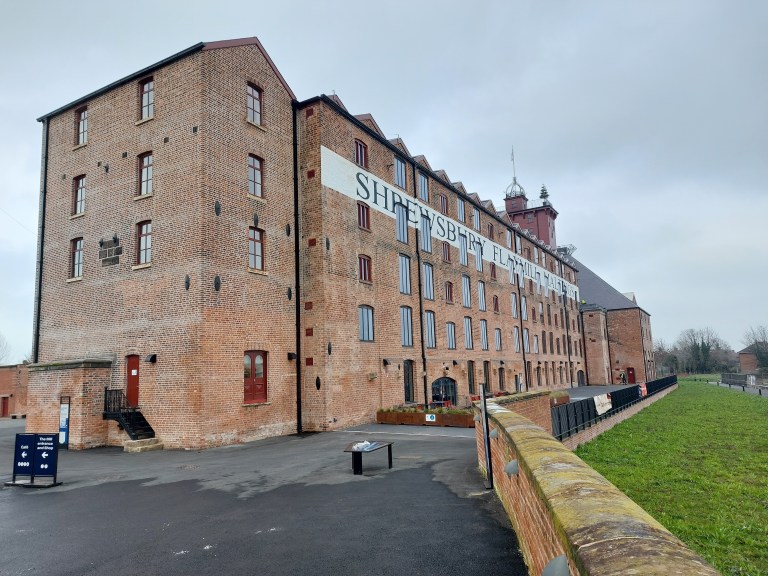
Shrewsbury Flaxmill Maltings is known as the grandparent of the skyscraper, the building being the world’s first multistorey, iron-frame building, with the design paving the way for modern high-rise buildings. The site opened in 1797 as a flax mill and then, from 1897 to 1987, was used as a maltings. It also served as a temporary army training unit and barracks during the second world war. A third of the 800 workers at the flax mill were under 16 and some as young as nine. Shrewsbury itself was too small to provide that number, so children were brought in from as far afield as London and Hull, mostly from the workhouses. Often orphans, the children were given housing, food and clothes but not paid wages. The missing bell would have called the children in from the apprentice house nearby.

Originally operated by a pull rope, the bell changed to an electric chiming mechanism after the second world war, but was lost when the building was left derelict after the closure of the business in 1987. Believed to be around 60cm (24in) high, the bell is cast with the year “1797” on it. The bellcote has been restored but remains, for the moment, empty.

Shrewsbury Flaxmill Maltings opened on 1st April 2025 as English Heritage’s first new paid-for site in 21 years.

Morte details here: https://www.english-heritage.org.uk/about/search-news/shrewsbury-flaxmill-maltings-bell-return-appeal/

Shrewsbury Flaxmill Maltings is open to the public as an English Heritage site from April 2025. Image copyrigth Dr Michael Nevell.

King Edward Mine Museum Looking for More Volunteers Ahead of 2025 Season

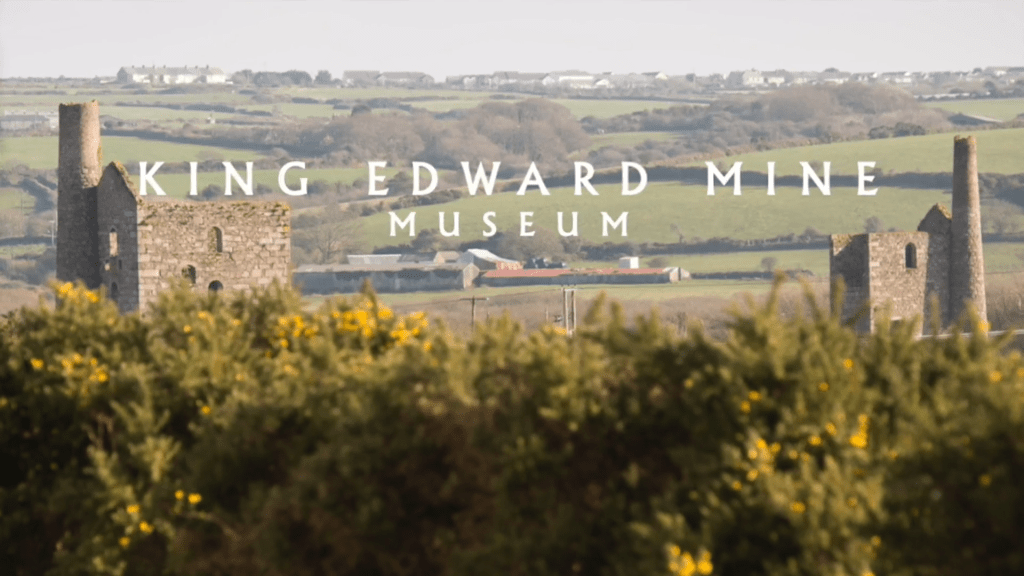
King Edward Mine Museum (KEM), a volunteer-led charity within the UNESCO Mining World Heritage Area of Cornwall, is looking for more tour guides when it re-opens for the new season on 20 April.

The site saw a significant rise in visitor numbers last year, many of whom travelled from overseas to explore the mine complex. The museum, which is dedicated to sharing the history of mining on the Great Flat Lode, and is Grade II* listed, lies in the village of Troon, near Camborne.

The mine tells the stories of Cornish miners and maintains a collection of historic mining equipment, including an operational Cornish tin mill, and a Holman winding engine. Originally worked under the name of Old Tye it was opened in 1844 together with Great Condurrow about 300m to the north, finally closing in 1921. However, the surface buildings continued in use for the teaching of mining, ore dressing, and surveying skills until 1974. In 1987 a volunteer group was formed with the aim of conserving the site as an educational resource for the future and the local community. 

If you would like to volunteer as a museum guide or help in the reception area in 2025, follow this link for more details: https://www.kingedwardmine.co.uk/about/volunteering

National Trust in Talks to Run Heartlands Industrial Heritage Site

The National Trust, Cornwall Rural Community Charity, and Cornwall Voluntary Sector Forum are in discussions with Cornwall Council over the future of the Heartlands mining heritage site at Pool in Cornwall.

The site opened in 2012 after more than £20m in lottery funding was used to regenerate the derelict mining area and retsore the listed mining pumping engine house and surrounding buildings as a visitor attraction with retail units. It was run by the Heartlands Trust, and leased from Cornwall Council, before it ran into financial difficulty, closing in January 2024. The Trust was wound up and the Council has took over the maintenance of the site, and has been seeking a partner to lease the entire site from it.

The National Trust said: “The National Trust, with partners, Cornwall Rural Community Charity (CRCC) and Cornwall Voluntary Sector Forum (VSF) are in discussions with Cornwall Council to look at how a sustainable future could be secured for Heartlands, an important cultural heritage and community site in Cornwall.”

Further details here: https://www.falmouthpacket.co.uk/news/25018765.national-trust-talks-heartlands-cornwall-lease/

https://www.bbc.co.uk/news/articles/c8e79608rg1o

Walthamstow Pumphouse Museum and Markfield Beam Engine Announce Merger

Walthamstow Pumphouse Museum and Markfield Beam Engine and Museum have merged under a new umbrella organisation, the Heritage and Communities Trust. The merger, which was finalised on 31st January 2025, brings together two of Greater London’s well-known industrial heritage sites.

Both museums will retain their individual names and distinct identities while benefiting from shared resources, expertise, and a unified governance structure. This strategic partnership creates the largest dedicated industrial heritage charity within Greater London in terms of public benefit and multi-site operation.

The flywheel of the pumping engine at Markfield. Image courtesy of Heritage & Comunities Trust.

The merger builds upon years of collaboration between the two listed Victorian-era sewage pumping stations, which are located approximately 45 minutes apart on foot along the River Lea. Both museums will continue to offer free entry to visitors, maintaining their commitment to accessibility and community engagement. “By joining forces, we’re creating a stronger, more resilient organisation that can better preserve and celebrate our shared industrial heritage,” said Abdullah Seba, Chief Executive of the Heritage and Communities Trust. “Our visitors will benefit from enhanced programming, improved facilities, and a more comprehensive understanding of London’s industrial past.”

The newly formed Heritage and Communities Trust will oversee both museums as well as two attractions at the Walthamstow Pumphouse Museum: The Tool House (a community maker space) and Supperclub.tube (a pop-up dining experience in a decommissioned Victoria Line carriage), with plans for further growth in the future. The Board of Trustees for the Heritage and Communities Trust includes representatives from both original museums to ensure continuity and balanced governance. Both museums will remain free to enter, continuing their position as the only free-entry industrial heritage museums in Greater London.

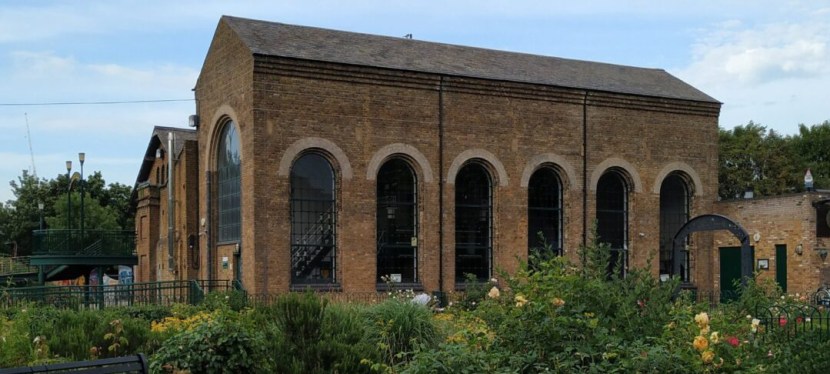
Walthamstow Pumphouse was built for Walthamstow Urban District Council and extended in 1896 to accommodate the current engine. It was closed around 1970. The museum opened in 1997 when a group of local enthusiasts came together to restore the Grade II listed Marshall engines and form the Friends of the Pumphouse. Markfield Beam Engine was built by the Tottenham Local Health Board in the 1880s and began its working life in 1888. It closed in 1964. In 1984 a Trust took on responsibility for the engine. In 2007 Haringey Council regenerated Markfield Park and restored the Grade 2 listed Engine Hall. The Trust restored the beam engine to full working order in 2008.

The Walthamstow Pumphouse Museum is open every Sunday from 10:30 am to 16:00 pm. Visit the website here. Markfield Beam Engine is open on selected Sundays and Bank Holiday Mondays. Visit the website here.

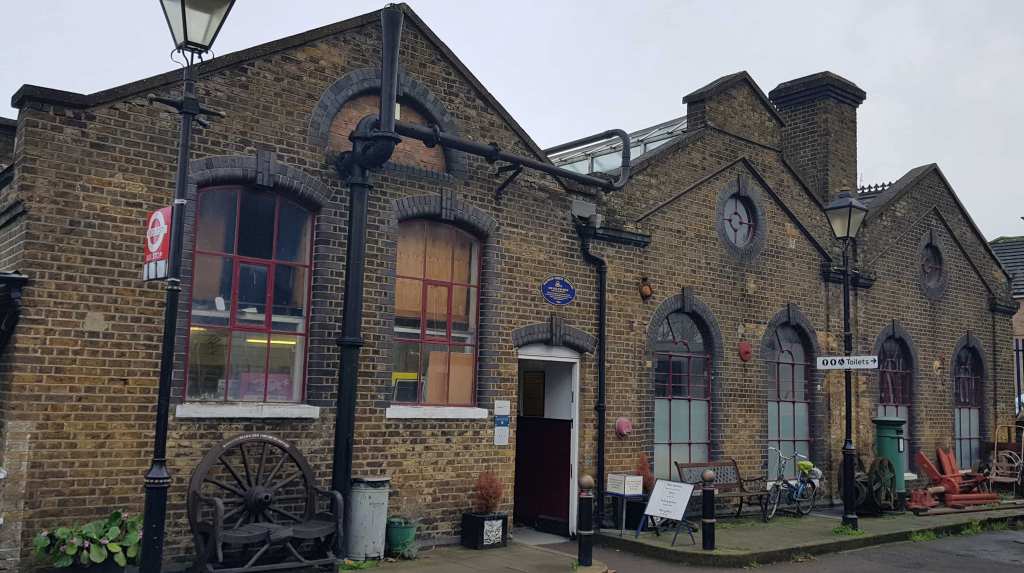
The Walthamstow Pumphouse. Image courtesy of Heritage & Communities Trust.