Historic England Technical Tuesday Webinar: Chain Bridge Conservation, 25 November & 9 December

Historic England’s next free Technical Tuesday: Technical Conservation Webinar takes place tomorrow, 25 November, from 1300 – 1400 looking at the historical and technical challenges associated with the refurbishment of the Union Chain Bridge. To book follow this link: https://historicengland.org.uk/education/training-skills/training/webinars/technical-tuesdays/.

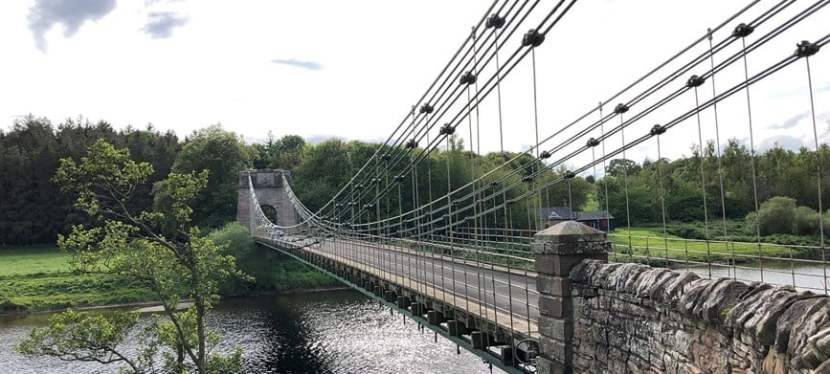
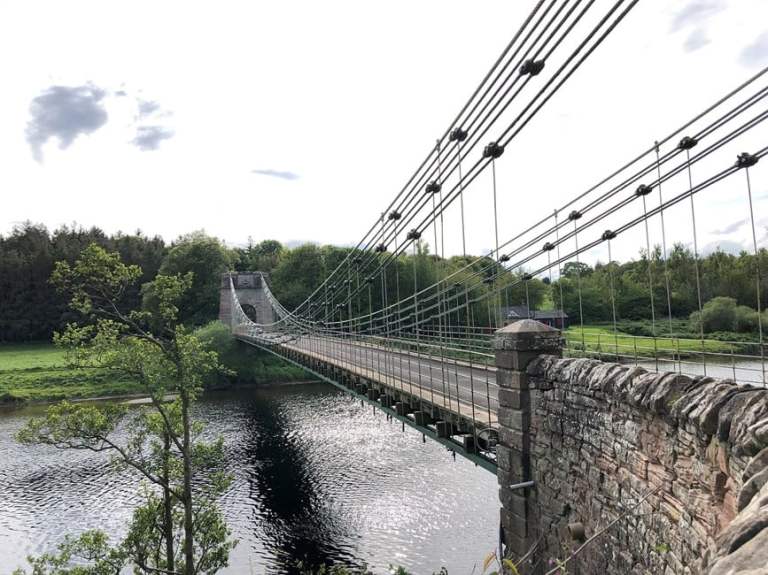
Opened in 1820 and listed Grade I (https://historicengland.org.uk/listing/the-list/list-entry/1042214), the Chain Bridge is the world’s oldest vehicular bridge and connects England and Scotland spanning the River Tweed. A second webinar dealing with the refurbishment scheme will be held on the 9 December 2025.

Union Chain Bridge, spanning the River Tweed. Copright Leon Walsh.

Sandfields Pumping Station Receives Heritage Engineering Award

The Institution of Mechanical Engineers (IMechE) has awarded Sandfields Pumping Station, run by the Lichfield Waterworks Trust, with one of its Heritage Engineering Awards. This prestigious honour celebrates Sandfields’ vital role in bringing clean water to the Black Country and advancing public health during Britain’s industrial period.

John Wood, chairman of the IMechE Heritage Awards committee noted that: “Sandfields Pumping Station is not just another pumping station”, whlst Katy Shore-Kapsis, chair of the Lichfield Waterworks Trust, added: “This award is a huge honour for Sandfields and for everyone who has dedicated time and passion to keeping its legacy alive.

The plaque, unveiled in October 2025 by Matt Garside President of the IMechE, reads: “The Sandfields Pumping Station was the first built for the South Staffordshire Waterworks Company to provide clean water to the industrial towns of the Black Country. The Cornish beam engine, operational from 1873 to 1927, could pump up to 2 million gallons of water per day.”

The Lichfield Waterworks Trust now cares for the site and its volunteers carry out restoration projects as well as running guided tours and educational programmes. They are currently raising funds to get the Cornish Pumping Engine working again. Further details here: https://lichfieldwaterworkstrust.co.uk/

Sandfields Pumping Station, Litchfield. Image courtesy of Litchfield Waterworks Trust.

Grants for Two Mining Industrial Heritage Sites

Two mining industrial heriatge sites have recently received grants towards conservation and community engagement.

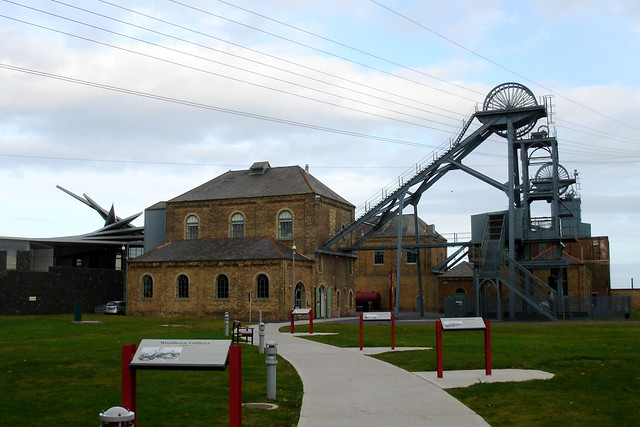
The headstocks at Woodhorn Museum, Ashington, has received extra money from Northumbrian County Council for the continuing conservation work at the industrial site. The £1.4m grant is in addition to earlier funds for the restoration of the site, including nearly £1m from the UK Government’s ‘Heritage at Risk’ support scheme. Further details can be found here: https://www.chroniclelive.co.uk/news/north-east-news/additional-14-million-agreed-save-32416167

The National Coal Mining Museum for England, Wakefield, has received a grant in the first round of the re-imagined Esmée Fairbairn Communities and Collections Fund. £98,561 will be used to celebrate the role of Miners’ Welfare by bringing together heritage, community, health, academic partners, and people living with marginalisation, mental and physical ill-health. This fund supports projects using museum collections to improve inclusion and equitable working with community partners. Further details can be found here: https://www.ncm.org.uk/news/funding-miners-welfare/

The headstocks at Woodhorn Museum. Image courtesy of North East Museums Development Trust.

Lancashire Mining Museum Secures NHLF Grant

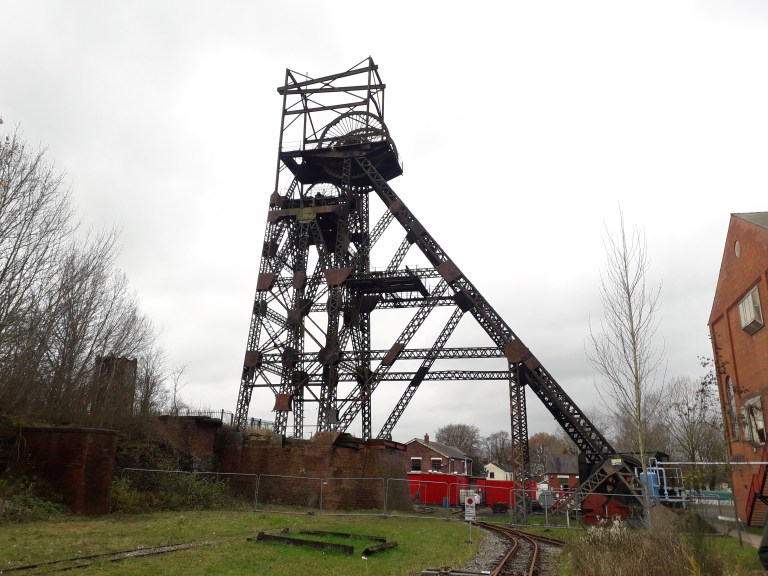
The Lancashire Mining Museum at Astley, Wigan, had been awarded a grant of nearly £200,000 from the National Lottery Heritage Fund. The funding will be used to safeguard the ‘unique’ winding house of the former Astley Green Colliery in Wigan. The site’s 98ft high headgear is a prominent feature of the surrounding landscape.

The museum has also secured additional contributions from the Association for Industrial Archaeology, the Arts Council, Awards for All, the Pilgrim Trust, and Wigan Council, bringing the grant total to over £360,000. Sunk in 1908 to exploit coal reserves in the south Lancashire Coalfield, the colliery had a lifespan of only 62 years, finally closing in 1970. Because of its short and relatively recent history, a considerable number of written and photographic records have survived. The site includes a 98ft winding headgear, winding engine, colliery cottages, and a miner’s canteen.

Further details about the museum here: https://lancashireminingmuseum.lexington-staging-site.co.uk/visit-us

The Headgear at the Lancashire Mining Museum (Astley Pit). Image copyright Dr Michael Nevell.

Historic England Publish Report on the Local Listing of Buildings

In 2019, the Ministry of Housing, Communities & Local Government (MHCLG) announced a campaign to develop or revise local heritage lists across England. Historic England’s new overview advocates for local heritage listing as a proactive, locally-led, tool that can support place-shaping and community empowerment, helping to deliver high-quality, unique places to live and work. The new report is intended to support Historic England and Central Government in developing policy and guidance to support Local Planning Authorities (LPAs), and others, in the production and revision of local heritage lists.

Historic England defines a local heritage list as ‘a list or register of assets (primarily but not exclusively historic) which are of importance to a particular place and the community who live and work there. Buildings included on local heritage lists are classified in the planning system as ‘non designated heritage assets’ (NDHAs).’ The concept of such local heritage lists goes back to the 1930s, often as a bottom-up approach to recognising heritage through the local community. They have recieved greater prominence in the last decade as one of the ways in which NDHAs can be formally identified, so that their significance can be taken into account in planning applications affecting the asset, or its setting.

With thousands of surviving industrial buildings across England not formally protected through listed building legislation, local listing provides an effective way of recognising these buildings’ importance to their local communities.

Download the report here: https://historicengland.org.uk/research/results/reports/38-2025?local

Science and Industry Museum in Manchester to Add New Galleries as Transformation Plan Extended 

Manchester’s Science and Industry Museum has revealed plans for new permanent galleries and a new railway visitor experience as part of the next phases of its redevelopment.  The museum plans to create a new Wonderlab gallery, similar to that in other Science Museum Group museums, such as the Science Museum in London and the National Science and Media Museum in Bradford.

The new gallery will explore Manchester’s history of science and invention, drawing on the architectural features and history of the site to reflect the city’s creativity and innovation. It will be aimed at a target audience of ages four to ten, plus access for early years. An open competition to design the gallery has already opened.

In addtion, feasibility work will begin this year on a new free Technicians interactive gallery for 11-16-year-olds. The museum said it is looking to ascertain whether there is potential for the gallery to  open towards the end of the decade. It would be housed within the arches of the museum property’s viaduct, and would mark the first time this space would be used as public galleries.

The museum is also planning a new gallery and static rail experience at the 1830 station, which is set to re-open in 2030 in time for the 200th anniversary of the opening of the Liverpool & Manchester Railway.

Finally, feasibility work is also set to commence “in the near future” on landscaping and improving access in and around the museum’s Lower Yard, to create a new science playground and open the museum site, providing more access from other Manchester locations and attractions. 

Phase One of the Museum’s Transformation Plan, improvements and extensive repairs to the Power Hall, will be completed this summer. By the end of 2025, half of the museum’s site will have been restored over the last five years, following an investment of more than £40m from national government, charitable trusts and foundations, and philanthropists. The second phase will be completed in 2027.

For more details follow these links:

https://www.scienceandindustrymuseum.org.uk/about-us/we-are-changing/revolution-in-progress

https://www.museumsassociation.org/museums-journal/news/2025/03/science-and-industry-museum-plans-wonderlab-gallery-as-it-extends-revamp/#

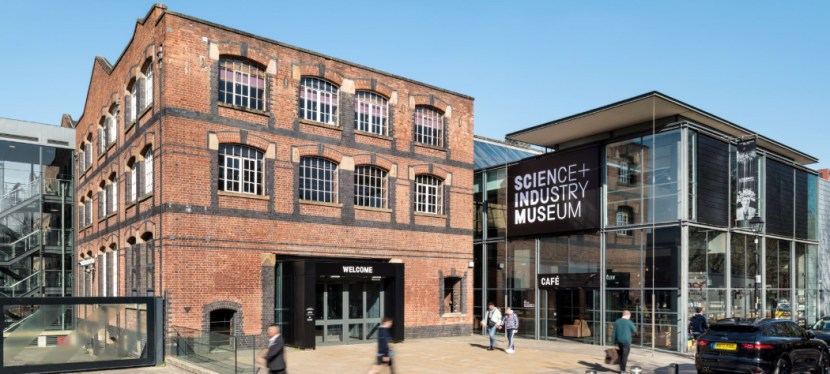
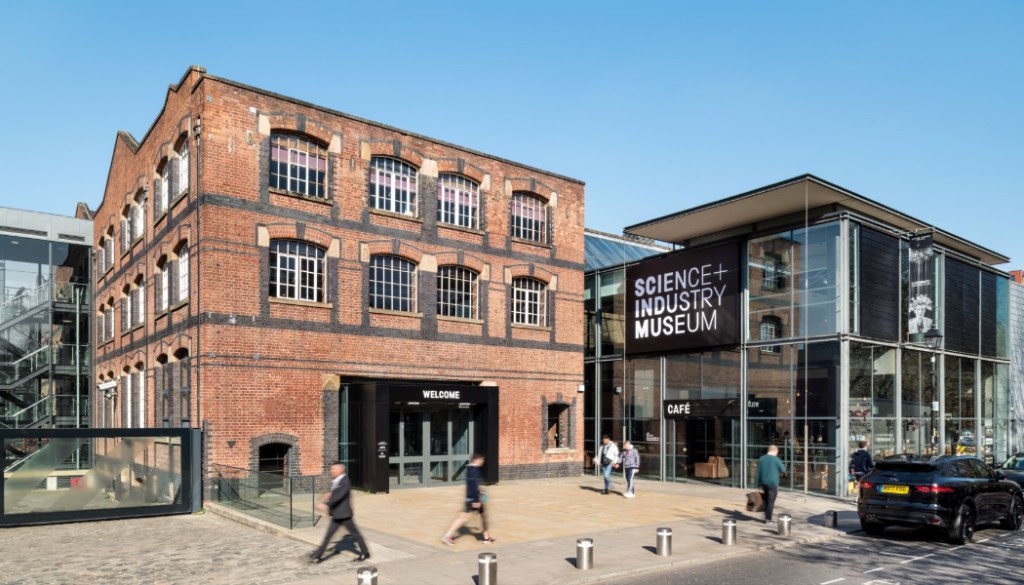
The entrance to the Science and Industry Museum, Manchester. Image courtesy of
The Board of Trustees of the Science Museum.

National Mills Weekend 2025: 10 & 11 May

This year, SPAB’s National Mills Weekend will take place on 10 and 11 May. It will focus on the way that mills past and present have been recorded in pictorial form with the theme ‘Mills in Time’. 

The weekend is an annual celebration promoted by the Mills Section of SPAB.  Across the country hundreds of mills – including some not normally open to the public – will be taking part. 

This year, SPAB are encouraging everyone (owner, volunteer, neighbour, or visitor) to share and display images of participating mills. These can be recent photographs or artworks (including embroideries, collages, films, or videos), or paintings, or drawings, and even old maps, postcards, or posters. To share your images go to the #NationalMillsWeekend Facebook page. Please remember to credit the copyright owner and photographer where known. 

To check whether your local wind or water mill is opening during the weekend click on the individual site website or follow this link for further details: https://www.spab.org.uk/whats-on/events/national-mills-weekend-2025

SPAB-owned Fladbury Mill and Kibworth Harcourt Post Mill, which aren’t normally open to the public, will also be open for the weekend. To book go to the SPAB website.

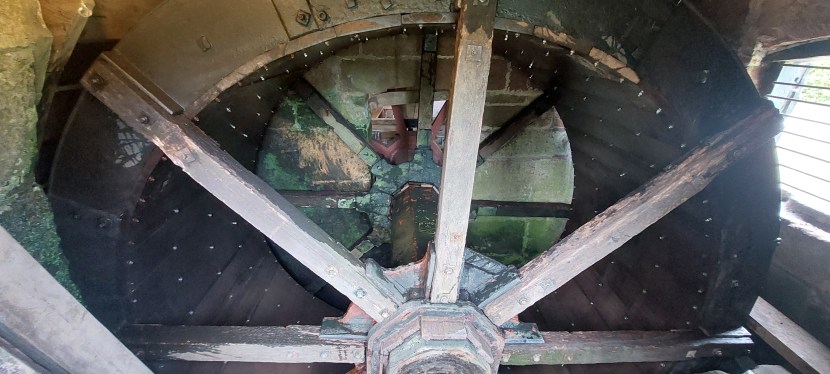
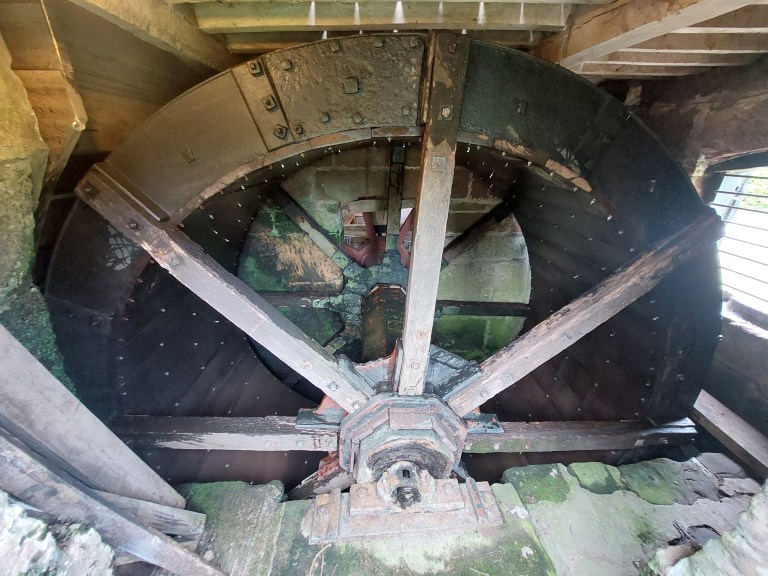
The waterwheel at Stretton Watermill, Cheshire. Image copyright Dr Michael Nevell.

Dean Heritage Centre & Cambridge Museum of Technology Recieve NHLF Grants

The National Lottery Heritage Fund has granted £164,000 for the Dean Heritage Centre’s “Investing in the Past, Future, and Present” project, and a grant of £99,932 to the Cambridge Museum of Technology for their ‘Full Steam Ahead’ project.

Horizontal stam engine, Cambridge Museum of Technology. Copyright: Dr Michael Nevell

Cambridge Museum of Tehcnology’s grant will fund the ‘Full Steam Ahead’ project. This will see two new heritage roles recruited to expand the Museum’s capacity for both general opening, and for increased education and community outreach work. The funding will also re-invigorate existing space in the Engineer’s House to be used as a space for community hires. Building on existing partnerships within the local Abbey community, the Museum will offer more opportunities for engaging with industrial heritage and their collections, through events and workshops. The Museum will be able to expand its schools programme, reaching more young people and engaging with teachers to form lasting links.

Dean Heritage Centre. Copyright: Dr Michael Nevell

The Dean Heritage Centre, which reflects the history of the Forest of Dean, is based in a listed cornmill and will use its grant for the “Investing in the Past, Future, and Present” project, which aims to “transform the museum”. Volunteers, local groups and schools will be able to take part in the project through “citizen science” activities, including sampling water that runs through the site. “We want to have new galleries, develop the site, and actually make it a viable place for the future,” Mark George, centre manager, said.

Further details about the Dean Heritage Centre here: https://www.deanheritagecentre.org/

Further details abou the Cambridge Msuem fo Technology’s plans can be found here: https://www.museumoftechnology.com/full-steam-ahead

Canal & River Trust Launch Emergency Appeal After Winter Storms Damage

The Canal and River Trust, who cares for a 2,000-mile network of canals and navigable rivers in England and Wales, has launch an emergency appeal for funds to help the network recover from the ‘devastating and widespread’ damage inflicted by a series of winter storms in late 2024 and early 2025.

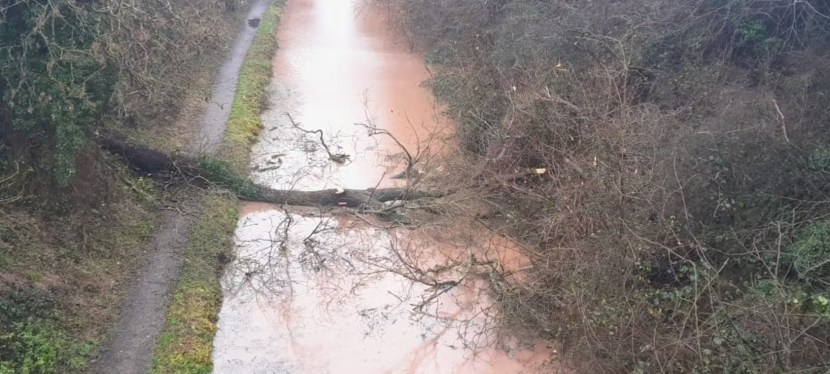
The Trust reports that Storm Bert’s high winds and torrential rain left boats adrift and flooded locks across the country in December 2024. Shortly after, at the beginning of January 2025, high winds and flooding risks returned as Storm Darragh hit the UK. This triggered a rare Red Warning from the Met Office, and felled over 400 trees along the network, blocking navigable waterways, damaging lock gates, and causing landslips. The charity estimates that it will cost hundreds of thousands of pounds to repair the canals and rivers affected.

Storms and flooding not only destroy towpaths and damage historic locks. They can also pollute and damage the habitats of the wildlife in and around the canal network. CRT teams have been working around the clock to deal with the impacts of these storms but the charity needs further funds to deal with future storm events.

For more details on how to donate online, follow this link: https://canalrivertrust.org.uk/support-us/our-campaigns/perfectstorm

Landslip on the the Huddersfield Narrow Canal in Saddleworth as a result of Storm Darragh, Janaury 2025. Image coutersy of Canal & River Trust.

Peak District Mining Museum, Museum of Rail Travel & Port Sunlight Receive AIM Funding

AIM (the Association of Independent Museums) has announced (December 2024) the latest recipients of their collections care and conservation grants, funded by the Pilgrim Trust. 20 organisations were offered grant funding totalling £63,750.50.

The Peak District Mining Museum has been offered funding for a conservator-led collections care audit to provide a report on the display and store environment and offer recommendations on how to improve collections care.

The Museum of Rail Travel/ Vintage Carriages Trust has been awarded £3,000.00 for conserving and making publicly accessible the Bradshaw map, whilst the Port Sunlight Village Trust has been awarded a grant of £7,325 for the Conservation of the Gladstone Theatre Plaque.

In 2025 AIM will be offering a new grant called ‘Museum Fundamentals’, combining the familiar conservator support offered by the Pilgrim Trust funded grants, with new funding to support back of house activity and mentoring for larger projects. To hear about the forthcoming AIM Museum Fundamentals grant application process, and news on all other AIM activity, sign up for their newsletter here:  weekly eNews.