Welcome to the Industrial Heritage Networks and Support website. This site is maintained and updated by the Ironbridge Gorge Museum Trust who run the project and the networks. We aim to support industrial heritage in England through networking, information exchange, guidance, and training. Please explore the website and please contribute! For more information you can … Read more Welcome to the IHNs website!
The 2026 Heritage Open Days will take place from 11 to 20 September. Heritage Open Days is England’s largest community-led festival of history and culture, involving thousands of local volunteers and organisations. Every year in September it brings people together to celebrate their heritage, community, and history. Stories are told, traditions explored, and histories brought to life. All the events are free.
269 industrial heritage sites in England took part in Heritage Open Days (HoD) 2025, offering guided walks, talks, and exhibitions as well as hands on experiences. If you would like to take part then the HoD website has full details on how to list a site, event, and/or acitvity.
For further details on how to take part as an event and/or site organiser follow this link: Get involved
To celebrate Mills in 2026 the Society for the Protection of Ancient Buildings (SPAB) is producing a compilation of individual mills’ histories. The SPAB Mills Section wants to create a new and comprehensive picture of mills of all types throughout the UK, Ireland, and Europe and are calling for submissions from owners, volunteers, millwrights, or anyone interested in the history of a mill or a linked group of mills, to write about how they evolved.
SPAB would like to understand a mill’s origins and how the structure and uses have changed over its lifetime. This can be a post mill, smock or tower mill, a watermill or tide mill, or an industrial mill. The mill can be located in the UK, Ireland or Europe. The entry can be about mills stil existing, derelict, or lost.
The chosen entrants will receive a copy of the published booklet, which will be available at SPAB Mills Section events. A digital version of selected submissions will also be available.
The deadline for submissions is Friday 1 May 2026. All entries to be submitted via email to: nmwsubmissions@spab.org.uk
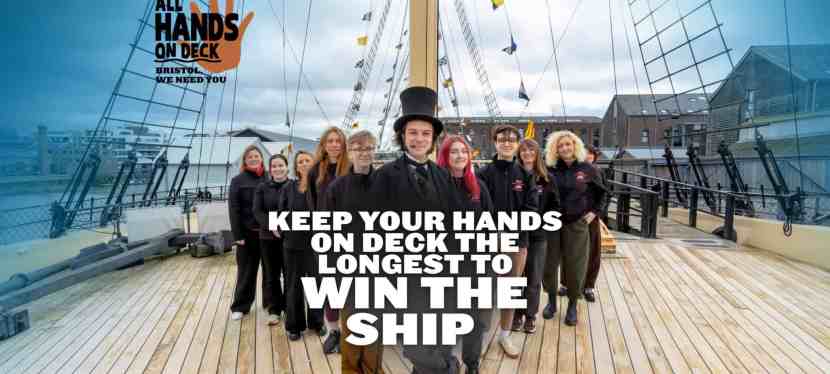
The SS Great Britain Trust is looking to raise the final £180,000 over the next six weeks to help complete the major reinvention project of the museum, which lies next to the historic ship in the Floating Harbour. On 23 February, the old Dockyard Museum closed to make way for a refreshed museum scheduled to open in July 2026. This will bring to life the remarkable stories of the passengers and crew who travelled and worked aboard the SS Great Britain. Alongside the revamped museum there will be a new community hub, a safe and accessible space for local groups to gather, research, and host workshops.
With £1.3m in investment already secured, the Trust are calling on visitors, local businesses, supporters worldwide, and the people of Bristol to get involved and help make the new museum a reality. The Dockyard Museum is being redesigned as an immersive experience focused on the “untold stories” of passengers who travelled aboard the SS Great Britain to destinations including New York, India and the Falkland Islands. The Trust has said that the “much-needed makeover” will “reveal stories from more of the passengers on board the SS Great Britain, but it will also allow today’s audiences to resonate with her history in an entirely new way”.
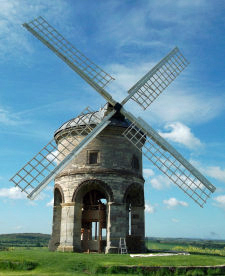
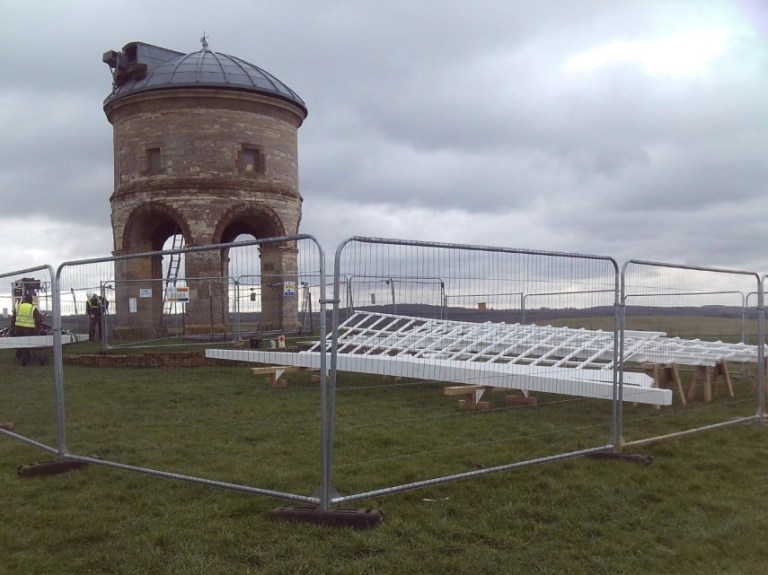
The Midlands Mills Group is hosting a free online talk on 9 December 2025 by Millwright Paul Sellwood. He will be discussing his work as a millwright. Paul and his firm have been involved in many wind and water mill projects over the years, most recently in the Midlands, putting up the sails on Chesterton Windmill.
The Midland Mills Group invites anyone interested to join the event. The link and other relevant details are:
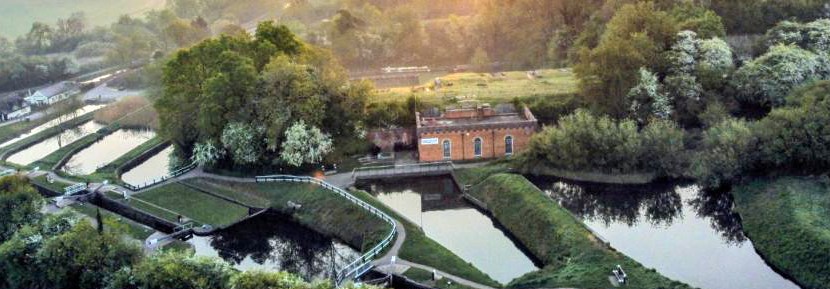
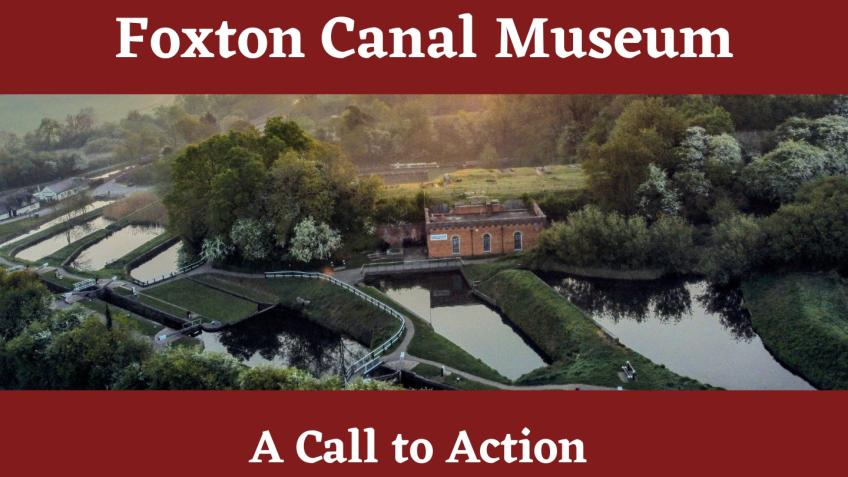
The Trustees of the Foxton Inclined Plane Trust have launched an urgent crowdfunding appeal to raise £20,000 by February so that the museum and site can open in 2026. A combination of rising costs, the long-term impact of COVID-19, and recent operational challenges—including lock closures that reduced visitor numbers this year—has left the Foxton Canal Museum, the beating heart of Foxton Locks and a vital guardian of Britain’s canal heritage, under threat. As a consequence, income has not kept pace with escalating expenses, making sustainability increasingly difficult.
The Museum tells the story of the Foxton Inclined Plane – a Victorian engineering marvel and a scheduled monument – and the people who shaped our waterways. Since its founding by the Foxton Inclined Plane Trust in 1982, the Museum has grown from a volunteer-led dream into a nationally recognized institution. It has hosted award-winning exhibitions, educational programs, and community events, becoming a hub for history, creativity, and learning.
From its humble beginnings – volunteers clearing overgrown inclines and rebuilding the boiler house – to achieving official museum status and welcoming thousands of visitors annually, Foxton Canal Museum has always been powered by passion and perseverance. Recent projects include Foxton Creates, a co-curated exhibition with local schools, and Ingenuity & Vision, exploring the 1950 Market Harborough Festival & Rally of Boats. The Museum also runs STEM workshops, artist residencies, and oral history projects, ensuring canal heritage remains relevant for future generations.
However, the Museum faces mounting financial pressure and without urgent support the Museum cannot guarantee opening in 2026.
Conservation and restoration work at three windmills has been finished ahead of the winter. Heage Windmill in Derbyshire, Meopham Windmill in Kent, and the White Mill, also in Kent, have been undergoing programnmes of conservation and restoration work for several years.
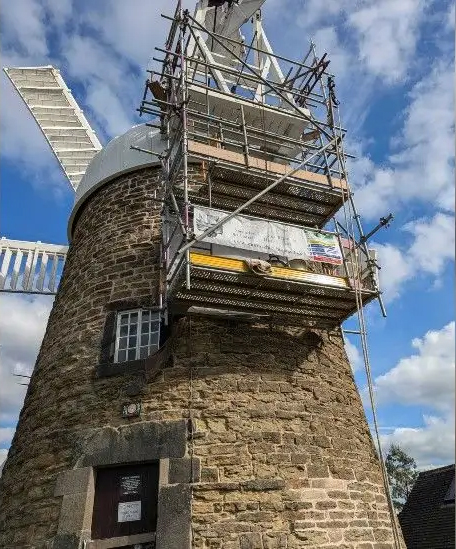
Heage Windmill was restored in 2002, but the Grade II* listed building required further work due to weather-related erosion to the exterior stonework and increased damp inside the building. Following consultation with Historic England, the Heage Windmill Society secured £30,000 in funding from the Association for Industrial Archaeology (AIA) and the Headley Trust for the works to go ahead. Work on the sails and caps was carried out in 2023, and now repair work on the stone tower has been completed.
Grade II* listed Meopham Windmill, which was built around 1820, had fallen into disrepair. Kent County Council purchased the mill, known for its rare six-sided design, in 1959. A £300,000 restoration programme has seen it reconstructed with new mechanisms, revitalised grounds, and its sweeps restored. The funding for the restoration came from a collaboration between KCC, Meopham Windmill Trust, Suffolk Millwrights, and the local community.
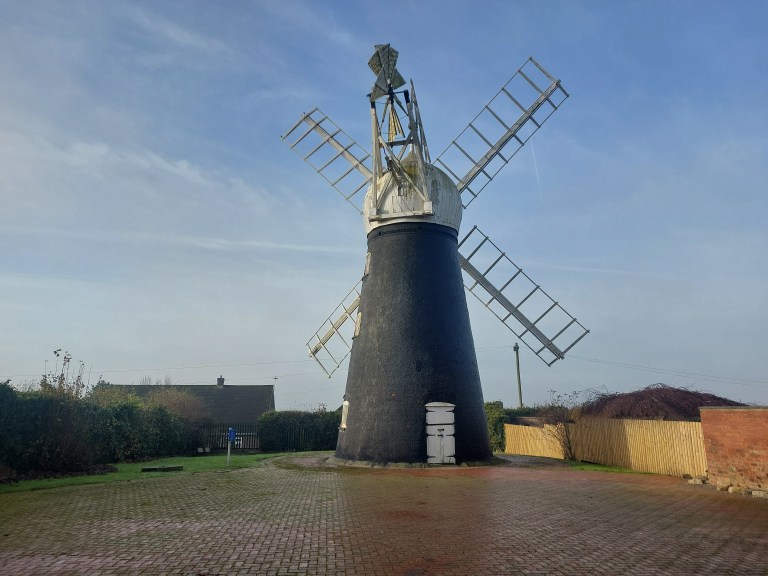
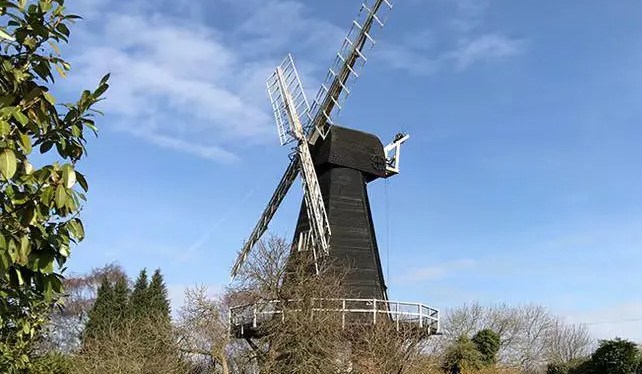
Finally, the Grade II listed White Mill in Sandwich, Kent, had its four sails restored and reinstated in September. The windmill was built in 1760 and served the community as a working mill until the 20th Century, before it became disused in 1957. The White Mill Rural Heritage Centre said the landmark was partly restored in the 1960s, but over the past five years it had undergone more extensive works, and that repairing the historic industrial machinery was a “major testament to the power of volunteering and the important role it plays in the community”.
Further details on these restoration projects can be found on these links:
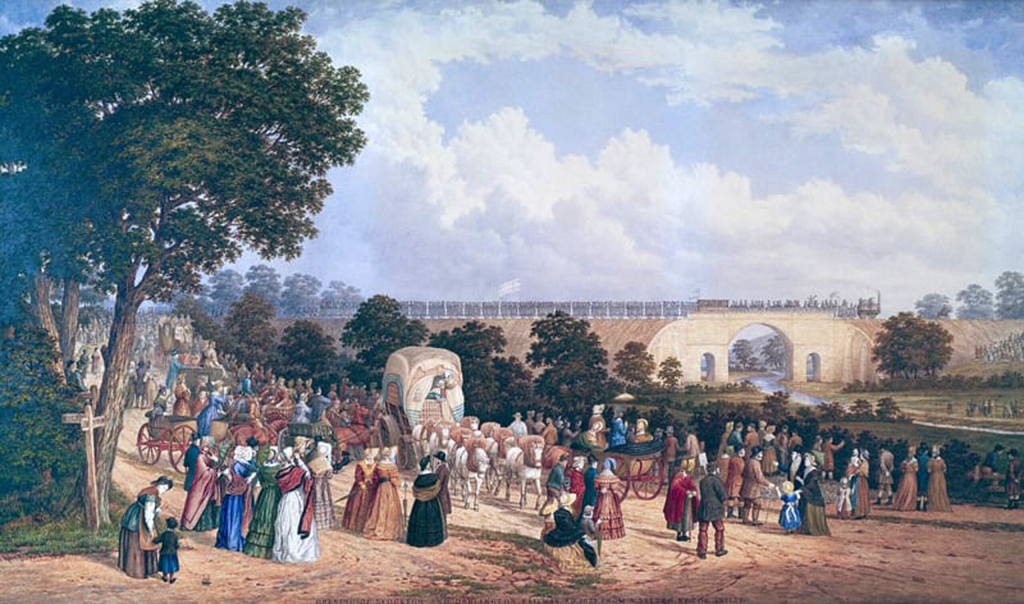
The 8th International (Hybrid) Early Railways Conference will run from Tuesday 23rd September 2025 to Friday 26th September. 2025 is the 200th anniversary of the opening of the Stockton & Darlington Railway, and the conference is designed to lead up to the ‘Railway 200’ celebration finale on the 27th September. The conference will be held in Darlington at the Central Hall, Dolphin Centre, Horse Market. Bookings can still be made online for delegates to participate in the conference, participating either in person or via the internet.
The conference will be similar in format to the previous successful InternationalEarly Railways Conferences, with topics ranging from the earliest waggonway systems through to the earliest main line and industrial systems around the world up to the 1870s.
The event is sponsored by the National Railway Museum, the Institution of Civil Engineers, the Newcomen Society, the Railway & Canal Historical Society, and the Stephenson Locomotive Society. There will also be six poster presentations provided by the members of the Historical Metallurgy Society.
Coinciding with this year’s Local History Month, Historic England has launched a new Local Heritage Hub. With nearly 400 locations, every county, city, district, major town, and national park in England now has a dedicated digital page that uncovers its rich and layered history.
Offering a wide range of content, from fascinating aerial photographs showing towns and villages through time, to curated selections of listed buildings, videos, blogs, and podcasts, the Local Heritage Hub invites members of the public to discover their local area through a new lens.
According to Savanta polling for Historic England in August 2024, 71% of those polled wanted to see more recognition of heritage in their area. Further Savanta polling for Historic England in February 2025 showed that 58% of those responding agreed that local heritage enhances their daily lives. The new platform will reflect what people are looking for in their local areas, and it’s designed not only to inform, but also to also encourage people to see familiar places in unfamiliar ways.
The new service – which will continue to expand with new places, information, and sections added over time – will make local heritage and histories more relevant, relatable, and engaging to more people’s everyday lives, inspiring conversations, unlocking memories, and sparking new interests.
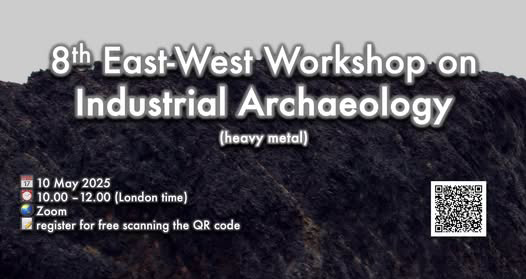
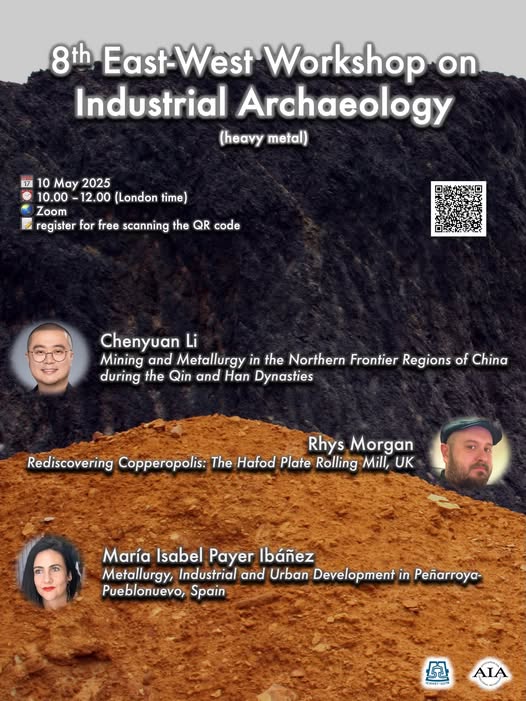
The East-West Workshops on Industrial Archaeology aim to exchange ideas and knowledge among Western and Eastern colleagues to build a more international and diverse industrial archaeology. The workshops are organised jointly by the Institute for Cultural Heritage and History of Science and Technology (USTB, China), and the UK Association for Industrial Archaeology (AIA). The 8th Workshop on 10 May will look at Heavy Metals.
Metallurgy is one of the oldest human activities and was one of the first sectors to embrace modern industrialisation. The production of metals and their alloys has strongly influenced the development of most societies throughout history, and played a key role in the construction of the modern world. The latest Workshop on Industrial Archaeology brings together archaeologists and architects to delve into the long history of metal production, its multiple contexts (technological, economic, social, and its heritage.
SPEAKERS
Chenyuan LI (University of Science and Technology Beijing, China): “The Evolution of Mining and Metallurgical Production Technologies in the Northern Frontier Regions of China during the Qin and Han Dynasties: A Perspective from Archaeometallurgy”
Rhys MORGAN (Black Mountains Archaeology, Britain): “Rediscovering Copperopolis: The Hafod Plate Rolling Mill, Swansea”
María Isabel PAYER IBÁÑEZ (Payer Arquitectura / University of Seville, Spain): “Metallurgy as Industrial and Urban Development in Peñarroya-Pueblonuevo, Spain”
DATE & TIME
10 May 2025, Saturday. 10.00-12.00 (London time)
BOOKING
Zoom (online meeting). More info and free registration:
Videos of all the workshops are available on the AIA’s YouTube Channel, including the latest event from November 2024 on ‘Weaving the Industrial Period’. Follow this link to view the workshops: https://www.youtube.com/channel/UCILr2TkRAOIfk_NKchshwZQ
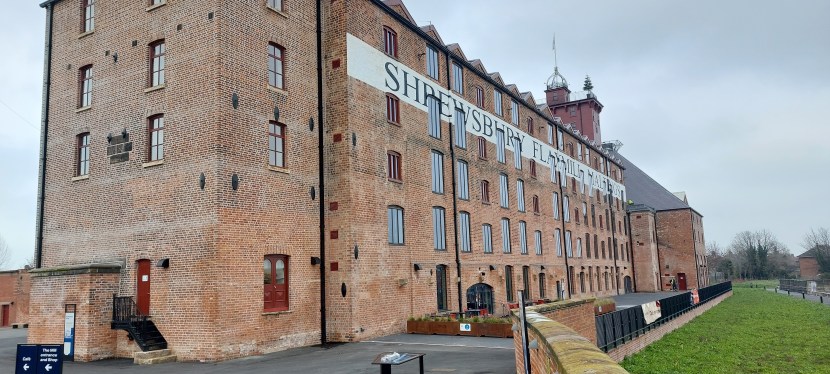
As English Heritage prepares to welcome visitors to the Flaxmill Maltings building in Shrewsbury, Shropshire, a hunt for the missing bell has been launched.Matt Thompson, the curatorial director of English Heritage, commented that “we believe the bell went missing in the late 1980s or early 1990s, when Shrewsbury Flaxmill Maltings was left derelict. Whilst it is possible that the bell could have been melted down, it is more likely that someone took it as a souvenir of this imposing, historic building which – at the time – looked close to ruin”
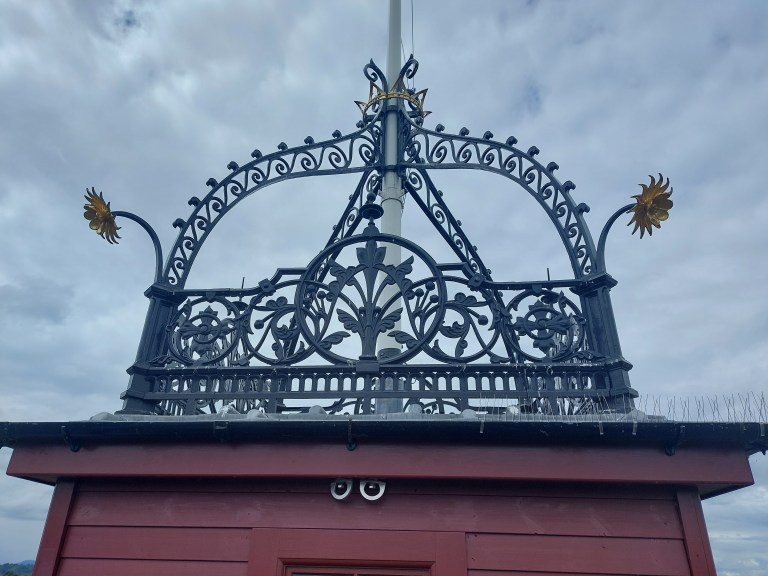
The empty bellcoate at Shrews Flaxmill Maltings. Image copyright Dr Michael Nevell.
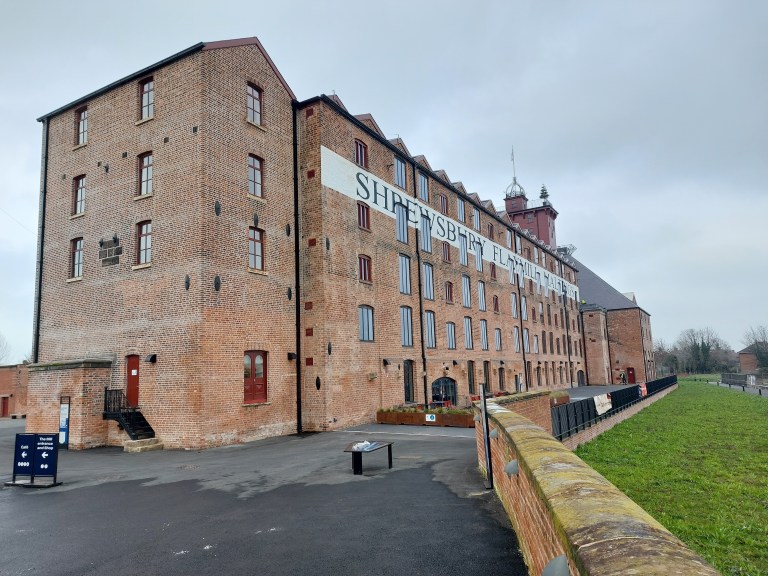
Shrewsbury Flaxmill Maltings is known as the grandparent of the skyscraper, the building being the world’s first multistorey, iron-frame building, with the design paving the way for modern high-rise buildings. The site opened in 1797 as a flax mill and then, from 1897 to 1987, was used as a maltings. It also served as a temporary army training unit and barracks during the second world war. A third of the 800 workers at the flax mill were under 16 and some as young as nine. Shrewsbury itself was too small to provide that number, so children were brought in from as far afield as London and Hull, mostly from the workhouses. Often orphans, the children were given housing, food and clothes but not paid wages. The missing bell would have called the children in from the apprentice house nearby.
Originally operated by a pull rope, the bell changed to an electric chiming mechanism after the second world war, but was lost when the building was left derelict after the closure of the business in 1987. Believed to be around 60cm (24in) high, the bell is cast with the year “1797” on it. The bellcote has been restored but remains, for the moment, empty.
Shrewsbury Flaxmill Maltings opened on 1st April 2025 as English Heritage’s first new paid-for site in 21 years.









 Industrial Heritage Networks