AI in the Heritage Sector Free Seminar

UK Heritage Pulse is running the second of two free online seminars on ‘AI in the Heritage Sector’ on Friday 7th November at 2pm. The first session explored the principles, opportunities, and risks of using artificial intelligence. If you weren’t able to attend, you can now watch the recording here.

The follow-up webinar on the 7th November will take a deeper look at practical applications of AI, sharing real-world examples and tips for the sector. To book your place follow this link: 🔗 Book your place here

You can also read Heritage Pulse’s recent report on the operational use of AI within the heritage sector here.

Heritage Pulse is a collaborative data and insight project for the UK’s heritage sector informing strategy, recovery, and reinvention. You can register for regular updates, or take part in their research, via this link: https://heritagepulse.insights-alliance.com/

Places Still Available for South West and Cornwall & Devon Industrial Heritage Network Meetings

There are still free places available for the next two Industrial Heritage Network meetings in November. These meetings are an opportunity to chat in-person with volunteer and professionals from a variety of industrial heritage sites in each region.

To book a place on the South West Industrial Heritage Network meeting, at Crofton Beam Engines, on Friday 7th November foillow this link: https://www.eventbrite.co.uk/e/1827645881029?aff=oddtdtcreator

To booka palce on Cornwall & Devon Industrial Heritage Network meeting, at Coldharbour Mill, on Thursday 6th November follow this link: https://www.eventbrite.co.uk/e/1827645881029?aff=oddtdtcreator

Science Museum, London, Receives £10m+ Donation

The Science Museum, London, has announced the receipt of an eight-figure donation from the world’s largest vaccine manufacturer. The Serum Institute of India, led by its CEO Adar Poonawalla, has donated at least £10m to the museum.  The Serum Institute of India, founded in 1966, operates in more than 170 countries, and has delivered over 2 billion COVID-19 vaccine doses. The donation is the largest international donation in the museum’s history.

The museum said the capital will support the transformation of its twenty year old ‘Making the Modern World’ gallery into the ‘Ages of Invention: The Serum Institute Gallery’, set to re-open in 2028. The new gallery will “reflect current global concerns and scientific thinking”, and will be designed by Lawson Ward Studio, the architecture and design studio led by Hannah Lawson and Georgina Ward who were recently appointed as the gallery’s architect.  

Sir Ian Blatchford, Director and Chief Executive of the Science Museum Group, said that “‘Through our ambitious new Ages of Invention: The Serum Institute Gallery we will create the most significant display of objects from the history of science anywhere in the world. Visitors will be able to journey through 250 years of innovation and explore the scientific ideas shaping our lives today.”

Mr. Adar Poonawalla, CEO of Serum Institute of India, said: “With this contribution, which will help in bringing in a transformation to this iconic space, we strive to inspire the future generations and celebrate the incredible journey of science that shapes our world.’’ 

Due to open in 2028, Ages of Invention: The Serum Institute Gallery will feature the most significant display of objects from the history of science, technology, and engineering anywhere in the world. From the rise of the industrialised world to the emergence of new scientific fields, this dramatic and engaging gallery will invite visitors to explore 250 years of innovation to discover the extraordinary objects, stories and people behind the scientific ideas that changed our lives. Significant objects set to feature in Ages of Invention: The Serum Institute Gallery include the telescope used by astronomer Caroline Herschel (1795); the world’s oldest surviving steam locomotive, Puffing Billy (1813–1814); J.J. Thomson’s cathode ray tube used in the discovery of the electron (1897); Tucker Sno-cat used in the Commonwealth Trans-Antarctica Expedition (1955), and Tracy, one of the first transgenic sheep (1990–97).

For more details follow this link: https://www.sciencemuseum.org.uk/about-us/press-office/science-museum-receives-largest-international-donation-date-enabling

A view of the Making the Modern World gallery. Image copyright Science Museum Group.

Latest Historic England ‘How to write a carbon reduction plan’ Workshop Now Available to Book

Historic England, with support from CIfA, are running a workshop on ‘How to write a carbon reduction plan’. Several dates are available with limited places on 30 October 2025, but further workshop places available on 17 and 26 November.

The workshop has been designed to support organisations, such as industrial heritage sites and museums, to build on their carbon footprint report by writing a basic plan for carbon reduction whilst also engaging with staff, volunteers, and visitors.

To book a place follow this link: How to Write a Carbon Reduction Plan

National Trust Take Over Ironbridge Gorge Museum Trust in ‘Landmark Moment’ for UK Industrial Heritage

The Department for Digital, Culture, Media and Sport (DCMS) has announced (16 October 2025) that the National Trust will be taking over the Ironbridge Gorge Museums Trust in spring 2026, securing their future, with the aide of a £9 million Government grant from the ‘Plan for Change’ fund. The Museum Trust, formed in 1967 and within the Ironbridge Gorge UNESCO World Heritage Site, is one of the UK’s largest independent museums and the custodian of some of the nation’s most significant industrial heritage. Like many industrial heritage sites in England the Trust has been dealing with increased costs, climate change, and lower vistor numbers since the pandemic.

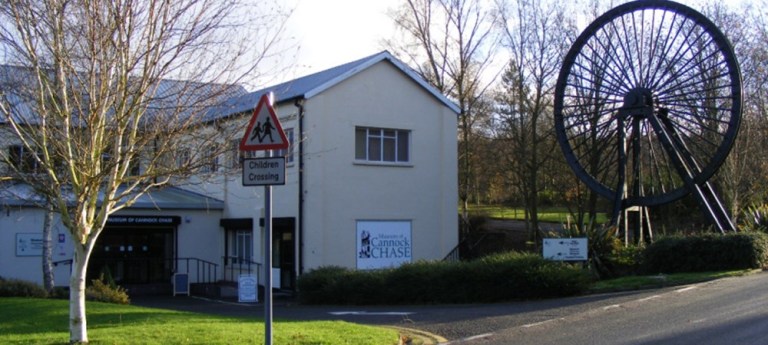
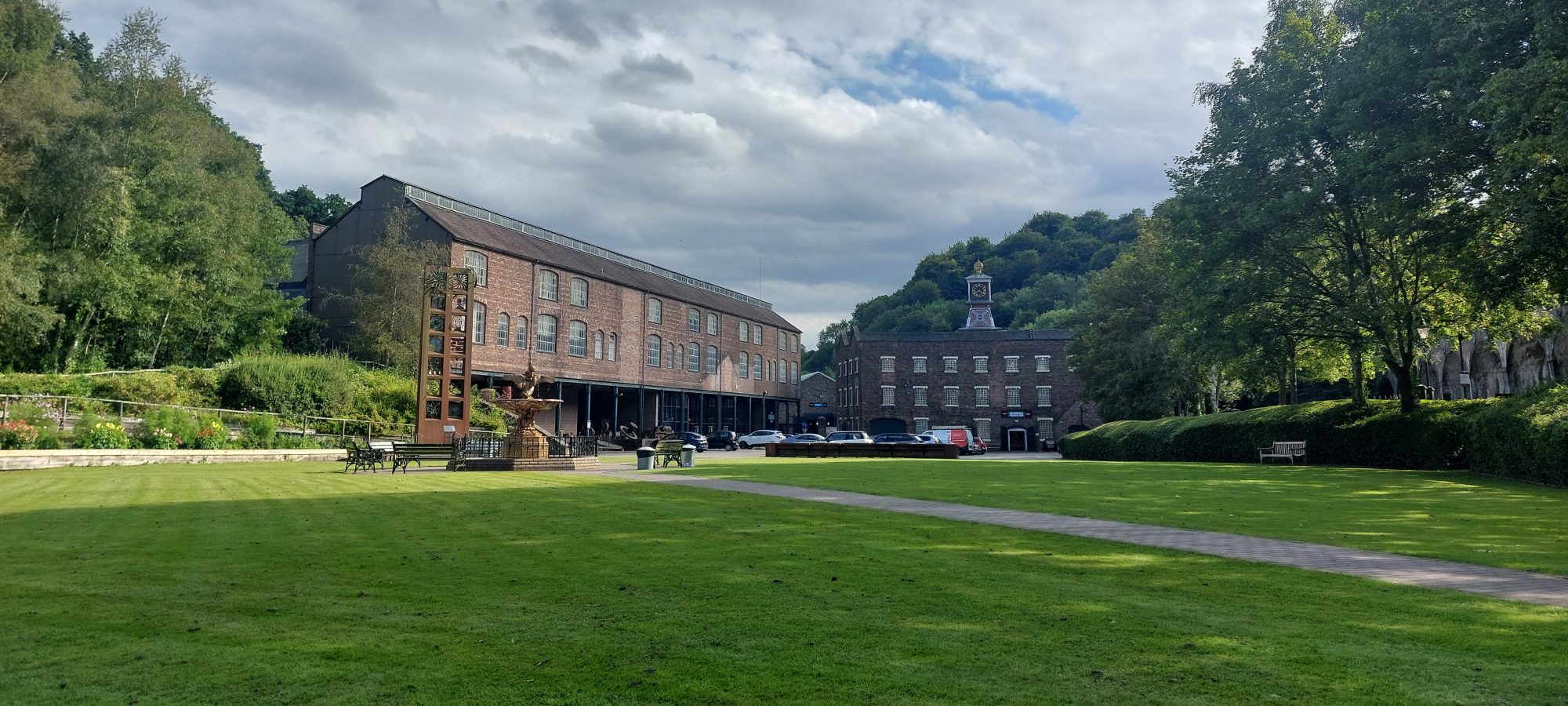
Museum of the Gorge. Image Copyright Dr Michael Nevell.

This funding will enable the transfer of the Ironbridge Gorge museums to the National Trust, securing the future of this internationally significant heritage site and ensuring continued access to Britain’s industrial heritage for hundreds of thousands of annual visitors.  The Ironbridge Gorge was designated as one of Britain’s first UNESCO World Heritage Sites in 1986, recognising its pivotal role as the epicentre of 18th century world industrialisation. The site encompasses 10 museums (Blists Hill Victorian Town, Enginuity, Coalbrookdale Museum of Iron, the Old Furnace, the Darby houses, the Museum of the Gorge, the Ironbridge Tollhouse, the Tar Tunnel, Coalport China Museum, Jackfield Tile Museum and Broseley Pipeworks), and 35 listed heritage buildings and Scheduled Monuments, and attracts 330,000 visitors annually. Its Nationally Designated collection includes more than 400,000 objects, representing a rich and unique record of Britain’s industrial past.

Lisa Nandy, Secretary of State for the Department of Digital, Media, Culture and Sport, visited Abraham Darby I’s furnace and Coalbrookdale Museum to make the announcement. She stated that: “As the birthplace of the Industrial Revolution, it is absolutely vital that the museums in the Ironbridge Gorge are protected as a key heritage asset in this country and a significant contributor to jobs and the economy in the Shropshire area.” Speaking to the Shropshire Star on Thursaday she also noted that: “One of the first things that came across my desk in 2024 when we were first elected was Ironbridge. It has been struggling like every heritage site in the country with visitor numbers post pandemic, but it also takes a lot of funding to continue to invest and protect the condition of this incredibly important historic site….It was urgent. If we hadn’t intervened and formed this partnership with the National trust I think it is fair to say that people who grew up coming here as children would not be bringing their children and grandchildren here in future years. So we were determined we were going to step up and support this, and to back that with a financial down-payment of £9m to demonstrate our commitment not just to Ironbridge, which is one of the most important sites in the country but to our industrial heritage, because the history of this country is not just the history of kings and queens and stately homes, it is the story of the most extraordinary people the length and breadth of Britain, people’s parents and grandparents, ordinary people who powered this country, built our wealth and influence and shaped who we are today.”

Councillor Carolyn Healy, Telford & Wrekin Council’s Cabinet Member for Neighbourhoods, Planning & Sustainability, noted that: “This is a landmark moment for our Borough and for heritage conservation nationally. The Ironbridge Gorge Museum Trust, including the many local people who have worked for the trust over the years, has been an outstanding custodian of our industrial heritage.”

Hilary McGrady, Director General of the National Trust, said “The Ironbridge Gorge is widely regarded as the birthplace of the Industrial Revolution, which paved the way for the scientific and technological innovation that defines our world today. The site is an example of British ingenuity, a source of immense national and community pride and a distinct and much-loved icon of our shared heritage. I cannot think of something more at home in the National Trust’s care – an institution built to protect and preserve the things our nation loves on behalf of everyone, everywhere.”

Mark Pemberton, Chairman of the Board of Trustees for IGMT commented that, “We are incredibly pleased to have secured the long-term future of the Museum by its transfer to the National Trust. The £9m investment by DCMS is recognition of the global significance and national importance of Ironbridge. Ironbridge was important as the birthplace of industry and as a major tourist destination it now plays a part in the success of the local economy. Ensuring a smooth transition, and in particular supporting IGMT’s staff and volunteers throughout the transition period, is now our priority.”

The full UK Government statement can be found here: https://www.gov.uk/government/news/shropshires-ironbridge-gorge-museums-saved-for-the-nation

For the full Shropshire Star interview with the DCMS Secretary of State, Lisa Nandy, follow this link: https://www.shropshirestar.com/news/local-hubs/telford/ironbridge/2025/10/16/national-trust-to-take-over-ironbridge-museums-with-9m-government-grant/

Abraham Darby’s 1709 iron furnace at Ironbridge. Image copyright Dr Michael Nevell.

South West Industrial Heritage Network Meeting, 7 November

The next in-person South West Industrial Heritage Network meeting will be held at Crofton Beam Engines on Friday 7th November, from 11am to 1pm. This will be followed, after lunch (please bring your own), by a tour of the site (2pm to 3pm). The themes for the 2025-26 IHN meetings are conservation and maintenance.

All IHN members and friends are very welcome to attend. To book a free place follow this link:

Crofton Beam Engines was built in 1807-9 to supply water to the highest point of the Kennet & Avon Canal which links London and Bristol. It is a rare survivor of the technology which enabled British engineers to drain mines and supply towns and cities with water throughout the world. For more details about the site follow this link: https://www.croftonbeamengines.org/about/

Cornwall & Devon Industrial Heritage Network Meeting, 6 November

The next in-person Cornwall & Devon Industrial Heritage Network meeting will be held at Coldharbour Mill, Devon, on Thursday 6th November from 11am to 1pm. This will be followed, after lunch (there is a cafe on site), by a tour of the site (2pm to 3pm). The themes for the 2025-26 IHN meetings are conservation and maintenance.

All IHN members and friends are very welcome to attend. Follow the link below to book a free place.

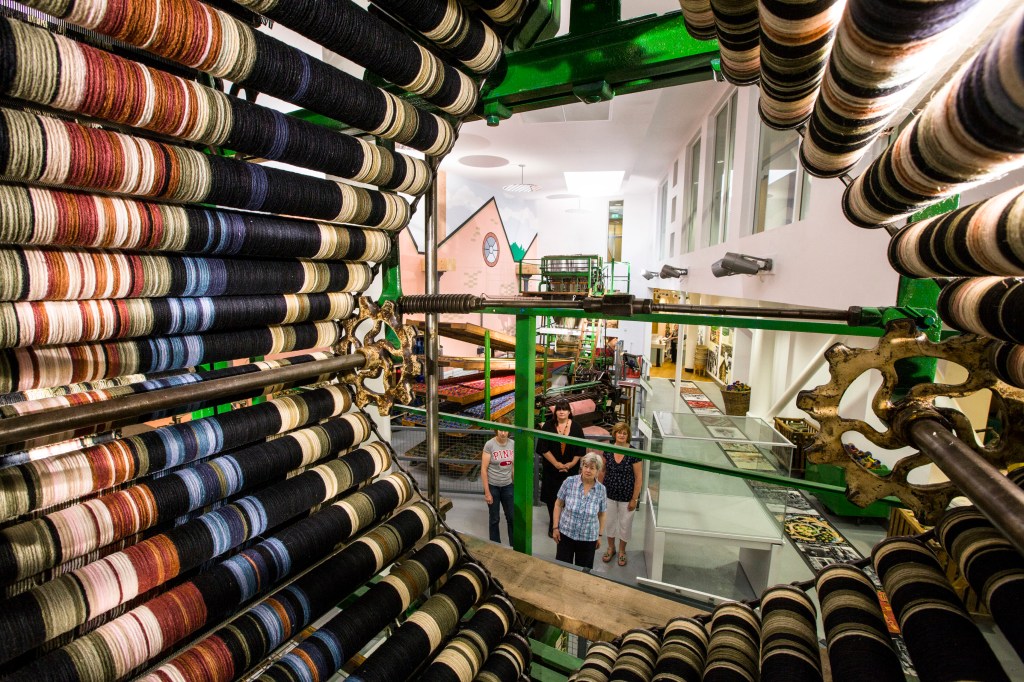
Coldharbour Mill is a 200-year-old spinning mill in Uffculme, Devon. It was built by Thomas Fox to spin woollen and later worsted yarns in 1799. It opened as a museum in 1982, and has continued to produce high quality worsted knitting yarn on its period machinery. For more details about the mill follow this link: https://www.coldharbourmill.org.uk/

DCMS Report Highlights the Impact of Local Authority Funding Cuts on Heritage Organisations in England

The Department for Culture, Media and Sport (DCMS) has released a new report that compiles evidence on the budgetary pressures facing England’s heritage sector, using a regional case study approach focussing on local and combined authority funding in West Yorkshire. The findings will be familiar to many industrial heritage sites.

The report outlines how over a decade of local authority funding cuts, alongside the loss of EU funding and the continuing effects of the pandemic, have placed significant pressure on small to medium-sized heritage organisations. While some have adapted through asset transfers, income diversification, and new governance models, others, particularly organisations in deprived regional areas, reliant on volunteers, or working with rural or intangible heritage, face an increasingly uncertain future.

The findings show, that since 2010 there has been a notable decline in local authority support for heritage, the limited long-term impact of project-based grants for smaller organisations, the essential role of support networks, and the close relationship between place and heritage. Thus, Local Authorities, the main providers of heritage services in their areas, have seen real-term cuts of up to 49% in central government grants since 2010, alongside a 35% fall in cultural service spending, and a 36% per capita reduction in planning, environmental, and cultural expenditure.

At the same time, the Department for Digital, Culture, Media and Sport (DCMS) reported real-term reductions of up to 24% durign the years 2011–2015. These cuts have led to closures, reduced opening hours, and the scaling back of public programmes, particularly in more deprived areas.

The impacts reported differ significantly by location and heritage type. Urban and asset-based heritage were found to often attract regeneration-linked investment, while rural and intangible heritage remain underserved and under-researched. The report also noted that there is evidence to show that funding cuts risk diminishing social cohesion and wellbeing, especially where heritage spaces serve critical civic and educational roles.

You can read the full report here. 

Industrial Museums Amongst Museum Renewal Fund Recipients

Seventy-five civic museums across England will share £20m through the UK Government’s Museum Renewal Fund. The monies will be distributed Arts Council England. The funding forms part of the £270 million ‘Arts Everywhere Fund’ launched in February 2025. The funding will be used by museums to support work towards stabilising their financial situation and building towards sustainable and thriving futures. It must be spent by the end of January 2026.

Local authority and other civic musuems services with industrial sites receiving more than £5 million in funding include:

  • Barnsley Museums (£266,273)
  • Birmingham Museums Trust (£994,742)
  • Bradford Museums and Galleries (£125,000)
  • Bridport Museum Trust (£29,218)
  • Bristol Museums (£495,320)
  • Chatham Historic Dockyard Trust (£533,084)
  • Dean Heritage Centre (Forest of Dean) (£58,285)
  • Derby Museums (£799,700)
  • Leeds Museums and Galleries (£952,000)
  • Museum of Royal Worcester CIO (£228,343)
  • Norfolk Museums Service (£360,000)
  • People’s History Museum (Manchester) (£652,157)
  • The Food Museum (£351,112)
  • The World of Glass (St Helens) (£286,000)

The full list of museums supported, and further details, can be found here: https://www.artscouncil.org.uk/creative-matters/news/museum-renewal-fund-stabilising-now-building-future

Dean Heritage Centre, Forest of Dean. Image courset of Dean Heritage Centre.

The Northern Mine Research Society October Online Talk

Northern Mine Research Society is experimenting with a series of online lectures this autumn/winter. The first of these will take place on Tuesday 7th October at 7pm. This initial lecture will be given by Steve Grudgings on ‘From Calley to Curr: the development of the Newocmen Engine in the eighteenth century’.

Join Steve to hear how the Newcomen engine developed from a bespoke, artisan-built, item to a “commodity” product built from standardised components. Steve will highlight the key challenges early engine builders had to overcome and how their endeavours contributed to the recognition of the engineering profession.

Non-members are very welcome. For joining instructions contact NMRS President Len Morris at: lmorris768@btinternet.com