Welcome to the Industrial Heritage Networks and Support website. This site is maintained and updated by the Ironbridge Gorge Museum Trust who run the project and the networks. We aim to support industrial heritage in England through networking, information exchange, guidance, and training. Please explore the website and please contribute! For more information you can … Read more Welcome to the IHNs website!
Bookings are now open for the next in-person East of England Industrial Heritage Network meeting at the Royal Gunpowder Mill Mills, Waltham Abbey, on Thursday 7th August, 11am to 3pm.
Established in 2018, these regional meetings are designed to bring together those industrial heritage sites open to the public in each region, and local groups and individuals working or volunteering on industrial archaeology and heritage subjects and sites in the area. The format is a round-table discussion in the morning, with a tour of the site in the afternoon.
All IHN members are very welcome to attend. You can turn up on the day or follow this link to book a free place via Eventbrite:
Birmingham Museums are looking for someone with a background in science and industry, either through museum practice or industry experience, and an interest in connecting science and industrial heritage to audiences, to join their Curatorial & Participation team later this year.
The new Curator of Science and Industry will work collaboratively internally, and through participatory practice, to better research, document, and support access to Birmingham’s scientific and industrial collections. They will also contribute to continuing gallery developments, across Birmingham Museums Trust’s sites, with a particular focus on Thinktank, supporting the development and delivery of new displays that will engage existing and new visitors.
The Historic Environment Forum (HEF) has launched the new Heritage Sector Resilience Plan 2025-35 (“HSRP2”). This provides a clear roadmap for collaborative working to deliver a robust and resilient heritage sector, including industrial heritage.
HEF says that the new plan, funded by Historic England, is structured around four cornerstones that will significantly strengthen the resilience of the historic environment and heritage sector in England. These cornerstones are:
relevance
physical resilience
workforce & organisational resilience
and financial resilience.
You can find out more about the new plan for 2025-35 by following this link:
The Historic Environment Forum (HEF) is a collaborative initiative that brings together senior representatives from organisations working across the historic environment sector in England.
The World of Glass (based around the 19th century Hotties furnaces) celebrates its 25th anniversary this year, but its immediate future is underthreat. The St Helens’ based industrial heritage attraction has launched an emergency funding campaign with the aim of raising £50,000 over the next three months.
The museum and art gallery is facing a combination of increasing competition for funding across the charity sector, and a steep rise in annual running costs.
Its closure would be a great blow to the town, not least because in 2026 the International Festival of Glass (ifg.org.uk) will be hosted in St Helens for the very first time. The Glass Art Society (GAS) (Glass Art Society – Glass Art Society) has invited The World of Glass to partner with them to deliver the International Festival of Glass and the British Glass Biennale in 2026.
The museum has welcomed over 1 million visitors since opening in 2000 and serves thousands of local schoolchildren each year. It’s an independent charity that offers free cultural and education experiences including historic furnaces, hands-on exhibits, and live glassblowing. It is home to the town’s library, community spaces, interactive galleries, meeting rooms, a café, shop, and live glass blowing demonstrations. The site also includes one of the finest examples of a regenerative furnace in England, the Grade II* listed Tank House No. 9, a Scheduled Monument.
The World of Glass is open Wed-Sun and Bank Holidays, 10-4pm. Entry is free, but with a recommended donation of £3. There is free parking on Sundays and Bank Holidays.
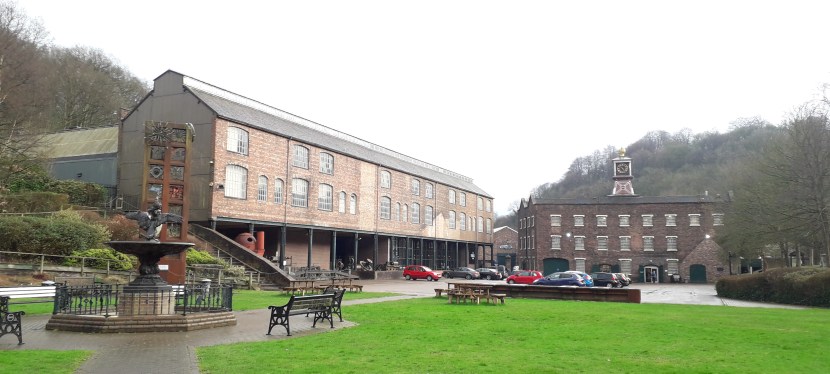
Bookings are now open for the next in-person East Midland’s Industrial Heritage Network meeting to be held at Cromford Mills, Derbyshire, on Friday 25 July, 11am to 3pm.
Established in 2018, these regional meetings are designed to bring together those industrial heritage sites open to the public in each region, and local groups and individuals working or volunteering on industrial archaeology and heritage subjects and sites in the area. The format is a round-table discussion in the morning, with a tour of the site in the afternoon.
All IHN members are very welcome to attend. You can turn up on the day or follow this link to book a place via Eventbrite:
There’s still time to book a place on the next in-person West Midland’s Industrial Heritage Network meeting to be held at the Ironbridge Gorge Museum Trust on Wednesday 25 June, at 11am in the Glass Glassroom behind the Museum of Iron, Coalbrookdale.
Established in 2018, these regional meetings are designed to bring together those industrial heritage sites open to the public in each region, and local groups and individuals working or volunteering on industrial archaeology and heritage subjects and sites in the area. The format is a round-table discussion in the morning, with a tour of the site in the afternoon.
The Association of Independent Museums(AIM) have announced the winners of the inaugural Museum Fundamentals grants. Funded by the Pilgrim Trust and The Julia Rausing Trust and launched in December 2024, the AIM Museum Fundamentals grant is designed to respond to the varied needs of AIM members.
Amongst the initial round of 12 grants is a succesful application from The Long Shop Muaseum in Suffolk to redesign and redisplay the ‘Made in Leiston’ gallery. The design and content of the new exhibition is based on audience research conducted over the last two seasons. The new displays will focus on unlocking the social history of the town and the people who lived and worked there over a 250-year span, and on technological change. The Long Shop Museum was founded in 1984. It is housed in a cluster of historic buildings in the Suffolk market town of Leiston. The buildings are survivors of the original 19th century engineering works site of Richard Garrett and Sons who specialised in famring machinery. Further details here:
The AIM Museum Fundamentals grant is funded by the Pilgrim Trust and The Julia Rausing Trust, and launched in December 2024. It combines the valued collections care and conservation funding supported by the Pilgrim Trust with new funding from The Julia Rausing Trust. AIM members can apply for up to £20,000 for funding to undertake a collections-based project. If you’re interested in applying to Museum Fundamentals, expressions of interest for the next round are welcome until Friday 8 August. Further details here: https://aim-museums.co.uk/news/first-aim-museum-fundamentals-awards-made/
Long Shop, Leiston, Suffolk. Image copyright The Long Shop Museum.
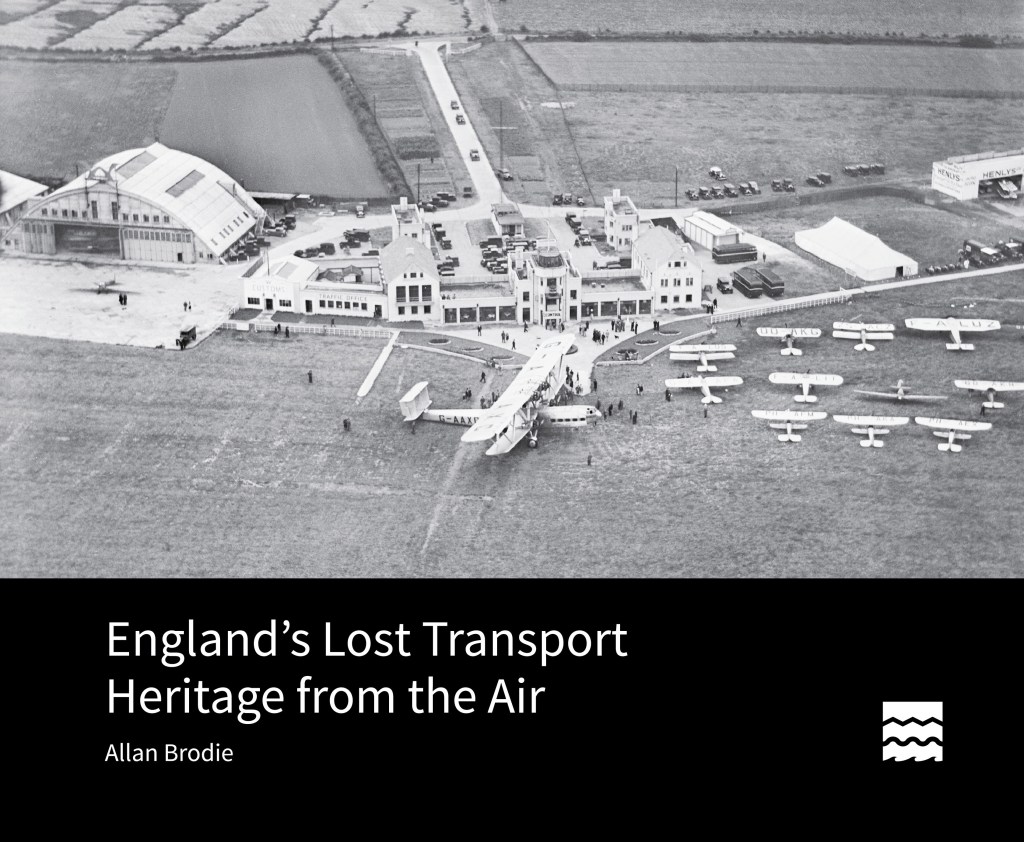
Historic England and Liverpool University Press have recently published ‘England’s Lost Transport Heritage from the Air’, our latest industrial heritage title – https://historicengland.org.uk/images-books/publications/englands-lost-transport-heritage-from-air/. Written by Allan Brodie, this book uses Aerofilms’ remarkable photographic collection to tell the story of England’s lost transport heritage, from Roman roads to supersonic Concorde.
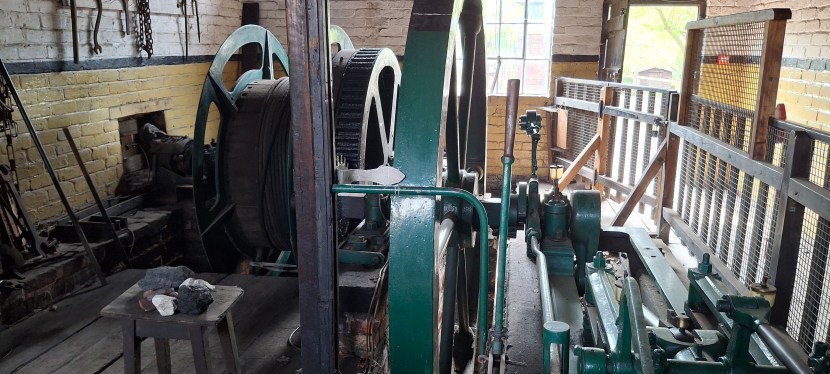
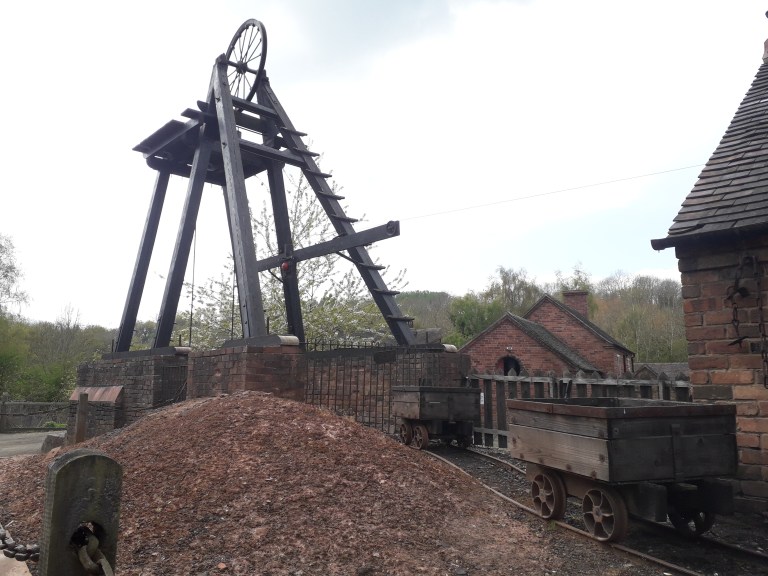
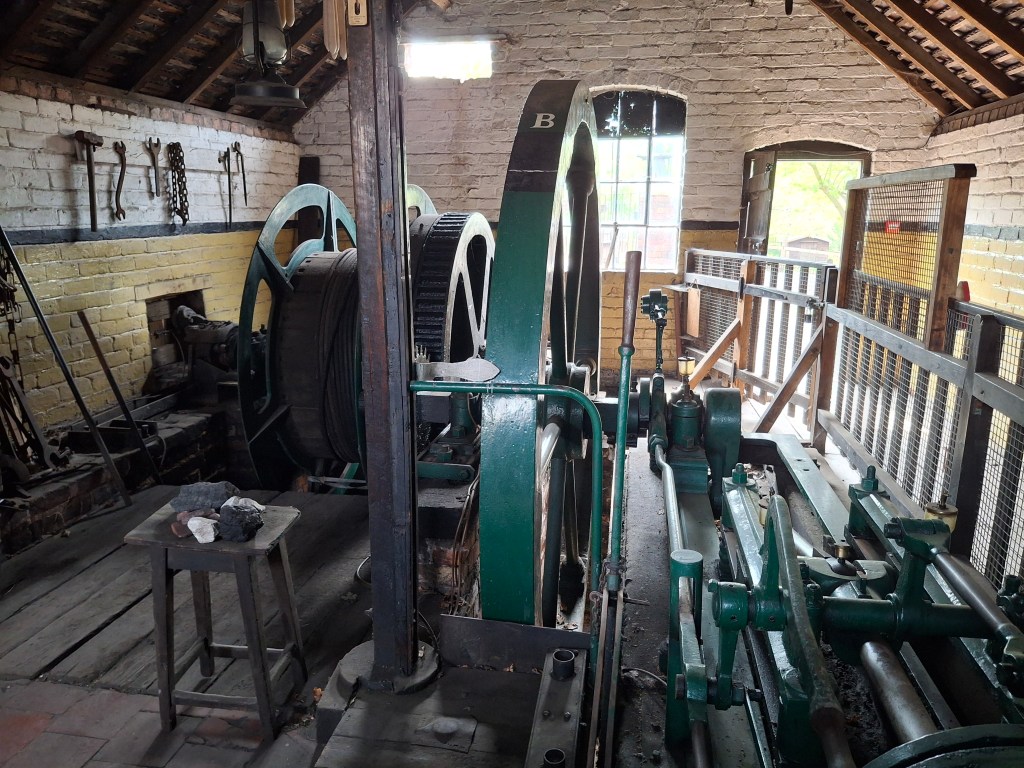
The Winding Engine at Blists Hill Victorian Town is one of the Ironbridge Gorge Museum Trust’s earliest and most significant exhibits. One of the very few preserved steam winding engines – and of even fewer able to wind up and down a historic mine shaft – it has been out of action since 2018. To repair and restore this machinery will cost £100,000. A fudn was setup in 2024 to raise this amount, and it has recently recieved a genrous donation from the 29th May 1961 Charitable Trust.
Winding head gear at Blists Hill, Ironbridge. Image copyright Dr Michael Nevell.
When it is working, the Winding Engine exhibit can bring the sounds, smells and sights of a working engine to life for our visitors. It helps us tell the story of the men, women and children who worked in Shropshire mines and the daily dangers they faced. It also demonstrates a vital feature of mining and the development of mining and engineering during the Industrial Revolution.
The phased plan for work will see the pit head, boiler house, and engine house refurbished, the mine shaft inspected and cage refit. The work will primarily be carried out by IGMT’s Steam Team, expert volunteers, supported by our Steam Engineer and outside contractors.
More money still needs to be raised, so if you would like to contribute to getting the engine winding again follow this link:
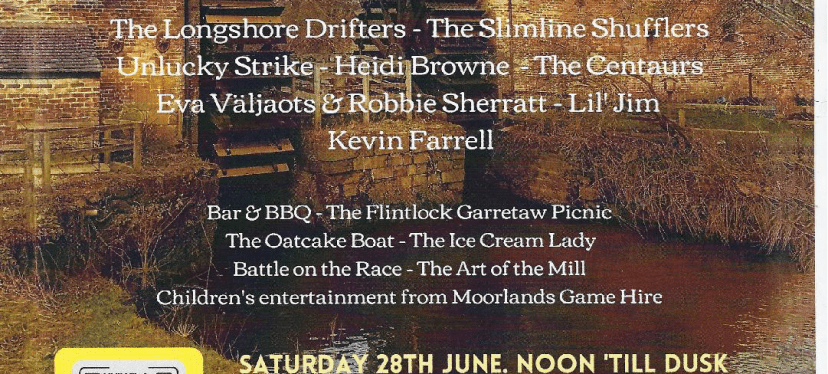
On the 28th June 2025 the Cheddleton Flint Mill Industrial Heritage Trust will be hosting a live music festival at the listed 18th century bone mill. This is a festival fundraiser to mark the centenary of the Garretaw carnival on the Caldon Canal in 1925, hence the ‘Flint Garretaw’ naming.
The festival village will be situated on the Flint Mill car park between the river and the canal with a specially built stage utilising the Mill as a uniquely lit backdrop to an afternoon and evening of music and various activities with both water wheels turning. All proceeds from this event go to the charity Cheddleton Flint Mill Industrial Heritage Trust. (Registered Charity No: 254196)
Or in person at Cheddleton Flint Mill (open Mondays & Wednesdays).
All enquiries: flintgarretaw@gmail.com
Cheddleton Flint Mill is a fine example of a water mill that ground flint for the local Staffordshire pottery industry. The site features two listed water mills, a small museum, a period cottage, the canal, and many other exhibits. The site is open to the public and is run by The Cheddleton Flint Mill Industrial Heritage Trust which was formed in 1967.












 Industrial Heritage Networks