Museum of Making, Derby, Installs Flood Barriers

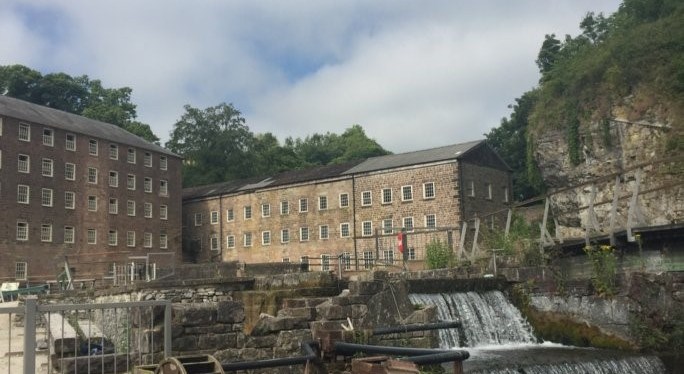
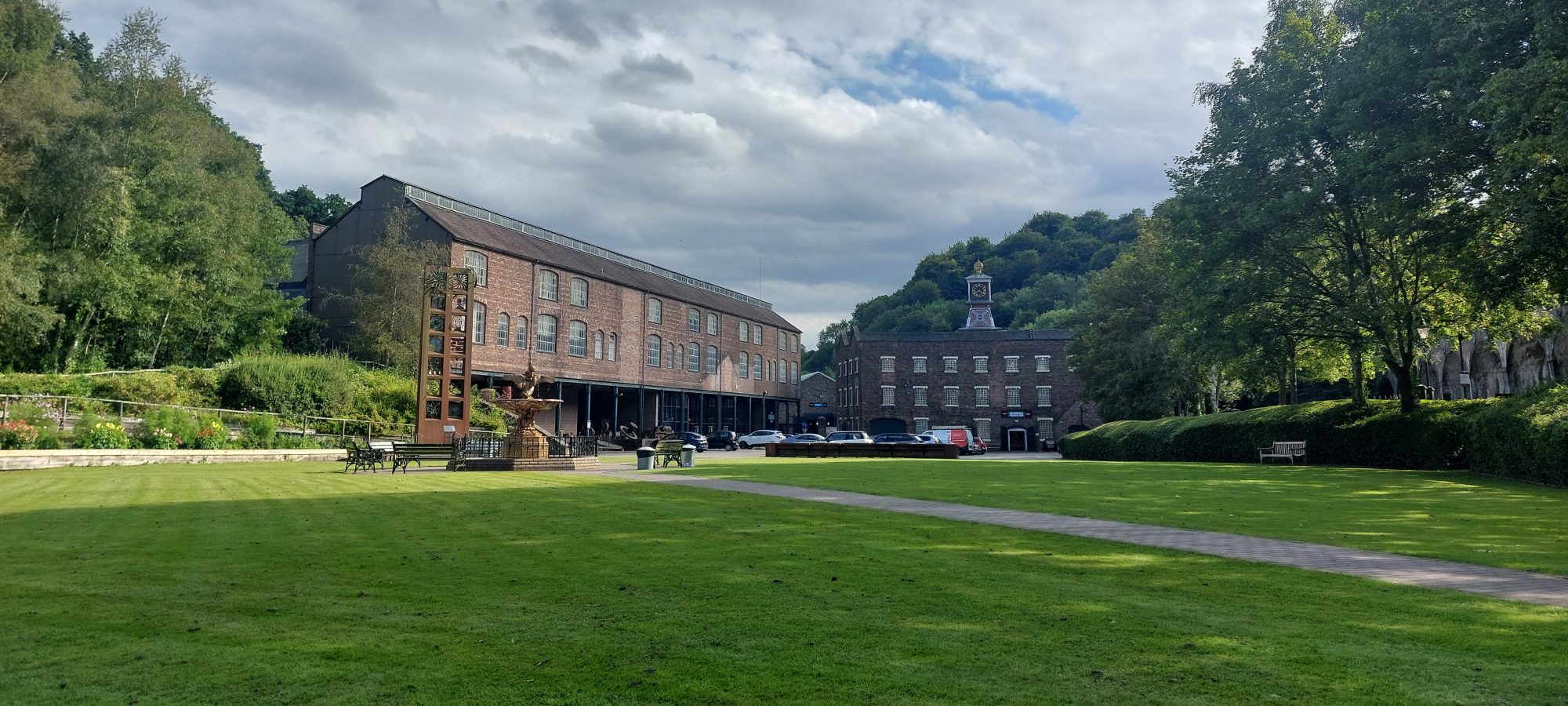
New flood defences have been installed at Museum of Making, Derby. The protective barriers have been placed inside the old Silk Mill, now the Museum of Making, which was flooded by waters from the River Derwent to a depth of 0.7m during Storm Babet in 2023.

Alex Rock, director of commercial and operations at Derby Museums Trust, said “We’re delighted to add further protection to our building, and very grateful for the support of Derby City Council’s planning team and their engineering colleagues. Both departments have been crucial in securing the relevant permissions and funding from DEFRA for this work. It adds another layer of protection to two key operational areas, which means that should a flood event occur again – and it is worth bearing in mind that Storm Babet was forecast as a once-in-a-century event for Derby – then we’ll be able to shorten the period of closure. It protects the two areas of the ground floor that are most impacted by flood events.”

As part of Derby City Council’s ‘Our City Our River’ scheme, flood defences are also to be improved around the museum. Work is underway to demolsih disused office buildings on the eastern bank of the river, close to the museum, at Stuart Street and Phoenix Street. This will allow the construction of a new flood wall, floodgates, and a riverside green area to provide a controlled corridor for flood waters fromt eh River Derwent to pass through the city.

More details here: https://www.msn.com/en-gb/news/world/derbys-museum-of-making-gets-flood-defence-boost-after-closure-cost-six-figure-sum/ar-AA1PA7v1?ocid=BingNewsSerp

and here: https://www.derby.gov.uk/environment-and-planning/regeneration-and-economic-growth/our-city-our-river/our-city-our-river-project-overview/

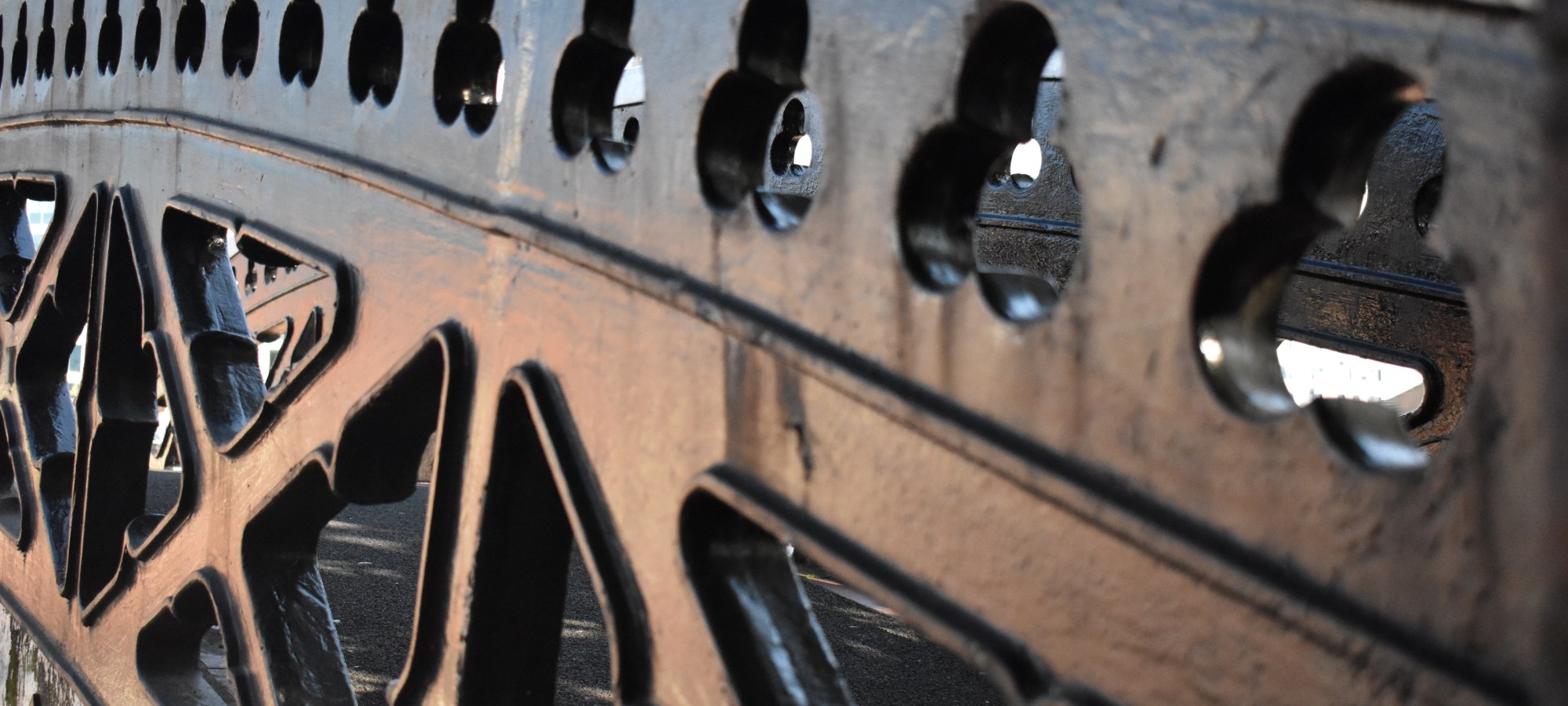
The Museum of the Making (the Old Silk Mill), Derby. Image copyright Dr Michael Nevell.

CBA Launches New Volunteer Opportunities Page

The Council for Britsh Archaeology (CBA) has launched a new volunteering page, listing opportunities across the UK. You can search by your region to find volunteering callouts near you. However, the page doesn’t just listed opportunities for volunteers, but also has a section where groups, sites, and museums can list their own volunteering opportunities in archaeology and heritage.

Current industrial archaeology and heritage volunteer openings include opportunities to help Kingswood Heritage Museum (a brassworks) in South Glouscestershire, digitising opportunities with the Food Museum, and helping out with the North Tynside Steam Railway.

To learn more about new volunteer opportunities sign up for the CBA volunteering newesletter by following this link:

https://www.archaeologyuk.org/get-involved/volunteering.html

London Industrial Heritage Network Meeting, 8 August

Bookings are now open for the next in-person London Industrial Heritage Network meeting to be held at Merton Priory Chapter House, Wandle, on Thursday 8th August, 11am to 3pm.

Established in 2018, these regional meetings are designed to bring together those industrial heritage sites open to the public in each region, and local groups and individuals working or volunteering on industrial archaeology and heritage subjects and sites in the area. The format is a round-table discussion in the morning, with a tour of the site in the afternoon.

All IHN members are very welcome to attend. You can turn up on the day or follow this link to book a free place via Eventbrite:

Mills Archive Trust Launch ‘Caring for an Icon’ Crowd Funder

The Mills Archive Trust need your help locating the records of past millers and millwrights, preserving them in their archive, and making them accessible to modern craftsmen. With this in mind they have launched a new crowd funding appeal – ‘Caring for an Icon’.

The Trust are looking to preserving these records in their archive and make them accessible to modern craftsmen, thereby helping to train the next generation. In order to do that they need to raise significant sums to safe guard the future of these archives.

Folow this link to donate ot the ‘Carings for an Icon’ appeal: https://new.millsarchive.org/caring-for-an-icon/

The Mills Archive Trust is the custodian of the history of mills and milling. They safeguard the stories, skills, and traditions that mills embody. This expertise allows the Trust to protect, interpret, and open access to this rich history. Mills shaped the foundations of the modern world, and the Trust ensure’s that their legacy continues to inspire.

A millwright at work. Image courtesy of Mills Archive Trust.

East Midlands Industrial Heritage Network Meeting, 25 July

Bookings are now open for the next in-person East Midland’s Industrial Heritage Network meeting to be held at Cromford Mills, Derbyshire, on Friday 25 July, 11am to 3pm.

Established in 2018, these regional meetings are designed to bring together those industrial heritage sites open to the public in each region, and local groups and individuals working or volunteering on industrial archaeology and heritage subjects and sites in the area. The format is a round-table discussion in the morning, with a tour of the site in the afternoon.

All IHN members are very welcome to attend. You can turn up on the day or follow this link to book a place via Eventbrite:

Cheddleton Flint Mill to Host ‘Flint Garretaw: Music at the Mill’ Fundraising Event

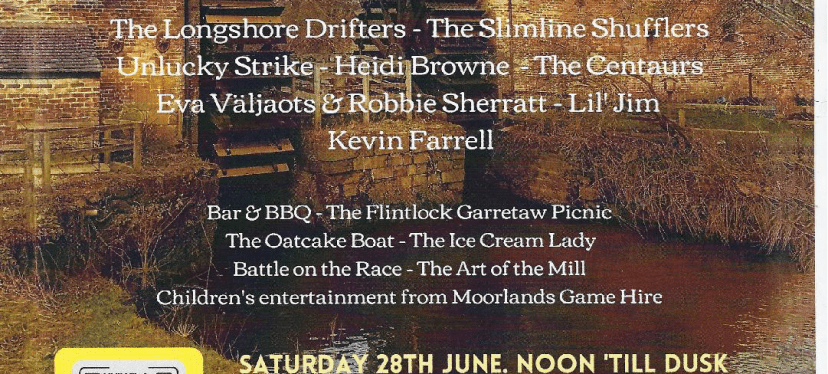
On the 28th June 2025 the Cheddleton Flint Mill Industrial Heritage Trust will be hosting a live music festival at the listed 18th century bone mill. This is a festival fundraiser to mark the centenary of the Garretaw carnival on the Caldon Canal in 1925, hence the ‘Flint Garretaw’ naming.

The festival village will be situated on the Flint Mill car park between the river and the canal with a specially built stage utilising the Mill as a uniquely lit backdrop to an afternoon and evening of music and various activities with both water wheels turning. All proceeds from this event go to the charity Cheddleton Flint Mill Industrial Heritage Trust. (Registered Charity No: 254196)

Book your place via any of the following:

Online: https://wegottickets.com/event/654925

Or in person at Cheddleton Flint Mill (open Mondays & Wednesdays).

All enquiries: flintgarretaw@gmail.com

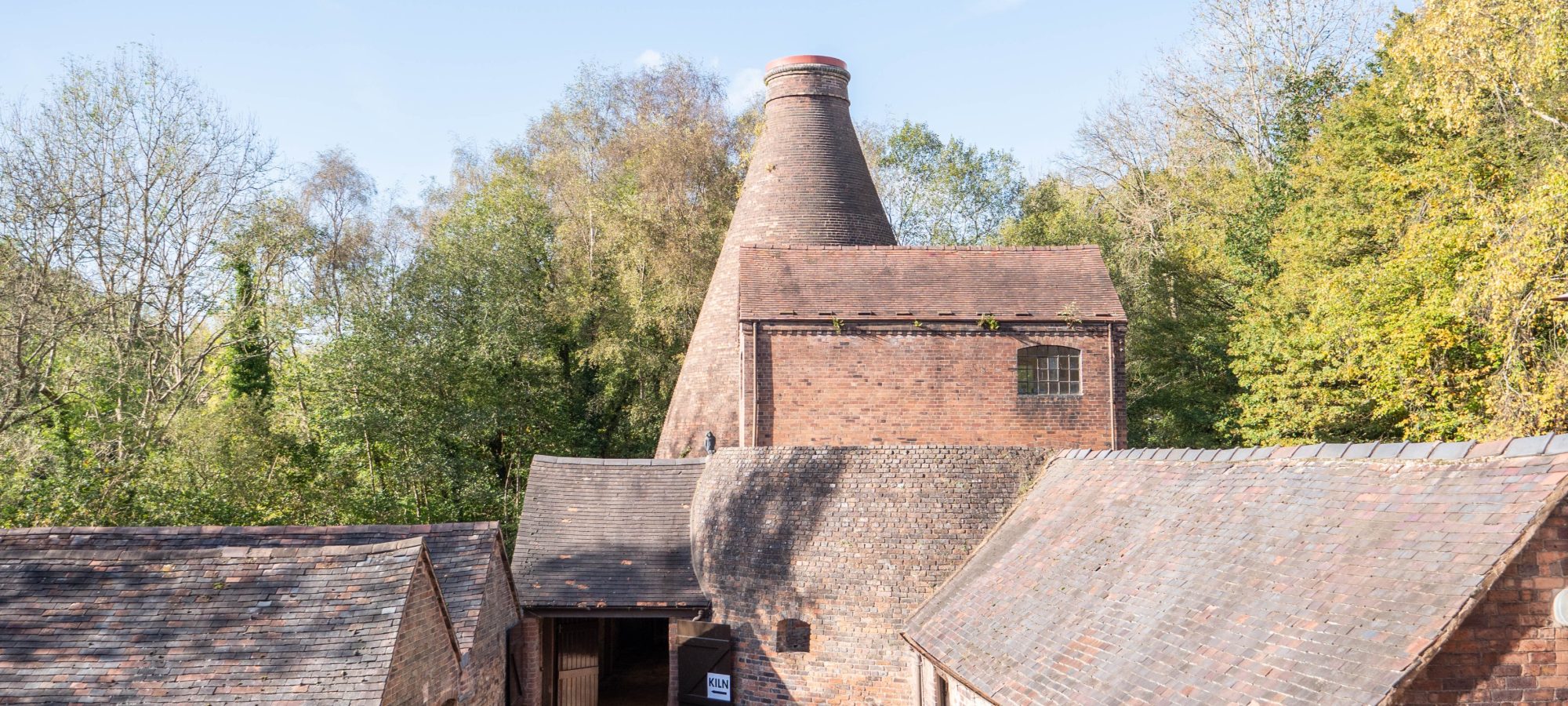
Cheddleton Flint Mill is a fine example of a water mill that ground flint for the local Staffordshire pottery industry. The site features two listed water mills, a small museum, a period cottage, the canal, and many other exhibits. The site is open to the public and is run by The Cheddleton Flint Mill Industrial Heritage Trust which was formed in 1967.

Building Resilience: Sustaining Macclesfield’s Silk Heritage to Protect, Share, and Enjoy Stories of Working Lives

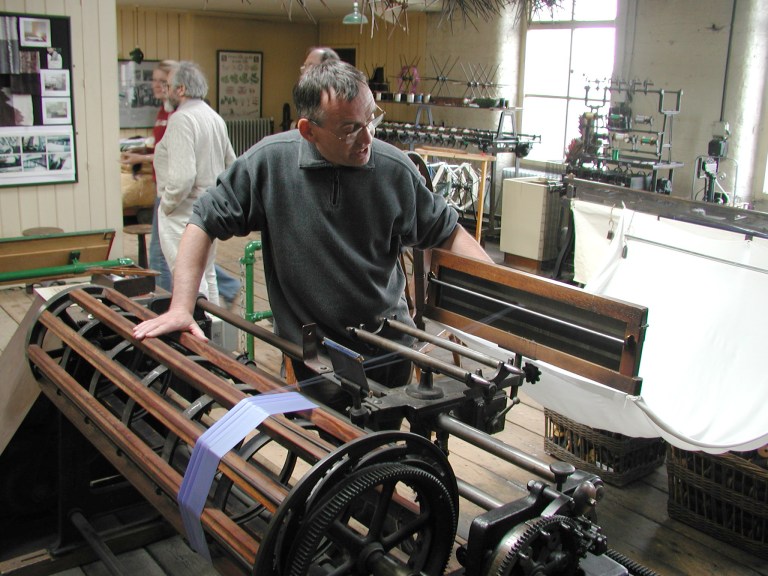
Silk macinery in operation, Paradsie Mill. Image courtesy of Paradise Mill.

This spring, the National Lottery Heritage Fund awarded £227,000 to The Silk Heritage Trust to develop Paradise Mill and the Silk Museum in Macclesfield into a vibrant campus of economic activity, skills development, and heritage participation. This grant will help keep alive the stories of Macclesfield as the centre of the nation’s silk heritage.

The three year project ‘A Stronger Future: Developing the Silk Heritage Trust’s vision for culture and heritage in Macclesfield’ aims to improve the training of the museum’s staff and volunteers. It also intends to help preserve endangered collections, the museum’s silk weaving skills, and extend the museum’s audience reach.

Paradise Mill, Macclesfield. Image copyright Dr Michael Nevell

Europa Nostra UK : Shrewsbury Flax Mill Free Webinar, 24 April 2025

Shrewsbury Flaxmill Maltings recently won a European Heritage Award/ Europa Nostra Award 2024 for Conservation and Adaptive Reuse.  A free webinar has been orginsed with the architects who led the project, Geoff Rich and Tim Greensmith, who will share with the fascinating story of the project.

Established as a Flax mill in 1797, the site of Shrewsbury Flaxmill Maltings includes the world’s first iron-frame building which has been described as the ‘grandparent of skyscrapers’. Its combination of cast iron beams and columns, brick arches, and cast iron ties made its construction fireproof, while large windows admitted natural light for its numerous employees. A century later, it was converted into a maltings through a second state-of-the-art design, with windows either blocked up or made smaller, boiler houses demolished, a timber hoist and new tower added, and a large kiln built.

The brief for this project called for an exemplar of sustainable refurbishment to support the next 100 years of use for a building with a particularly innovative design heritage. Feilden Clegg Bradley Studios (FCBStudios) have conserved the enduring elements of both uses to provide four floors of flexible working space, while weaving in a contemporary layers to accommodate a visitor centre and café.

The online meeting will end with a Q&A session. Please find more information about the project and the speakers below. To register please follow the link on Eventtbrite (though hurry as the webinar is at 5pm on the 24 April!): 

Mills Archive Trust Archival Skills Webinars

On 24 May and 7 June, between 2:00 pm and 4:00 pm, the Mills Archive Trust will be hosting a two-part webinar series covering the fundamental skills needed to protect and share archival records.

For over two decades, the Trust’s UK accredited archive has preserved the history of the traditional and modern milling industry. They want to share these skills, whether you are an individual collector or part of an organisation.

The first session will cover how to organise and catalogue archival records. The second session will help you preserve them, including old documents or digital files, from decay and make them accessible online. To join the Caring for Your Collection webinars and for more information, visit new.millsarchive.org/caring-for-your-collection/. For more information, email friends@millsarchive.org.

English Heritage Hunting for Shrewsbury Flaxmill Bell as Site Opens to the Public

As English Heritage prepares to welcome visitors to the Flaxmill Maltings building in Shrewsbury, Shropshire, a hunt for the missing bell has been launched. Matt Thompson, the curatorial director of English Heritage, commented that “we believe the bell went missing in the late 1980s or early 1990s, when Shrewsbury Flaxmill Maltings was left derelict. Whilst it is possible that the bell could have been melted down, it is more likely that someone took it as a souvenir of this imposing, historic building which – at the time – looked close to ruin”

The empty bellcoate at Shrews Flaxmill Maltings. Image copyright Dr Michael Nevell.

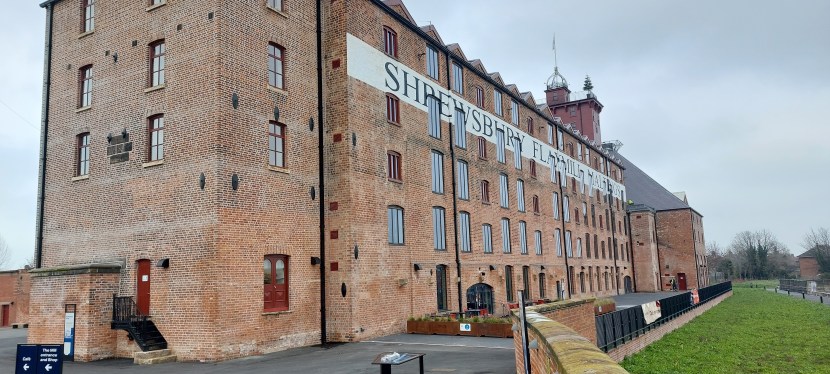
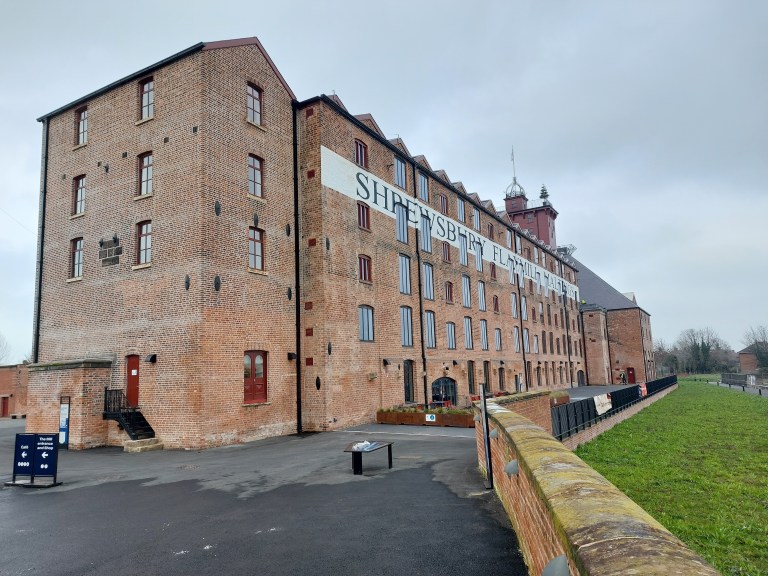
Shrewsbury Flaxmill Maltings is known as the grandparent of the skyscraper, the building being the world’s first multistorey, iron-frame building, with the design paving the way for modern high-rise buildings. The site opened in 1797 as a flax mill and then, from 1897 to 1987, was used as a maltings. It also served as a temporary army training unit and barracks during the second world war. A third of the 800 workers at the flax mill were under 16 and some as young as nine. Shrewsbury itself was too small to provide that number, so children were brought in from as far afield as London and Hull, mostly from the workhouses. Often orphans, the children were given housing, food and clothes but not paid wages. The missing bell would have called the children in from the apprentice house nearby.

Originally operated by a pull rope, the bell changed to an electric chiming mechanism after the second world war, but was lost when the building was left derelict after the closure of the business in 1987. Believed to be around 60cm (24in) high, the bell is cast with the year “1797” on it. The bellcote has been restored but remains, for the moment, empty.

Shrewsbury Flaxmill Maltings opened on 1st April 2025 as English Heritage’s first new paid-for site in 21 years.

Morte details here: https://www.english-heritage.org.uk/about/search-news/shrewsbury-flaxmill-maltings-bell-return-appeal/

Shrewsbury Flaxmill Maltings is open to the public as an English Heritage site from April 2025. Image copyrigth Dr Michael Nevell.