Welcome to the Industrial Heritage Networks and Support website. This site is maintained and updated by the Ironbridge Gorge Museum Trust who run the project and the networks. We aim to support industrial heritage in England through networking, information exchange, guidance, and training. Please explore the website and please contribute! For more information you can … Read more Welcome to the IHNs website!
The next in-person Cornwall & Devon Industrial Heritage Network meeting will be held at Coldharbour Mill, Devon, on Thursday 6th November from 11am to 1pm. This will be followed, after lunch (there is a cafe on site), by a tour of the site (2pm to 3pm). The themes for the 2025-26 IHN meetings are conservation and maintenance.
All IHN members and friends are very welcome to attend. Follow the link below to book a free place.
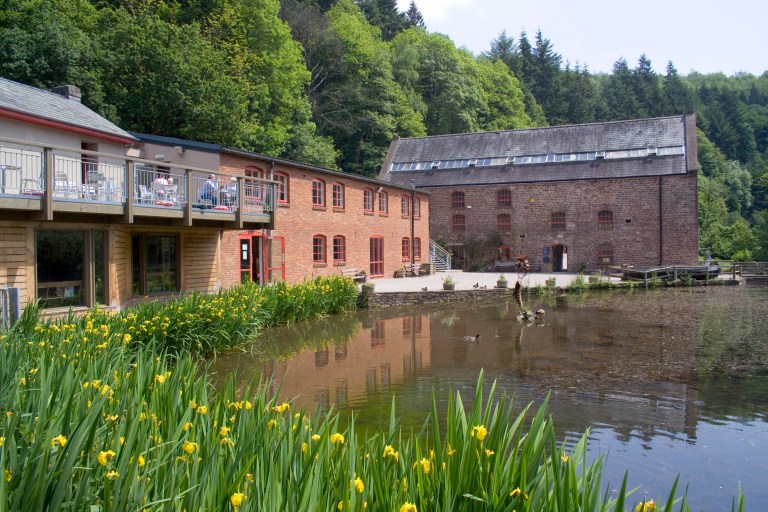
Coldharbour Mill is a 200-year-old spinning mill in Uffculme, Devon. It was built by Thomas Fox to spin woollen and later worsted yarns in 1799. It opened as a museum in 1982, and has continued to produce high quality worsted knitting yarn on its period machinery. For more details about the mill follow this link: https://www.coldharbourmill.org.uk/
The Department for Culture, Media and Sport (DCMS) has released a new report that compiles evidence on the budgetary pressures facing England’s heritage sector, using a regional case study approach focussing on local and combined authority funding in West Yorkshire. The findings will be familiar to many industrial heritage sites.
The report outlines how over a decade of local authority funding cuts, alongside the loss of EU funding and the continuing effects of the pandemic, have placed significant pressure on small to medium-sized heritage organisations. While some have adapted through asset transfers, income diversification, and new governance models, others, particularly organisations in deprived regional areas, reliant on volunteers, or working with rural or intangible heritage, face an increasingly uncertain future.
The findings show, that since 2010 there has been a notable decline in local authority support for heritage, the limited long-term impact of project-based grants for smaller organisations, the essential role of support networks, and the close relationship between place and heritage. Thus, Local Authorities, the main providers of heritage services in their areas, have seen real-term cuts of up to 49% in central government grants since 2010, alongside a 35% fall in cultural service spending, and a 36% per capita reduction in planning, environmental, and cultural expenditure.
At the same time, the Department for Digital, Culture, Media and Sport (DCMS) reported real-term reductions of up to 24% durign the years 2011–2015. These cuts have led to closures, reduced opening hours, and the scaling back of public programmes, particularly in more deprived areas.
The impacts reported differ significantly by location and heritage type. Urban and asset-based heritage were found to often attract regeneration-linked investment, while rural and intangible heritage remain underserved and under-researched. The report also noted that there is evidence to show that funding cuts risk diminishing social cohesion and wellbeing, especially where heritage spaces serve critical civic and educational roles.
Seventy-five civic museums across England will share £20m through the UK Government’s Museum Renewal Fund. The monies will be distributed Arts Council England. The funding forms part of the £270 million ‘Arts Everywhere Fund’ launched in February 2025. The funding will be used by museums to support work towards stabilising their financial situation and building towards sustainable and thriving futures. It must be spent by the end of January 2026.
Local authority and other civic musuems services with industrial sites receiving more than £5 million in funding include:
Northern Mine Research Society is experimenting with a series of online lectures this autumn/winter. The first of these will take place on Tuesday 7th October at 7pm. This initial lecture will be given by Steve Grudgings on ‘From Calley to Curr: the development of the Newocmen Engine in the eighteenth century’.
Join Steve to hear how the Newcomen engine developed from a bespoke, artisan-built, item to a “commodity” product built from standardised components. Steve will highlight the key challenges early engine builders had to overcome and how their endeavours contributed to the recognition of the engineering profession.
Non-members are very welcome. For joining instructions contact NMRS President Len Morris at: lmorris768@btinternet.com
The East-West series of workshops aims to exchange ideas and knowledge among Western and Eastern colleagues to build a more international and diverse industrial archaeology. The activity is organised jointly by the Institute for Cultural Heritage and History of Science & Technology (USTB, China), and the UK Association for Industrial Archaeology.
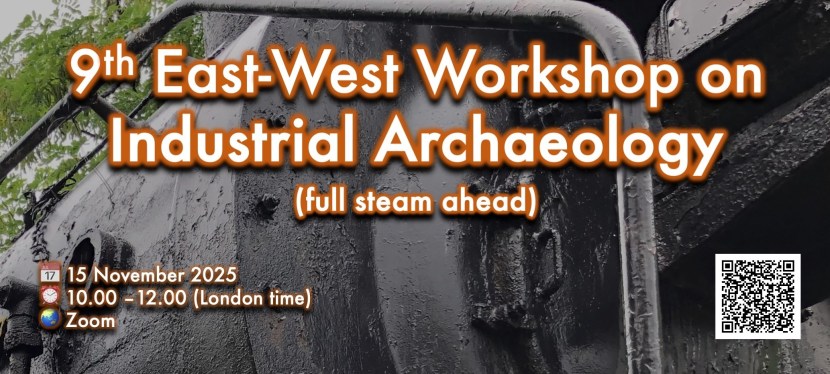
The 9th East-West Wiorkshop takes as its theme the industrial archaeology of railways. Modern railways were born in Britain 200 years ago in 1825 with the opening of the Stockton & Darlington Railway (although the concept of using rails to move bulk goods around the landscape is much older). From there, they spread to the rest of the world, reducing travel and transportation times, and fostering modernisation, industrialisation and urbanisation.
Facing both continuity and continuous change (including the expansion and contraction of networks, new traction technologies, and instances of nationalisation and privatisation), in the 21st century, the railway is the most efficient and sustainable mode of transport and, particularly in the East and Global South, is expanding its tracks into the future. To honour its 200th anniversary, the 9th East-West Workshop on Industrial Archaeology travels to the railway past to examine the international circulation of treaties, technologies, materials, and people that defined the early development of railways in Eurasia.
Speakers & Talks
Yibing FANG (Chinese Academy of Sciences, China): “A Review of Research on China’s Early Steel Rails Heritage”
Paulina ROMANOWICZ (Polish Academy of Sciences, Poland): “Rediscovery of a Brickworks Narrow-Gauge Industrial Railway Tunnel in Stołczyn, Poland”
Arida Fitriana YASMIN (University of Groningen, Netherlands): “Follow the Tracks: Railway Heritage Management at the Ombilin Coal Mining Heritage of Sawahlunto, Indonesia”
Juan Manuel CANO SANCHIZ (University of Science and Technology Beijing, China / Association for Industrial Archaeology, UK): “European Early Railway Architecture in Beijing: A Perspective from Building Archaeology”
Date & Time
15 November 2025, Saturday. 10.00-12.00 (London time)
This ia free online workshop via Zoom. For more information and to book for free follow the below link:
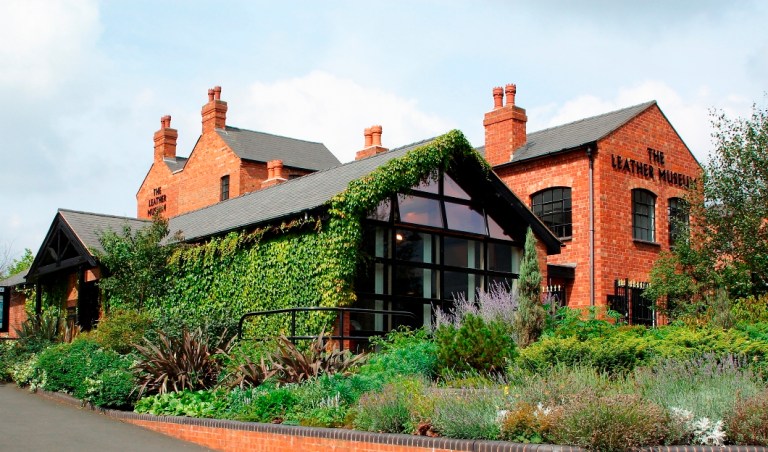
Walsall Council has announced that Walsall Leather Museum will close next year (2026), despite a stay of execution earlier this year. The Council met on Wednesday, September 24, to approve plans for purchasing a new town centre building for the museum and to sell off the existing museum building, it self a former leather works in Littleton Street West, to the nearby Walsall College.
In February a petition against any sale, closure, or relocation of the Museum attracted 6,491 signatures and hundreds of people attended a demonstration and march at the time to oppose the closure. The Council cabinet announced on February 12 that Walsall Leather Museum would remain open in its current location to allow them to meet with stakeholders, deferring any decision until 2026. However, this new decision means that the museum will close without any new premsies being identified and without a long term plan for the contents of the museum.
Further details here: ttps://www.expressandstar.com/entertainment/attractions/2025/09/25/youre-destroying-the-cultural-heritage-of-walsall-by-moving-the-leather-museum-says-mp/
Walsdall Leather Museum. Image courtesy of Walsall Letaher Museum.
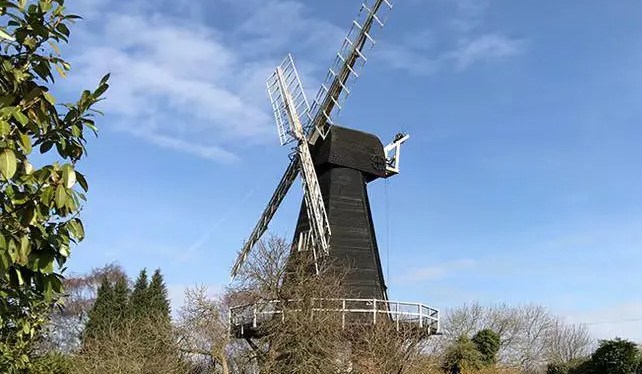
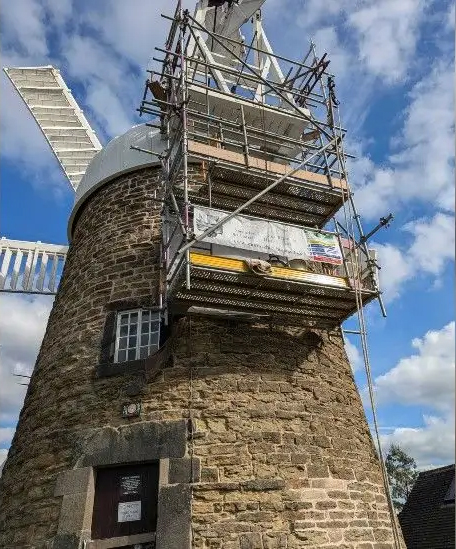
Conservation and restoration work at three windmills has been finished ahead of the winter. Heage Windmill in Derbyshire, Meopham Windmill in Kent, and the White Mill, also in Kent, have been undergoing programnmes of conservation and restoration work for several years.
Heage Windmill was restored in 2002, but the Grade II* listed building required further work due to weather-related erosion to the exterior stonework and increased damp inside the building. Following consultation with Historic England, the Heage Windmill Society secured £30,000 in funding from the Association for Industrial Archaeology (AIA) and the Headley Trust for the works to go ahead. Work on the sails and caps was carried out in 2023, and now repair work on the stone tower has been completed.
Grade II* listed Meopham Windmill, which was built around 1820, had fallen into disrepair. Kent County Council purchased the mill, known for its rare six-sided design, in 1959. A £300,000 restoration programme has seen it reconstructed with new mechanisms, revitalised grounds, and its sweeps restored. The funding for the restoration came from a collaboration between KCC, Meopham Windmill Trust, Suffolk Millwrights, and the local community.
Finally, the Grade II listed White Mill in Sandwich, Kent, had its four sails restored and reinstated in September. The windmill was built in 1760 and served the community as a working mill until the 20th Century, before it became disused in 1957. The White Mill Rural Heritage Centre said the landmark was partly restored in the 1960s, but over the past five years it had undergone more extensive works, and that repairing the historic industrial machinery was a “major testament to the power of volunteering and the important role it plays in the community”.
Further details on these restoration projects can be found on these links:
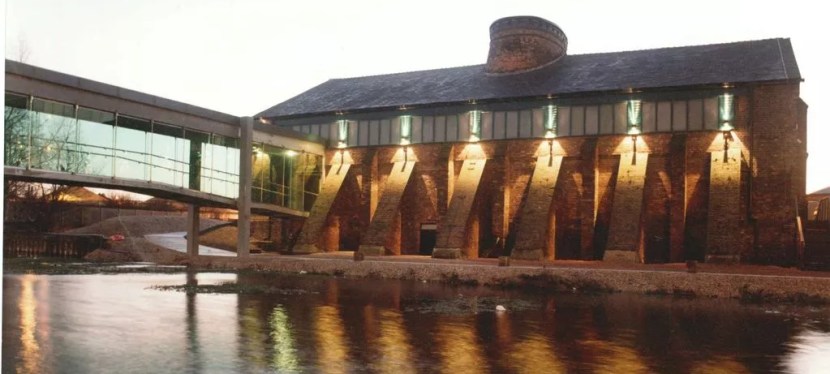
The World of Glass Museum in St Helens has been saved from closure, ahead of its 25th anniversary year in 2026. The museum was facing a combination of increasing competition for funding across the charity sector, and a steep rise in annual running costs which threatened its immediate future (see blog 2nd July). In response the museum launched an emergency funding appeal.
The Museum reported that a crowdfunding appeal had raised £27,000, and in addition they had received generous support from local firms, grant funders, and community fundraisers. This has brought the total of funds raised to £87,000. Sarah Taylor, World of Glass chief executive, said: “This support has been so inspiring….We’re breathing a huge sigh of relief. Thanks to this funding, we can plan for the future with confidence. We are proud to be a free museum, committed to sharing art, history, and culture with everyone — regardless of background or income.”
The next in-person North West Industrial Heritage Network meeting will be held at the Lancashire Mining Museum, Astley, Wigan, on the 17th October, from 11am to 1pm. This will be followed, after lunch (please bring your own), by a tour of the site (2pm to 3pm). The themes for the 2025-26 IHN meetings are conservation and maintenance.
All IHN members are very welcome to attend. To book a place follow this link:
The Lancashire Mining Musuem, which is entirely voluntary run, has origins going back to the 1970s, and first opened to the public in 1982, re-using buildings from the former Astley Pit, which closed in 1970. The museum has the last surviving headgear and winding house in the whole Lancashire coalfield. Apart from the steam winding engine and headgear, the museum also houses many exhibits, not least of which is the collection of 28 colliery locomotives, the largest collection of its type in the United Kingdom.
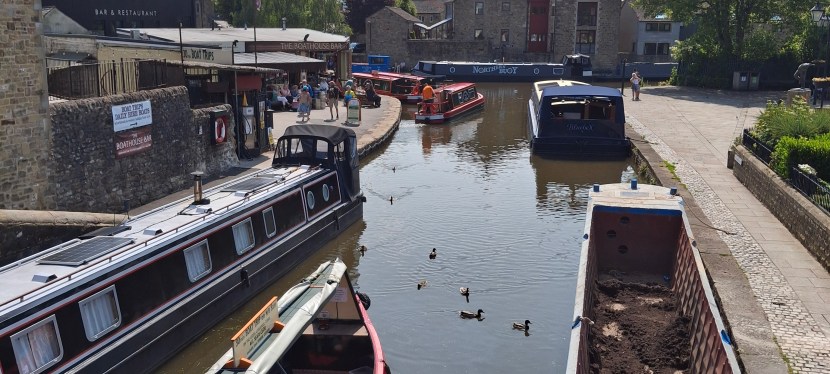
The Canal & River Trust (CRT) is appealing for people interested in the history of canals to volunteer to map and record the heritage of Yorkshire’s 250-year-old canals, as part of a national survey. The heritage survey will chart how the canal system has changed over the past 30 years, by updating and augmenting a survey of canals completed in the early 1990s by British Waterways and Historic England (then English Heritage).
Over the course of several weeks earlier this year, CRT ran a pilot of the heritage survey on the Leeds & Liverpool Canal. Teams of volunteers used an app developed specifically to survey a range of heritage assets situated along the canal between Leeds and Liverpool. This work included looking at locks and lock cottages, bridges, aqueducts, tunnels, wharfs, warehouses, and stables. The project is now being rolled out across the 2,000-mile network of canals that span England and Wales, with the Yorkshire survey the latest area to be studied.
Carrying out the volunteer-led survey of the CRT’s network of canals, and the historic setting around them, is expected to take four years. The project is supported by funds raised by players of People’s Postcode Lottery.








 Industrial Heritage Networks