
The Newcomen Society Launches Small Grants Scheme

The Newcomen Society has introduced a Small Grants programme, aimed at organisations who are working in the field of the history of engineering and technology, and are charities, voluntary organisations, or registered archives holding relevant collections. The scheme will initially run for a year, February 2026 to February 2027, before being reviewed.

The new scheme is intended to fund projects which:

  1. Support the collection, cataloguing and preservation of objects and archives about the history of technology.
  2. Promote the display and interpretation of the history of technology.
  3. Encourage and support the publication and wider dissemination of material about the history of technology in a range of formats such as articles, videos, podcasts, conferences etc.

The minimum grant will be £500 and the maximum £10,000, with applications possible throughout the 12 months of the initial scheme. To download an application follow the link below:

Expressions of interest should be made by email or post to the Hon Secretary, The Newcomen Society, P O Box 79326, London SW1P 9NP Email: cosec@newcomen.com

All successful applicants will be required to submit an end of project report and are encouraged to submit article(s) on their projects for possible publication in Newcomen Links or the International Journal for the History of Engineering & Technology.

Updating the South West Archaeological Research Framework (SWARF) – Call to Take Part

The Bureau for the Contemporary and Historic Consultancy (BUTCH) has been commissioned to support the update of the South West Archaeological Research Framework (SWARF). This is to make sure that it reflects all the research done in the last 18 years and that the priorities for future research are clear. This research framework includes a substantial post-medieval, industrial, and modern section, which will be of interest to the dozens of industrial heritage and archaeology sites, groups, and museums in the region.

The BUTCH team are looking for expressions of interest from experts in their field to fulfil two roles in this process. The roles are (1) Resource Assessment Chapter Team Lead; (2) Expert Panel Member. You may also wish to be involved in their commitment to engage the wider research community. 

The online version of the current South West Archaeological Research Framework (SWARF), including the industrial section, can be found here: Post-Medieval, Industrial and Modern Periods – South West England Research Framework

If you are interested in taking part, please register your interest by completing the form, via the link below, by 7 June 2026 for roles 1 and 2. The form will remain open for those who wish to be updated on the project or who might be interested in being involved in future discussions. The link for the form is here: SWARF Involvementhttps://lnkd.in/e-gu3exM

The front cover of the 2008 SWARF monograph.

Images of Industrial Heritage: ICOMOS UK Photography Competition 2026

ICOMOS UK are inviting mebers of the public to enter their second photography competition, which this year is on the theme, ‘Images of Industrial Heritage’. The photography competition, which was launched at ICOMOS UK’s Industrial Heritage event at the canal museum in London last month, will celebrate built and living heritage around the world.

To mark the launch of the ICOMOS UK Industrial Heritage Committee, this competition will explore changing approaches to and perceptions of industrial heritage, and reflect on how they are preserved, celebrated, and debated. There are four categories that images can be submitted for, which aim to record, celebrate, or pose questions about the variety of industrial heritage and its impact on people:

  • Machinery – working or redundant engines, equipment, production lines and processes
  • Buildings & Structures – from the monumental to the fragmentary
  • Landscapes and their transformation by the presence or disappearance of industrial activity and processes
  • People and community – making, conserving, taking part, moving away

Detail on how to enter the competion, the deadline for which is the 1st September, can be found here:  Photographic Competition.

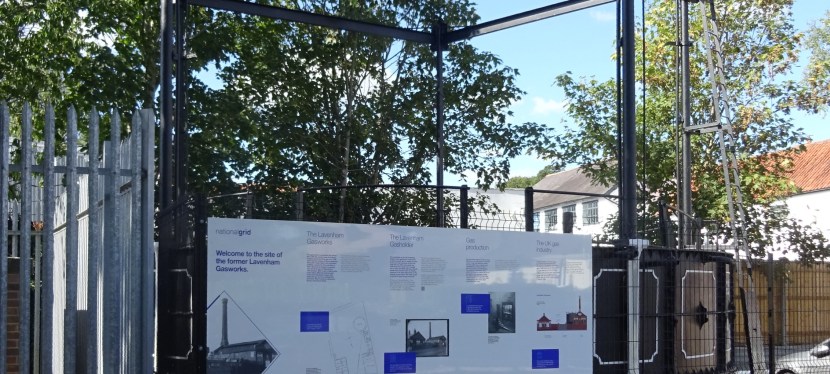
Preserved gasholder. Image courtesy of ICOMOS UK.

Climate Change Adaptation on Two More Industrial Heritage Sites

Charting the impact of climate change on industrial heritage sites often involves recording damage from storms, floods, and prolonged dry spells. However, many industrial sites and museums have been putting plans in place to adapt to changing climatic conditions this decade, and two sites have just announced the installation of solar panels: Whitchurch Silk Mill and the Glenlee hydro-electric power station.

The waterpowered Grade 2* listed Whitchurch Silk Mill, in Hampshire, has installed a solar energy system, with the panels on their modern cafe and visitor entrance building, using support from Basingstoke and Deane Borough Council’s Business Investment Fund. Sue Tapliss, director of Whitchurch Silk Mill, said: “We are delighted to complete this project. The waterwheel is a powerful symbol of the mill’s past and its longstanding relationship with sustainable energy. Installing solar panels allows us to honour that heritage while taking a meaningful step forward in reducing our carbon footprint. We are extremely grateful to Basingstoke and Deane Borough Council’s Business Investment Fund for making this possible.”

This latest improvement marks a return to renewable energy for the mill, which was originally run by a waterwheel powered by the River Test. More details here: Whitchurch Silk Mill has installed new solar panel system

Solar panels have been fitted to the 1934, Category B, Glenlee Hydro-electric power station, near Dalry in Dumfries and Galloway, Scotland, by renewable engergy firm Drax. The power station has been running for more than a century and the new solar panels are designed to meet the sattion’s back-up power needs, which it currently pays to get from the local electricity grid. More details here: First solar panels in place at historic hydro power network

Whitchurch Silk Mill, Hampshire. Image copyright Dr Michael Nevell.

SPAB One Day Conference: ‘Caring for Their Future: Recording, Repairing, & Researching Mills’, 13 June 2026

The SPAB Mills Section is running a one day conference on wind and water mills in Britain on 13 June 2026 in Reading, and booking is now open. There will be chaired panel discussions after both the morning and afternoon talks. Refreshments will be available during break times and delegates will have the opportunity to see some of Rex Wailes’ drawings on display at the Mills Archive Trust.

Mildred Cookson and Nathanael Hodge from the Mills Archive Trust, will share their knowledge on caring for documents and images, and project archivist Hei-Yan Tsui will share some finds from the Rex Wailes collection. Dr Toby Huitson and Duncan McCallum will explore the Mills at Risk theme and the intricacies of listing historic buildings. Justin Coombs will demonstrate his innovative Smartmolen Project, and the confence will also hear from water-mill expert Stephen Bartlett about flood warning and prevention for watermills.

To book the conference follow the this link: Caring for their future: Recording, Repairing, & Researching Mills | The SPAB

Collections Trust Takes on Museums Association’s ‘Find an Object’ Service

The Collections Trust has taken on the Find an Object platform, a service previously managed by the Museums Association (MA). The platform lists deaccessioned items from museum collections that are available for transfer to other museums or organisations within the public domain.

Users can upload items they plan to dispose of, as well as search for objects that might find a place within their collection. They can also make speculative requests for items that they are looking to acquire. More than 200 items from museums across the UK are already listed on the Collections Trust website. Current listings on the MA website will remain live until 18 May, after which the service will be taken offline. 

Museums with active listings on the are encouraged to repost these to the new site as soon as possible.

Further details here: Collections Trust takes on Find an Object service – Museums Association

AIA 2026 Norwich Conference Booking Now Open

Booking for the Association for Industrial Archaeology’s Annual Conference is now open via the AIA website:  https://industrial-archaeology.org/Conference. This year’s Conference is to be held at the Mercure Hotel, Norwich, East of England, from the 4th to the 9th September.

The AIA Annual Conference was first established in the 1970s and you can book for in-person or online attendence for the weekend programme. This year’s event follows its traditional format, starting on Saturday with a day of talks on the Industrial Heritage of the area followed by the presentation of this year’s awards and the Conference Dinner. On Sunday morning there will be the AIA AGM followed by the Rolt Lecture. Who was Tom Rolt ?

On Sunday afternoon, Monday, Tuesday, and Wednesday morning there will be a series of tours and evening talks. The full itinerary, costs, and accommodation details can be found on the website here: Annual Conference – The Association for Industrial Archaeology

Thanks to the Patrick Nott bursary, there will be five free places for the entire event from Friday to Wednesday, including accommodation, and up to £100 for travel expenses. The places are intended for those who feel they would otherwise be unable to attend. Please send details to the Conference Secretary at conference@industrial-archaeology.org at least 30 days in advance.

Front Cover of the IA Gazetteer from the 1981 AIA Norfolk Conference. Image copyright Association for Industrial Archaeology.

Get Involved With Heritage Open Days 2026

The 2026 Heritage Open Days will take place from 11 to 20 September. Heritage Open Days is England’s largest community-led festival of history and culture, involving thousands of local volunteers and organisations. Every year in September it brings people together to celebrate their heritage, community, and history. Stories are told, traditions explored, and histories brought to life. All the events are free.

269 industrial heritage sites in England took part in Heritage Open Days (HoD) 2025, offering guided walks, talks, and exhibitions as well as hands on experiences. If you would like to take part then the HoD website has full details on how to list a site, event, and/or acitvity.

For further details on how to take part as an event and/or site organiser follow this link: Get involved

AIA’s 10th East-West Workshop on Industrial Archaeology

The next East-West Workshop on Industrial Archaeology, co-run by the Association for Industrial Archaeology (AIA), will be on the 9th May. This is 10th online, free, workshop in the series and takes place exactly five years after the AIA co-hosted the first edition in May 2021.

The East-West Workshops on Industrial Archaeology were not created to endure; at least, not in a purely virtual format. When the first workshop was held in May 2021, it was mainly a way to prevent the COVID pandemic from disrupting our academic activities and international exchanges. However, the experience exceeded expectations. Five years on, the AIA are launching the 10th edition of a series of workshops that has become increasingly popular in the West, the East, and beyond.

To mark this special occasion, this workshop focuses on the archaeology, heritage, and history of alcoholic beverages. The speakers will examine the architecture of malt production in Britain and continental Europe (a key component of beer, whiskey, and other spirits), the history of winemaking and wine consumption in Spain, and the landscape of baijiu production in China. While the workshop acknowledges the serious consequences of alcohol abuse, it also recognises it as a significant element in many cultures worldwide, their social practices, and their heritage.

The East-West workshop series aims to exchange ideas and knowledge between Western and Eastern colleagues to develop a more international and diverse industrial archaeology. The event is jointly organised by the Institute for Cultural Heritage and History of Science & Technology (USTB, China) and the UK Association for Industrial Archaeology.

SPEAKERS & TALKS

  • Amber PATRICK (Association for Industrial Archaeology, Britain): “Malthouse Developments – The Late 18th Century to the Mid-20th Century”
  • Pablo ALONSO GONZÁLEZ (Spanish National Research Council, Spain): “Craft Vs. Industrial? A Critical History of Spanish Wine”
  • Yuchen WANG (University of Science and Technology Beijing, China): “Symbiotic Cityscape: Luzhou Baijiu Cultural Heritage as an Urban Cultural Landscape”

DATE & TIME

9 May 2026, Saturday. 10.00-12.00 London time

PLACE

Zoom (online meeting). More info and free registration:

Mills Now & Then – SPAB Call for Your Mill Histories

To celebrate Mills in 2026 the Society for the Protection of Ancient Buildings (SPAB) is producing a compilation of individual mills’ histories. The SPAB Mills Section wants to create a new and comprehensive picture of mills of all types throughout the UK, Ireland, and Europe and are calling for submissions from owners, volunteers, millwrights, or anyone interested in the history of a mill or a linked group of mills, to write about how they evolved.

SPAB would like to understand a mill’s origins and how the structure and uses have changed over its lifetime. This can be a post mill, smock or tower mill, a watermill or tide mill, or an industrial mill. The mill can be located in the UK, Ireland or Europe. The entry can be about mills stil existing, derelict, or lost.

The chosen entrants will receive a copy of the published booklet, which will be available at SPAB Mills Section events. A digital version of selected submissions will also be available.

The deadline for submissions is Friday 1 May 2026. All entries to be submitted via email to: nmwsubmissions@spab.org.uk

Further details can be found by following this link: Mills Now & Then – Call for your histories | The SPAB

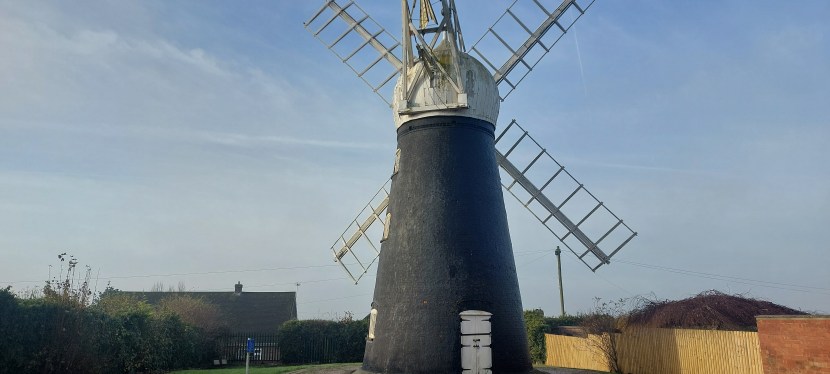
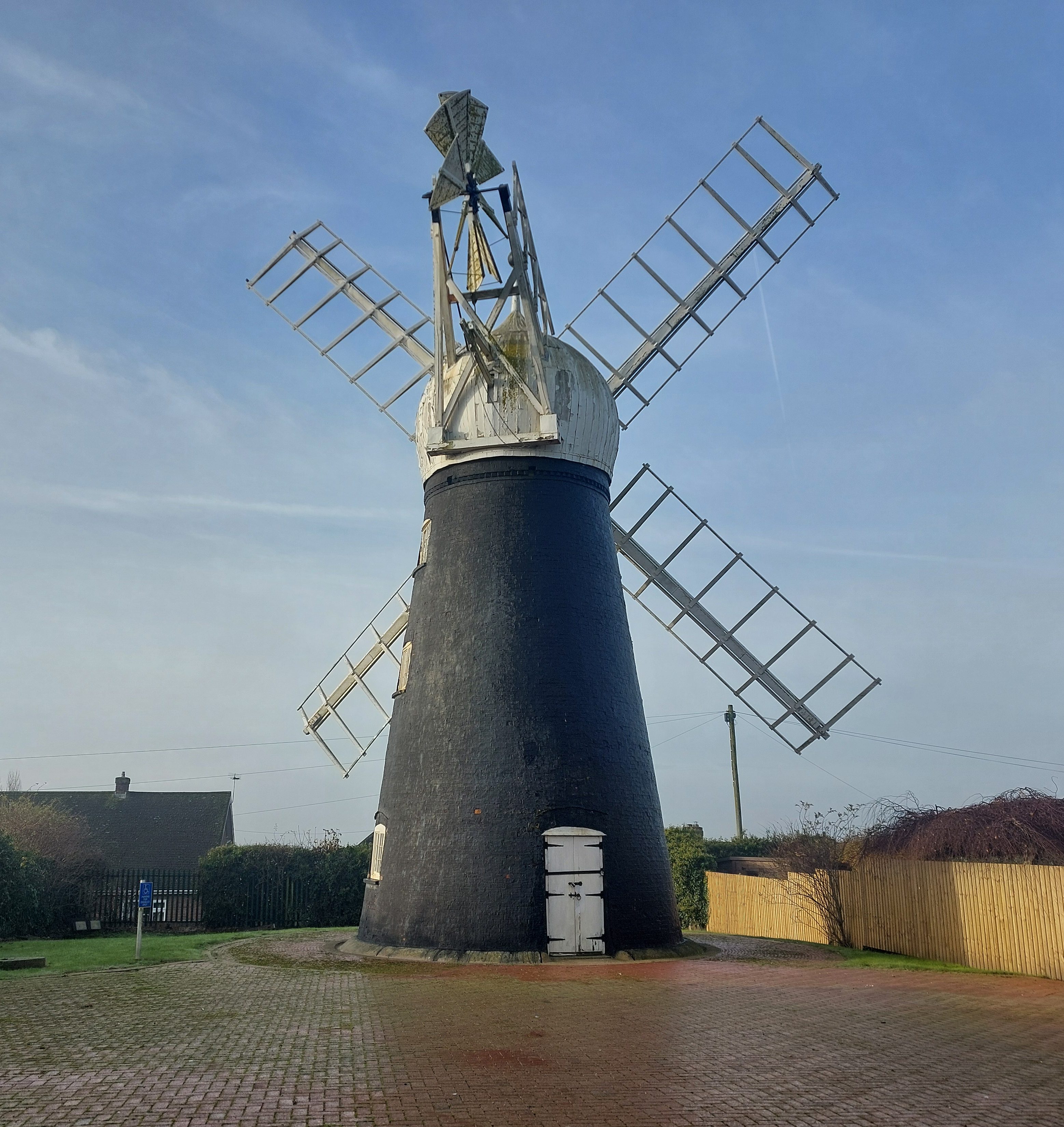
Windmill in Lincoln. Image copyright Dr Michael Nevell.