IHSO Project Extended to 2026

The Industrial Heritage Support Officer (IHSO) role, occupied by Dr Mike Nevell, has been awarded further funding to enable it to continue its work to preserve England’s industrial heritage. IGMT is delighted that our partners at Historic England and the Association for Industrial Archaeology have agreed to fund the post, which is vital for the support of the wider Industrial Heritage sector and a mark of the importance of IGMT as a leading Industrial Heritage organisation. 

The IHSO project is funded by Historic England and the Association for Industrial Archaeology (AIA), and began in September 2012. It is managed by the Ironbridge Gorge Museum Trust. The project aims to support the approximately 600 industrial heritage sites preserved and open to the public in England by developing partnerships and promoting best practice, among other things. 

In 2024 the project supported more than 400 sites through one-to-one advice, network meetings, site visits, seminars, websites, and social media. At the end of March the first round of Industrial Heritage Network meetings for 2025 will take place online, and on 25 April, Mike will be talking at an event hosted in Coalbrookdale, organised by the Boiler and Engineering Skills Training Trust, about the need for trained engineers to run industrial heritage sites.

Project highlights for 2025 to 2026 include a major report on the industrial heritage sector in England; more online training seminars to support the sector; and the continuation of the Industrial Heritage Networks. These are key to bringing together people working at industrial sites so that they can exchange experience and best practice.  

For further informatioon about the project renewal follow this link: https://www.ironbridge.org.uk/news/ironbridge-news/ihso-for-england-project-receives-funding-for-2025-2026/

Industrial Heritage Support Officer, Dr Mike Nevell, outside Abraham Darby’s 1709 blast furnace, Coalbrookdale. Image copyright IGMT.

Science and Industry Museum in Manchester to Add New Galleries as Transformation Plan Extended 

Manchester’s Science and Industry Museum has revealed plans for new permanent galleries and a new railway visitor experience as part of the next phases of its redevelopment.  The museum plans to create a new Wonderlab gallery, similar to that in other Science Museum Group museums, such as the Science Museum in London and the National Science and Media Museum in Bradford.

The new gallery will explore Manchester’s history of science and invention, drawing on the architectural features and history of the site to reflect the city’s creativity and innovation. It will be aimed at a target audience of ages four to ten, plus access for early years. An open competition to design the gallery has already opened.

In addtion, feasibility work will begin this year on a new free Technicians interactive gallery for 11-16-year-olds. The museum said it is looking to ascertain whether there is potential for the gallery to  open towards the end of the decade. It would be housed within the arches of the museum property’s viaduct, and would mark the first time this space would be used as public galleries.

The museum is also planning a new gallery and static rail experience at the 1830 station, which is set to re-open in 2030 in time for the 200th anniversary of the opening of the Liverpool & Manchester Railway.

Finally, feasibility work is also set to commence “in the near future” on landscaping and improving access in and around the museum’s Lower Yard, to create a new science playground and open the museum site, providing more access from other Manchester locations and attractions. 

Phase One of the Museum’s Transformation Plan, improvements and extensive repairs to the Power Hall, will be completed this summer. By the end of 2025, half of the museum’s site will have been restored over the last five years, following an investment of more than £40m from national government, charitable trusts and foundations, and philanthropists. The second phase will be completed in 2027.

For more details follow these links:

https://www.scienceandindustrymuseum.org.uk/about-us/we-are-changing/revolution-in-progress

https://www.museumsassociation.org/museums-journal/news/2025/03/science-and-industry-museum-plans-wonderlab-gallery-as-it-extends-revamp/#

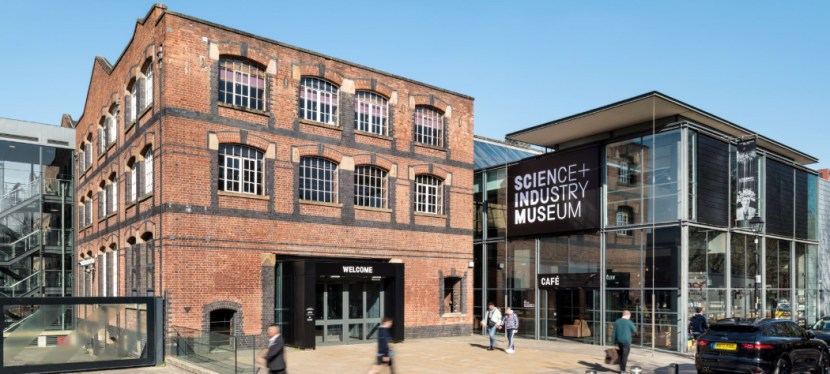
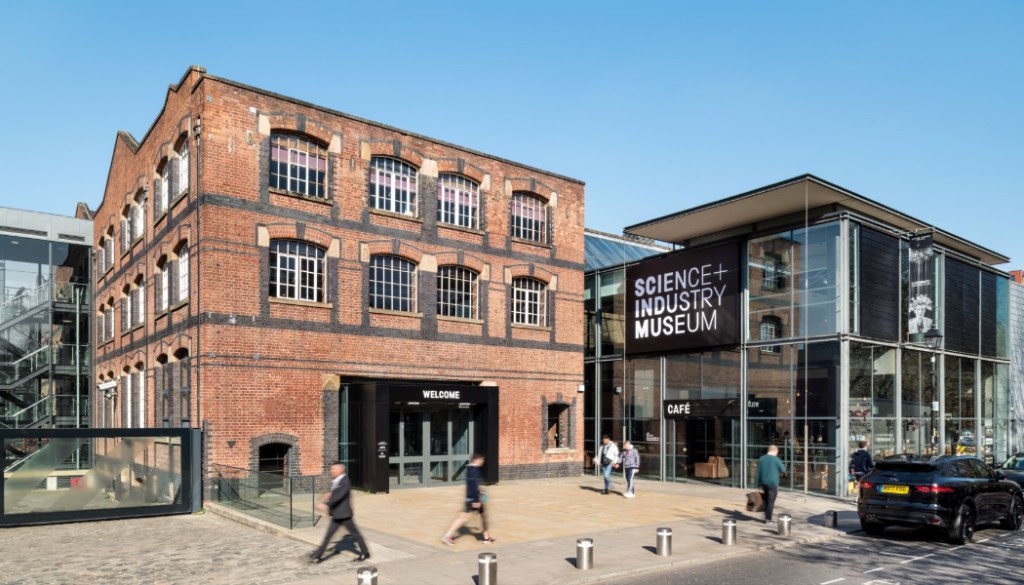
The entrance to the Science and Industry Museum, Manchester. Image courtesy of
The Board of Trustees of the Science Museum.

National Mills Weekend 2025: 10 & 11 May

This year, SPAB’s National Mills Weekend will take place on 10 and 11 May. It will focus on the way that mills past and present have been recorded in pictorial form with the theme ‘Mills in Time’. 

The weekend is an annual celebration promoted by the Mills Section of SPAB.  Across the country hundreds of mills – including some not normally open to the public – will be taking part. 

This year, SPAB are encouraging everyone (owner, volunteer, neighbour, or visitor) to share and display images of participating mills. These can be recent photographs or artworks (including embroideries, collages, films, or videos), or paintings, or drawings, and even old maps, postcards, or posters. To share your images go to the #NationalMillsWeekend Facebook page. Please remember to credit the copyright owner and photographer where known. 

To check whether your local wind or water mill is opening during the weekend click on the individual site website or follow this link for further details: https://www.spab.org.uk/whats-on/events/national-mills-weekend-2025

SPAB-owned Fladbury Mill and Kibworth Harcourt Post Mill, which aren’t normally open to the public, will also be open for the weekend. To book go to the SPAB website.

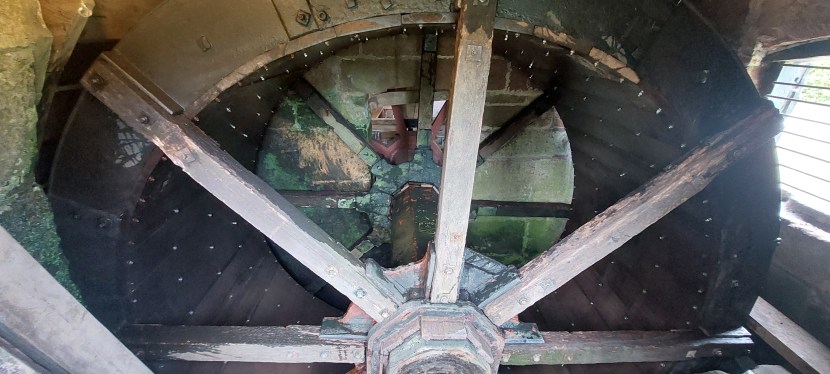
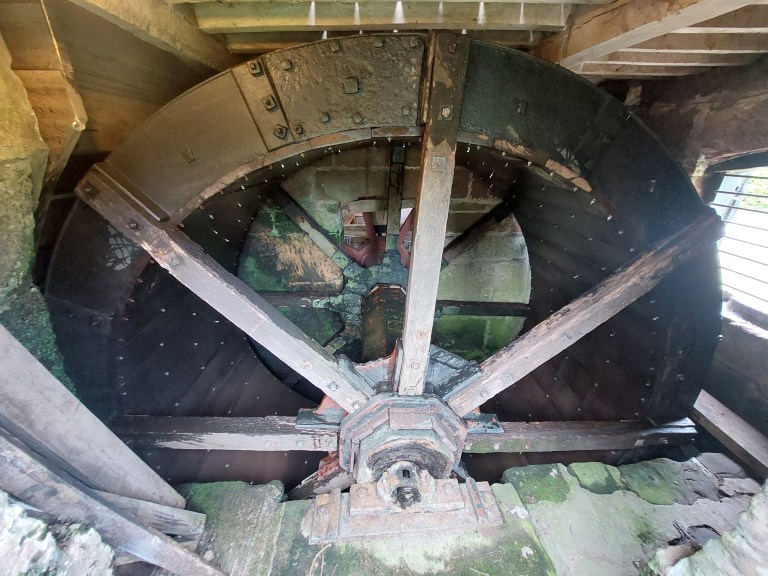
The waterwheel at Stretton Watermill, Cheshire. Image copyright Dr Michael Nevell.

Festival of Archaeology Summer 2025 Officially Launched by CBA

The Festival of Archaeology, run by the Council for British Archaeology (CBA), is back for summer 2025. This year’s theme, ‘Archaeology and Wellbeing’, celebrates the ways archaeology can inspire, connect, and enrich our lives. Whether it’s exploring historic landscapes, taking part in hands-on activities, or engaging in mindful moments with the past, there’s something for everyone.

Running from the 19 July to the 3 August, the CBA has announced some key festival events, including the opening in Northern Ireland at Divis and the Black Mountain, and the festival finale in Bradford, the UK City of Culture for 2025. During this year’s Festival, the CBA will be incorporating the five ways to wellbeing into the events and activities, creating opportunities for people to give, be active, learn, take notice, and connect. 

In 2024 there were dozens of industrial archaeology events across the country, so if you are an Industrial Heritage site or group lookign to get /involved as an organiser now’s the time to submit your event. Or, if you’re looking for some great events this July, you can start exploring what’s coming up now. In both cases follow this link to the Festival website for how to get involved: https://www.archaeologyuk.org/festival.html

Seven Industrial Museums Share £7.25m as Part of £270m Package of Support for Museums and Heritage Venues

Land of Iron, North Yorkshire. Image copyright Dr Michael Nevell

Museums, arts venues, libraries, and heritage attractions in urgent need of financial are to recieve significant Government funding. The ‘Arts Everywhere Fund’ totals £270m, and is to be shared between organisations the UK Government deems in most urgent need of financial support. It consists of both new and renewed funds for the sector.

As part of this package of support, five Industrial Heritage museums and sites will share grants from the 5th round of MEND support worth £7,253,849. These sites are:

  • Bletchley Park – £2,451,350
  • Land of Iron – £655,907
  • London Museum of Water & Steam – £2,626,277
  • Queen Street Mill – £813,115
  • Wheal Martyn Clay Works – £707,200

The £270m package of support will be targeted at organisations in urgent need of financial support to keep them up and running, carry out vital infrastructure work, and improve long term financial resilience. The support includes: 

  • A fifth round of the Museum Estate and Development (MEND) Fund worth £25 million
  • A new £20 million Museum Renewal Fund offering much-needed support to 29 civic museums  
  • An additional £120 million to continue the Public Bodies Infrastructure Fund
  • An additional £15 million for Heritage at Risk through Historic England 
  • A new £4.85 million Heritage Revival Fund
  • A 5% increase to national museums and galleries budgets  
  • Confirmation that DCMS will be providing £3.2 million in funding through the Museums and Schools Programme, the Heritage Schools Programme, the Art & Design National Saturday Club and the BFI Film Academy. 

The Association for Independent Museums (AIM) Director Lisa Ollerhead said, “We very much welcome this significant investment. It is fantastic news for the sector, not least given the pressure the public purse is under.  It also underlines the important role museums and heritage organisations play in strengthening our communities, boosting our economy and providing strong foundations for our creative industries.” 

The full announcement can be found here: https://www.gov.uk/government/news/major-investment-to-boost-growth-and-cement-britains-place-as-cultural-powerhouse

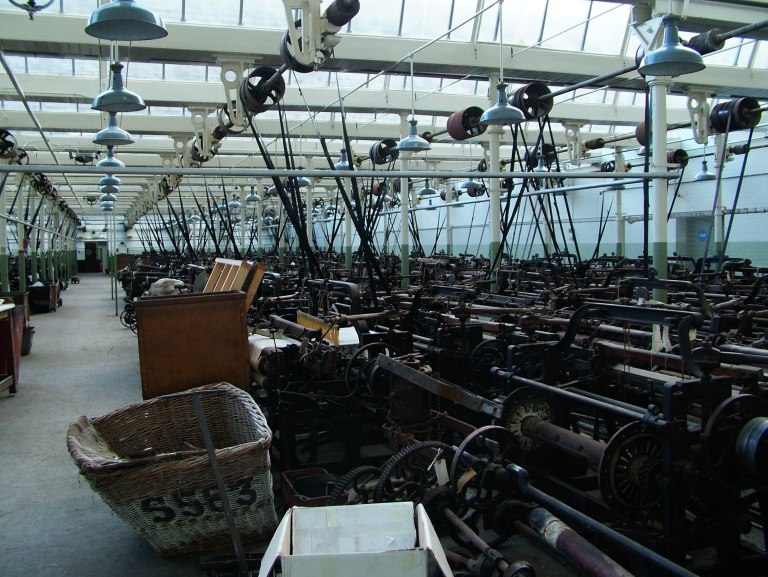
The weaving shed at Queen Street Mill, Burnley, Lancashire. Image copyrighht Dr Michael Nevell.

South Wales & West of England Regional Industrial Archaeology Conference, April 2025

The South Wales and West of England Regional Industrial Archaeological Conference 2025 (SWWERIAC) will take place on 26th April at Walton Village Hall. SWWERIAC took place annually until the Covid Epidemic struck. Oxford House Industrial History Society’s initiative revived the event in 2024. The Somerset Industrial Archaeology Societty (SIAS: www.sias.me.uk) has volunteered to organize the 2025 conference.

SIAS extends a cordial invitation to those interested in Industrial Archaeology to attend the conference in Walton Village Hall (http://www.waltonvillagehall.org). There will also be displays by the associated societies and publications will be on sale. The cost, including refreshments and lunch, is £25. Walton is situated on the A39 just west of Street and approximately 20 miles east of Junction 23 of the M5. The Village Hall is situated just north of the A39 at the end of Meadow Close.

PROGRAMME

09.15 – Registration opens. Tea, coffee, fruit juices and biscuits
10.00 – Welcome – Peter Daniel (President of SIAS)
10.10 – Peter Daniel – The Industrial Archæology of the Porlock Area
10.50 – Terry Stevens – The Unique Heritage of Coker Canvas
11.10 – Break. Tea, coffee, fruit juices and biscuits
11.30 – Stephen Miles – The Kilve Oil Shale Scandal
12.30 – Lunch: cold buffet. Please indicate any dietary requirements
13.50 – Samantha Cullen (Alfred Gillet Trust) – The New Shoemaker Museum
14.30 – Mary Miles – Clarke’s Influence on the Buildings of Street
15.10 – Break. Tea, coffee, fruit juices and biscuits
15.30 – Vanessa Ruhlig – Saving Fox’s Cloth and Dye Works at Tone Dale
16.10 – Close of Conference
16.15 – Visits (maps giving directions to the sites will be available on the day)

Choice of Post-conference Visits:

Street Buildings: A level walk around the centre of Street. We will see the development of industrial housing including grade II listed terraces which feature in books on the Arts & Craft Movement, public buildings, schools, a library, fire station, and swimming pool.

Glastonbury Fossick – Visiting the surviving buildings of Morland’s and Baily’s tanneries and sheepskin works. The walk will start by the Somerset & Dorset Joint Railway offices and will be just over a kilometre in length, all on the level. Morland’s and Baily’s were the major industrial employers in Glastonbury and there was a time just after WWII when they employed about 5000 people between them. The grade II listed buildings of Baily’s, including a landmark chimney, are about to be converted. There are also workers’ houses. Surviving buildings of Morland’s include the Red Brick Building and the Zig-zag Building.

Westonzoyland Pumping Station and Museum of Steam Power and Land Drainage: The Museum is housed in the first steam pumping station to be built on the Somerset Levels. Dated 1830, it is grade II* listed as is one of the earliest in the country. The existing engine, an Easton and Amos machine built in 1861, replaced an earlier beam engine and scoop-wheel pump. The site is also home to a collection of historic engines and items used in the area, including a narrow gauge tramway.

Bridgwater Brick and Tile Museum: This exclusive visit will include a guided tour with particular reference to Industrial Archæology, and a tile-making demonstration.

Book via these links:

SWWERIAC 2025 Booking Form.docx [Word Document]

SWWERIAC 2025 Booking Form.pdf [PDF Document]

SWWERIAC 2025 On-line Booking Form.docx [Word Document for electronic completion]

One of the many stationary steam engines on display at the Westonzoyland Pumping Station. Image copyright Dr Michael Nevell.

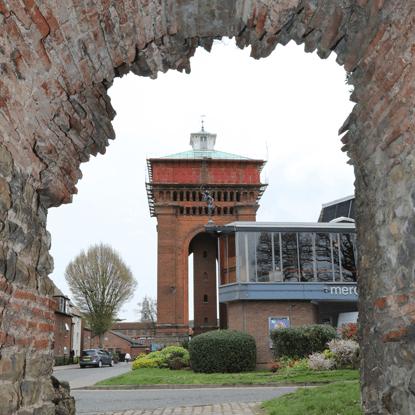
The Balkerne Water Tower, ‘Jumbo’, Recieves £8m NLHF Grant

North Essex Heritage (NEH), which has a 150 year lease on the Balkerne Water Tower, Colchester’s last intact listed water tower, has recieved an £8m grant from the National Lottery Heritage Fund. Affectionately known ‘Jumbo’, the money will help conservere the water tower and open it up to the public as a heritage attraction. The work to secure the future of the water tower will start in spring 2025 and be completed in mid 2027, when Jumbo will be open to the public for the first time in its 143 year history.

The grant will be used to make the 40m (131ft) tower fully accessible to the public for the first time as a heritage and events space. Simon Hall, chair of North Essex Heritage, the site’s leaseholders, said “This breathtaking support from the National Lottery Heritage Fund is a game-changer for our project and our city.”

The 131ft tall Grade II* Listed tower was originally constructed using 1.2m locally produced bricks in 1883. It could hold up to 1,000 tonnes of water when it was in use. It was used for its original purpose until 1984 and has been empty ever since.

Further details here: https://www.savejumbo.org.uk/

The Balkerne Water Tower, known as ‘Jumbo’. Image courtesy of North Essex Heritage

Dean Heritage Centre & Cambridge Museum of Technology Recieve NHLF Grants

The National Lottery Heritage Fund has granted £164,000 for the Dean Heritage Centre’s “Investing in the Past, Future, and Present” project, and a grant of £99,932 to the Cambridge Museum of Technology for their ‘Full Steam Ahead’ project.

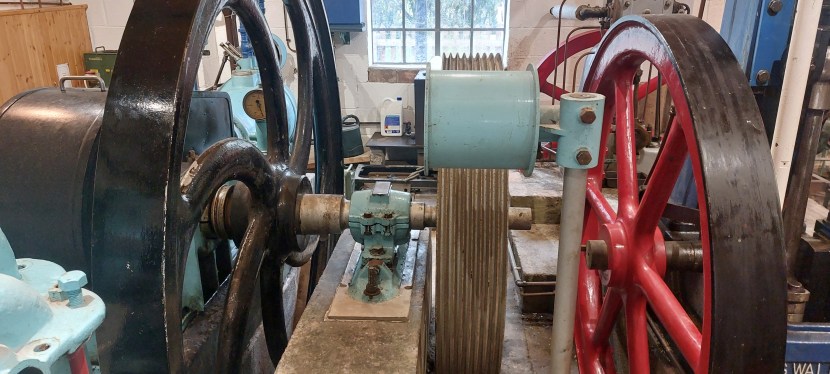
Horizontal stam engine, Cambridge Museum of Technology. Copyright: Dr Michael Nevell

Cambridge Museum of Tehcnology’s grant will fund the ‘Full Steam Ahead’ project. This will see two new heritage roles recruited to expand the Museum’s capacity for both general opening, and for increased education and community outreach work. The funding will also re-invigorate existing space in the Engineer’s House to be used as a space for community hires. Building on existing partnerships within the local Abbey community, the Museum will offer more opportunities for engaging with industrial heritage and their collections, through events and workshops. The Museum will be able to expand its schools programme, reaching more young people and engaging with teachers to form lasting links.

Dean Heritage Centre. Copyright: Dr Michael Nevell

The Dean Heritage Centre, which reflects the history of the Forest of Dean, is based in a listed cornmill and will use its grant for the “Investing in the Past, Future, and Present” project, which aims to “transform the museum”. Volunteers, local groups and schools will be able to take part in the project through “citizen science” activities, including sampling water that runs through the site. “We want to have new galleries, develop the site, and actually make it a viable place for the future,” Mark George, centre manager, said.

Further details about the Dean Heritage Centre here: https://www.deanheritagecentre.org/

Further details abou the Cambridge Msuem fo Technology’s plans can be found here: https://www.museumoftechnology.com/full-steam-ahead

Canal & River Trust Launch Emergency Appeal After Winter Storms Damage

The Canal and River Trust, who cares for a 2,000-mile network of canals and navigable rivers in England and Wales, has launch an emergency appeal for funds to help the network recover from the ‘devastating and widespread’ damage inflicted by a series of winter storms in late 2024 and early 2025.

The Trust reports that Storm Bert’s high winds and torrential rain left boats adrift and flooded locks across the country in December 2024. Shortly after, at the beginning of January 2025, high winds and flooding risks returned as Storm Darragh hit the UK. This triggered a rare Red Warning from the Met Office, and felled over 400 trees along the network, blocking navigable waterways, damaging lock gates, and causing landslips. The charity estimates that it will cost hundreds of thousands of pounds to repair the canals and rivers affected.

Storms and flooding not only destroy towpaths and damage historic locks. They can also pollute and damage the habitats of the wildlife in and around the canal network. CRT teams have been working around the clock to deal with the impacts of these storms but the charity needs further funds to deal with future storm events.

For more details on how to donate online, follow this link: https://canalrivertrust.org.uk/support-us/our-campaigns/perfectstorm

Landslip on the the Huddersfield Narrow Canal in Saddleworth as a result of Storm Darragh, Janaury 2025. Image coutersy of Canal & River Trust.

Moira Furnance Conservation to Go Ahead in Spring 2025

North West Leicestershire District Coucnil has agreed to provide £160,000 of extra funding to repair the Moira Furnace museum buildings. Repairs are due to begin later in February and are expected to take around 22 weeks.

Moira Furnace is one of the best preserved iron blast furnaces in England. Built in 1806 the site is now a Scheduled Monument owned by the local council. Initial plans to repair the structure and museum pre-date the COVID-19 pandemic. In that time the cost of the repairs has risen from £3330,000 to £490,000. The short fall is being made up from council reserves and £65,000 from the UK Shared Prosperty Fund. More details here: https://www.bbc.co.uk/news/articles/cp3j71141v5o

The current site comprises a museum of iron making and social history, a vintage 100+-year-old narrowboat for trips along the canal, fishing along its banks, and woodlands for exploring. More details here: https://www.moirafurnace.org/

Moira furnace. Image courtesy of Moira Furnace museum & country park.