

Energy Resilience Fund 2025

The Energy Resilience Fund (ERF) provides a blended funding package of loan (60%) and grant (40%) to bolster the energy resilience of eligible charities and social enterprises in England.   The Fund is the successor to the pilot Energy Resilience Fund managed by Key Fund and its primary purpose is to enable the supply of renewable energy to an organisation’s own building (s). Many industrial heritage sites may find that they qualify and are suitable for such a fund.

The Fund is delivered by a partnership made up of Social Investment BusinessBig Issue InvestCharity BankCo-operative and Community Finance, Groundwork UK,Key FundResonance LtdThe Architectural Heritage Fund, and The Ubele Initiative. 

Applicants must have fewer than 250 employees, £35m assets, or £40m turnover, but a turnover of more than £100,000, and be based primarily in England. For further details follow this link:

Cheddleton Flint Mill to Host ‘Flint Garretaw: Music at the Mill’ Fundraising Event

On the 28th June 2025 the Cheddleton Flint Mill Industrial Heritage Trust will be hosting a live music festival at the listed 18th century bone mill. This is a festival fundraiser to mark the centenary of the Garretaw carnival on the Caldon Canal in 1925, hence the ‘Flint Garretaw’ naming.

The festival village will be situated on the Flint Mill car park between the river and the canal with a specially built stage utilising the Mill as a uniquely lit backdrop to an afternoon and evening of music and various activities with both water wheels turning. All proceeds from this event go to the charity Cheddleton Flint Mill Industrial Heritage Trust. (Registered Charity No: 254196)

Book your place via any of the following:

Online: https://wegottickets.com/event/654925

Or in person at Cheddleton Flint Mill (open Mondays & Wednesdays).

All enquiries: flintgarretaw@gmail.com

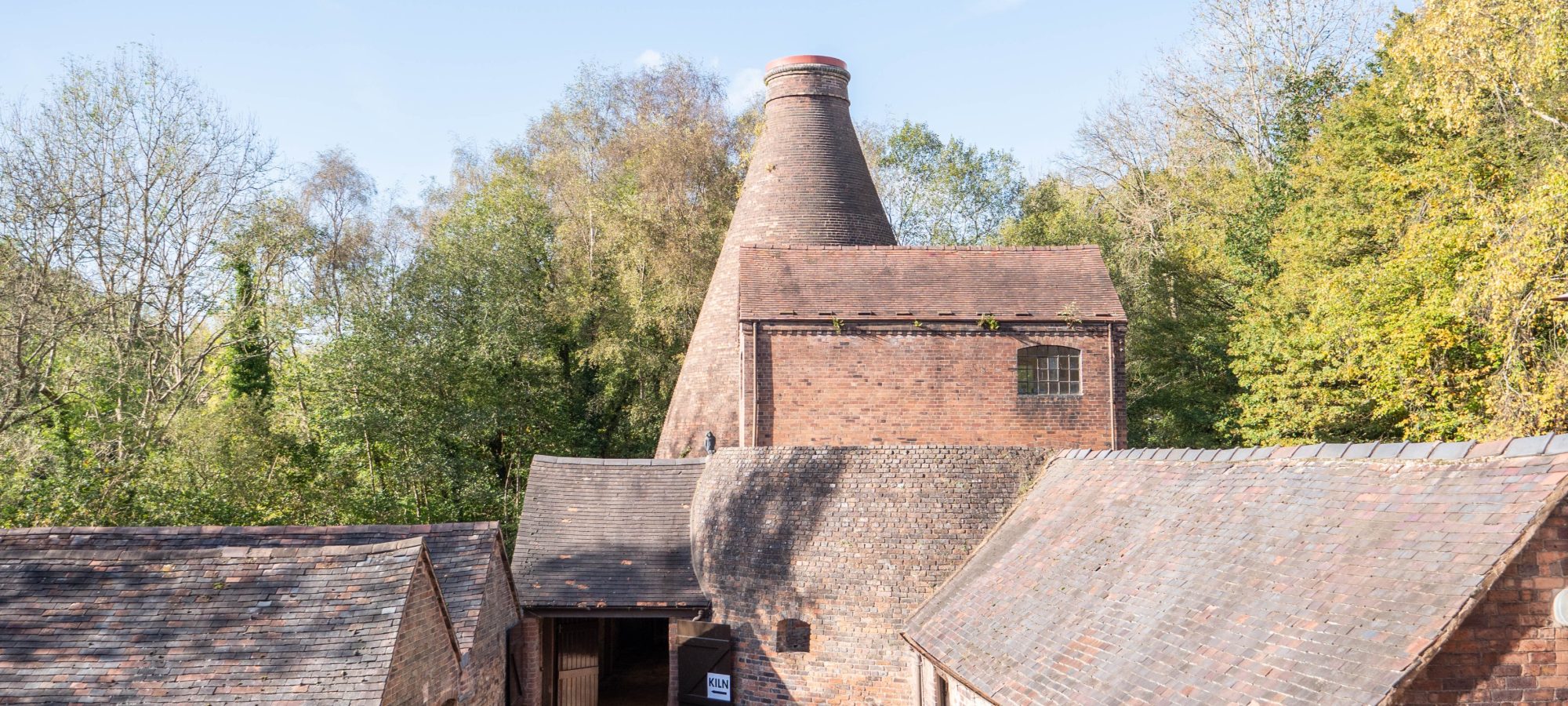
Cheddleton Flint Mill is a fine example of a water mill that ground flint for the local Staffordshire pottery industry. The site features two listed water mills, a small museum, a period cottage, the canal, and many other exhibits. The site is open to the public and is run by The Cheddleton Flint Mill Industrial Heritage Trust which was formed in 1967.

Industrial Heritage Network Meetings for 2025: West Midlands Date Released

2025’s in-person Industrial Heritage Network (IHN) meetings will be taking place over the summer and autumn. Established in 2018, these regional meetings are designed to bring together those industrial heritage sites open to the public in each region, and local groups and individuals working or volunteering on industrial archaeology and heritage subjects and sites in the area. The format is a round-table discussion in the morning, with a tour of the site in the afternoon.

The first meeting for 2025 will be for the West Midlands IHN, which will be held at the Ironbridge Gorge Museum Trust in the Glass Classroom on the Coalbrookdale site on 25th June. After a general meeting in the morning, there will be an afternoon tour of current conservation works at Blists Hill.

All IHN members are very welcome to attend. A booking link via Eventbrite can be found here. https://www.eventbrite.co.uk/e/west-midlands-industrial-heritage-network-meeting-tickets-1377368599559?aff=oddtdtcreator

These meetings are part of the Industrial Heritage Support project for England, run by the Ironbridge Gorge Museum Trust and funded by Historic England and the Association for Industrial Archaeology.

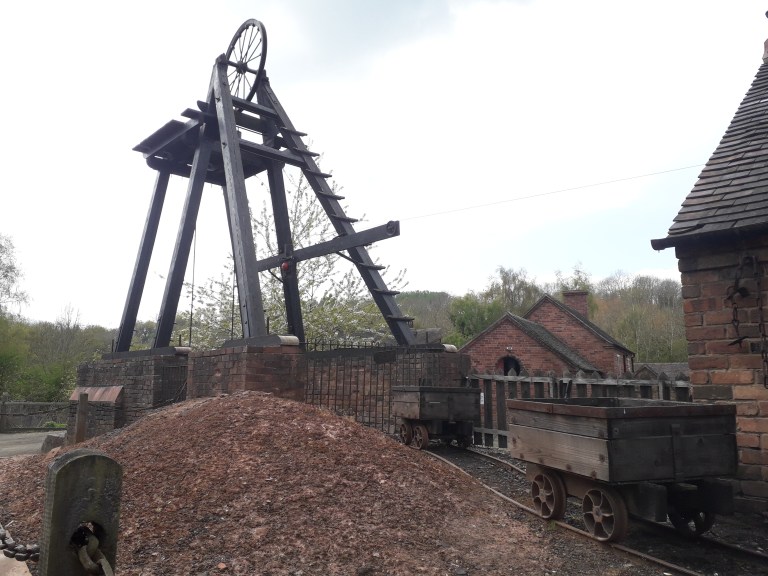
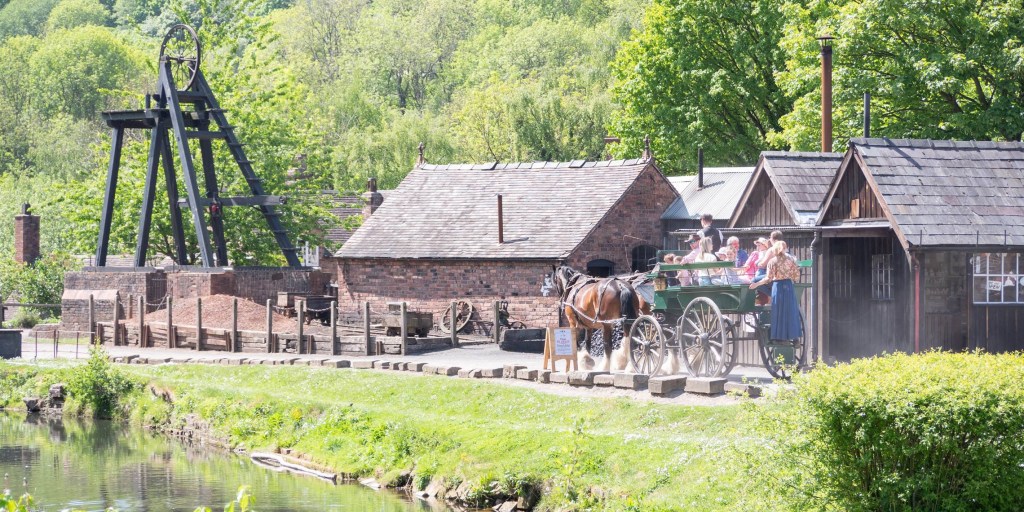
Colliery headgear and canal at Blists Hill, Coalbrookdale, Ironbridge. Image copyright Dr Michael Nevell.

Historic England Launch Local Heritage Hub Webpages

Coinciding with this year’s Local History Month, Historic England has launched a new Local Heritage Hub. With nearly 400 locations, every county, city, district, major town, and national park in England now has a dedicated digital page that uncovers its rich and layered history.

Offering a wide range of content, from fascinating aerial photographs showing towns and villages through time, to curated selections of listed buildings, videos, blogs, and podcasts, the Local Heritage Hub invites members of the public to discover their local area through a new lens.

According to Savanta polling for Historic England in August 2024, 71% of those polled wanted to see more recognition of heritage in their area. Further Savanta polling for Historic England in February 2025 showed that 58% of those responding agreed that local heritage enhances their daily lives. The new platform will reflect what people are looking for in their local areas, and it’s designed not only to inform, but also to also encourage people to see familiar places in unfamiliar ways.

The new service – which will continue to expand with new places, information, and sections added over time – will make local heritage and histories more relevant, relatable, and engaging to more people’s everyday lives, inspiring conversations, unlocking memories, and sparking new interests.

To explore your local area on the Historic England website follow this link: https://historicengland.org.uk/local

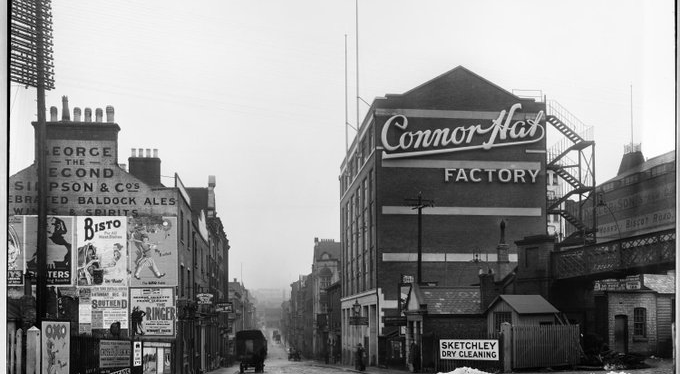
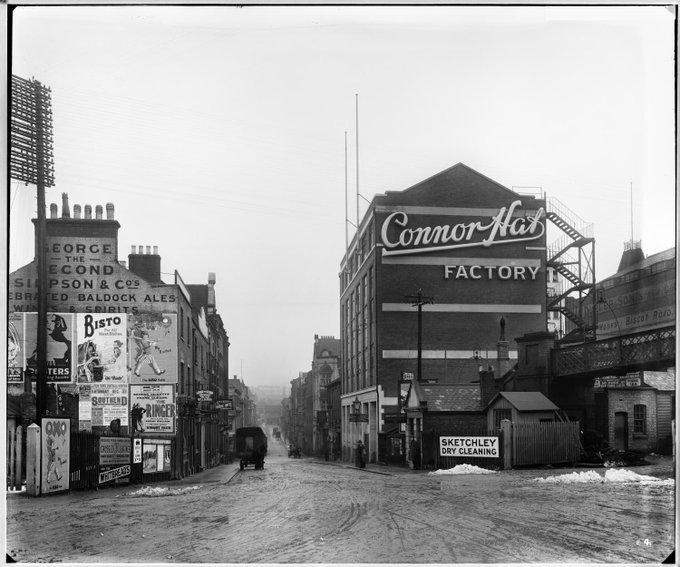
Connor Hat Factory, Bute Street, Luton. Image courtesy of Historic England

Crowdfunder Launched for New Footbridge Next to Bennerley Viaduct

As part of increasing access to the Bennerley Viaduct and its surrounding environment, the Friends group want to build a new footbridge over the River Erewash. They also want to secure the riverbank to prevent its erosion. The Friends already have support from a variety of funders for this project, but need to raise the rest of the amount needed to build the new footbridge bridge.

All the monies raised will go towards to providing the materials for the bridge and river erosion works, which will involve supportive sustainable material used to protect the bank from erosion. They are planning to use local volunteers and students from the University of Kent to help build the footbridge. This new bridge will provide an important access route to the structure and its surrounding environment, so people can enjoy this hidden gem from top to bottom.

The Friends of Bennerley Viaduct were formed in 2019 as a community charity to help save and make accessible the Bennerley Viaduct and its surrounding environment. The Bennerley Viaduct is a Grade II* listed former Railway Viaduct sandwiched between the Nottinghamshire and Derbyshire near the towns of Kimberley and Ilkeston. 

Follow this link to contribute to the new footbridge: https://www.crowdfunder.co.uk/p/new-footbridge-next-to-bennerley-viaduct

Summer Solstice 2025 at Bennerley Viaduct

Join the Friends of Bennerley Viaduct to see the sun rise on the longest day of the year, 21st June, on the Iron Griant and mark the arrival of astronomical summer when the northern hemisphere tilts towards the sun. If you thought you were an early bird for the dawn chorus, try this 03:00 start!

The event is quickly filling up, so Hadley Trueman urges you to book your place. “Although our events are always free, please consider making a suggested donation of £3 per person,” says Hadley.  “Due to the early start time of this event we ask you to find your own way up onto the viaduct from the Cotmanhay/Ilkeston, Derbyshire side. The FoBV team will be there to greet you.”

To find out more, or to book your place, follow the link:

If eventbrite says SOLD OUT, we can often book you in by email, as we sometimes have no-shows or cancellations: community@bennerleyviaduct.org.uk

A History of Stoke-on-Trent in 8 Places: New Historic England Blog

The latest Historic England blog, under their ‘Heritage Calling’ banner, looks at the historic and industrial heritage of Stoke-on-Trent.

The Potteries encompassed the towns of Burslem, Fenton, Hanley, Longton, Stoke, and Tunstall. Together, these towns created the world’s leading centre for ceramics production, with famous names such as Wedgwood, Royal Doulton and Spode centring their work there.

Eight site shave been chosen to highlight this industrial history. These are: Middleport Pottery; Chatterley Whitfield Pottery; Bethesda Methodist Chapel; the Former Wedewood Institute; Trentham Mausoleum; Hanley Park; Stoke-on-Trent townhall; and Price and Kensington Teapot Works.

The full blog can be found here:

https://heritagecalling.com/2025/05/02/a-history-of-stoke-on-trent-in-8-places/?utm_medium=email&utm_source=newsletter&utm_campaign=brand&fbclid=IwY2xjawKJZa1leHRuA2FlbQIxMQABHuIOlYHFQLuCVzlN5Is74h22tI-cCFn5H-TC1A_9qsFVoil3riZG12xL_qcM_aem_IyEcaG7deiYUiV6TrbcWKA

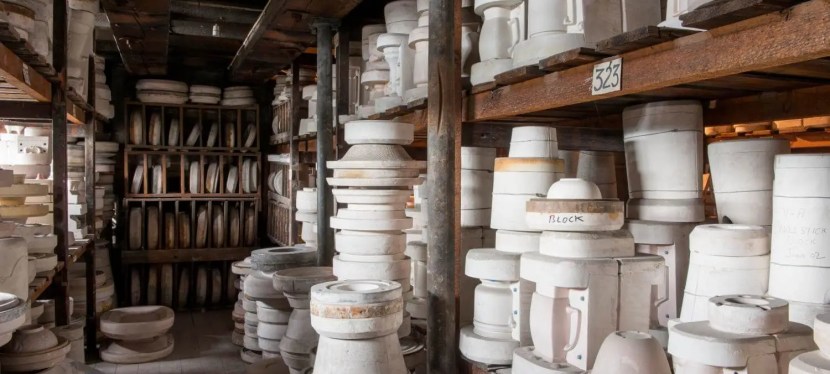
The interior of the pattern store at Middleport Pottery, Burslem, Stoke-on-Trent, Staffordshire. © Historic England Archive. View image DP157658. View List entry 1297939.
Chatterley Whitfield Colliery, Whitfield, Stoke-on-Trent, Staffordshire. © Historic England Archive. View image DP059964. View List entry 1015947.

Arts Council England Review

Arts Council England (ACE) want to hear from anyone who has an interest in, or a view about, the operation of the Arts Council England and what it delivers, by completing the ACE Review survey.  The Review is an opportunity for a national conversation about the future of Arts Council England and how creativity is nurtured and developed.

Over the years ACE has supported many industrial heritage museums and sites, and continues to be an important source of support for the Industrial Heritage sector, from lcoal authority sites to independent museums.

The survey is one part of that conversation and will enable a broad range of people to share their views and ideas. It is an essential part of the evidence collection for this Review.  The survey starts with a profile section consisting of up to 10 questions. The remaining questions are optional, consisting of 32 questions across 6 themed sections.

You can access the survey here Arts Council England review – survey questions – GOV.UK.  The survey will close at midday on 30 June.

Building Resilience: Sustaining Macclesfield’s Silk Heritage to Protect, Share, and Enjoy Stories of Working Lives

Silk macinery in operation, Paradsie Mill. Image courtesy of Paradise Mill.

This spring, the National Lottery Heritage Fund awarded £227,000 to The Silk Heritage Trust to develop Paradise Mill and the Silk Museum in Macclesfield into a vibrant campus of economic activity, skills development, and heritage participation. This grant will help keep alive the stories of Macclesfield as the centre of the nation’s silk heritage.

The three year project ‘A Stronger Future: Developing the Silk Heritage Trust’s vision for culture and heritage in Macclesfield’ aims to improve the training of the museum’s staff and volunteers. It also intends to help preserve endangered collections, the museum’s silk weaving skills, and extend the museum’s audience reach.

Paradise Mill, Macclesfield. Image copyright Dr Michael Nevell

Europa Nostra UK : Shrewsbury Flax Mill Free Webinar, 24 April 2025

Shrewsbury Flaxmill Maltings recently won a European Heritage Award/ Europa Nostra Award 2024 for Conservation and Adaptive Reuse.  A free webinar has been orginsed with the architects who led the project, Geoff Rich and Tim Greensmith, who will share with the fascinating story of the project.

Established as a Flax mill in 1797, the site of Shrewsbury Flaxmill Maltings includes the world’s first iron-frame building which has been described as the ‘grandparent of skyscrapers’. Its combination of cast iron beams and columns, brick arches, and cast iron ties made its construction fireproof, while large windows admitted natural light for its numerous employees. A century later, it was converted into a maltings through a second state-of-the-art design, with windows either blocked up or made smaller, boiler houses demolished, a timber hoist and new tower added, and a large kiln built.

The brief for this project called for an exemplar of sustainable refurbishment to support the next 100 years of use for a building with a particularly innovative design heritage. Feilden Clegg Bradley Studios (FCBStudios) have conserved the enduring elements of both uses to provide four floors of flexible working space, while weaving in a contemporary layers to accommodate a visitor centre and café.

The online meeting will end with a Q&A session. Please find more information about the project and the speakers below. To register please follow the link on Eventtbrite (though hurry as the webinar is at 5pm on the 24 April!):