Welcome to the Industrial Heritage Networks and Support website. This site is maintained and updated by the Ironbridge Gorge Museum Trust who run the project and the networks. We aim to support industrial heritage in England through networking, information exchange, guidance, and training. Please explore the website and please contribute! For more information you can … Read more Welcome to the IHNs website!
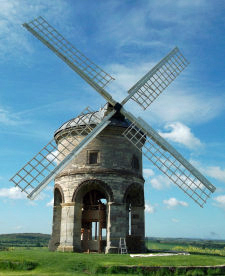
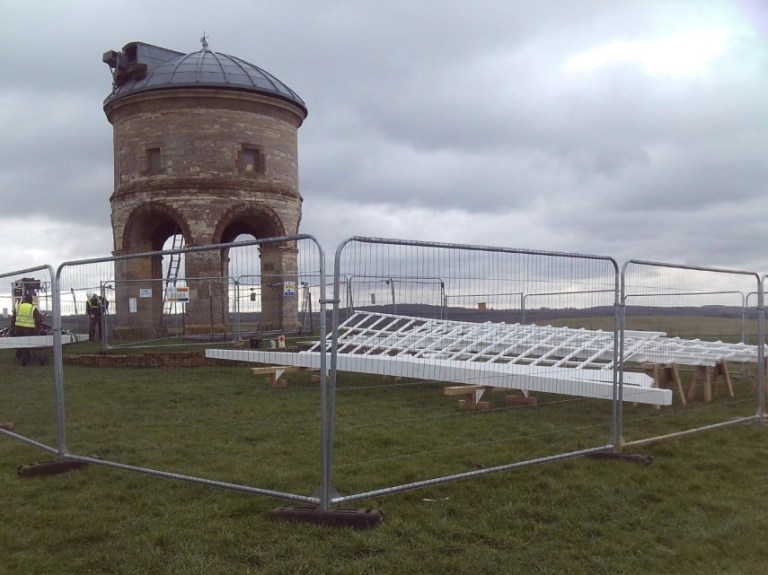
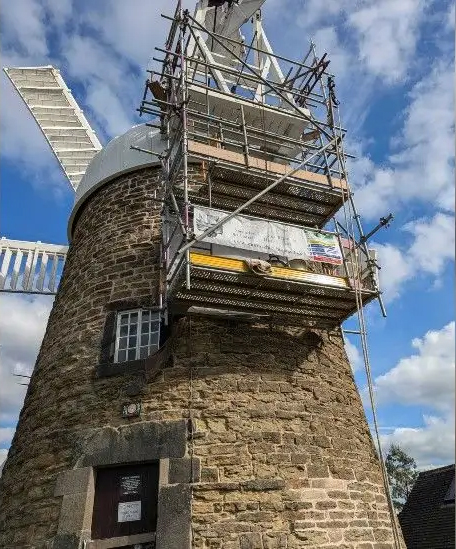
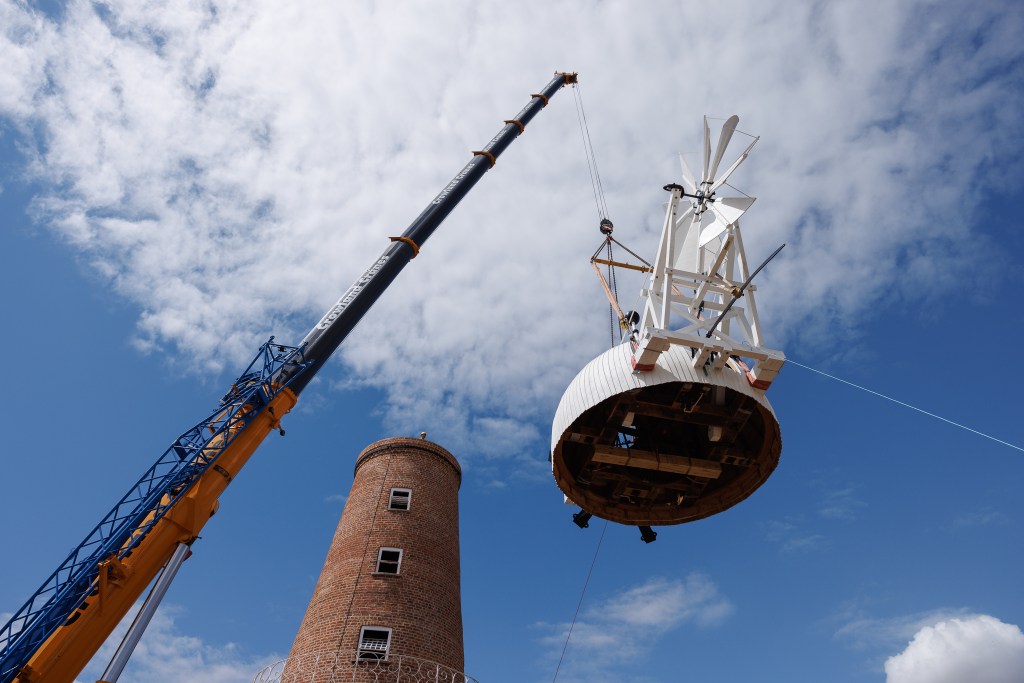
The Midlands Mills Group is hosting a free online talk on 9 December 2025 by Millwright Paul Sellwood. He will be discussing his work as a millwright. Paul and his firm have been involved in many wind and water mill projects over the years, most recently in the Midlands, putting up the sails on Chesterton Windmill.
The Midland Mills Group invites anyone interested to join the event. The link and other relevant details are:
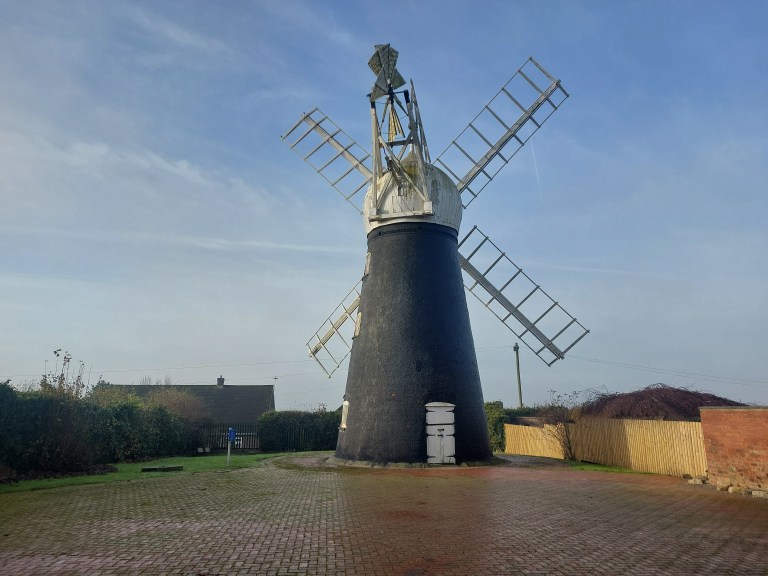
Conservation and restoration work at three windmills has been finished ahead of the winter. Heage Windmill in Derbyshire, Meopham Windmill in Kent, and the White Mill, also in Kent, have been undergoing programnmes of conservation and restoration work for several years.
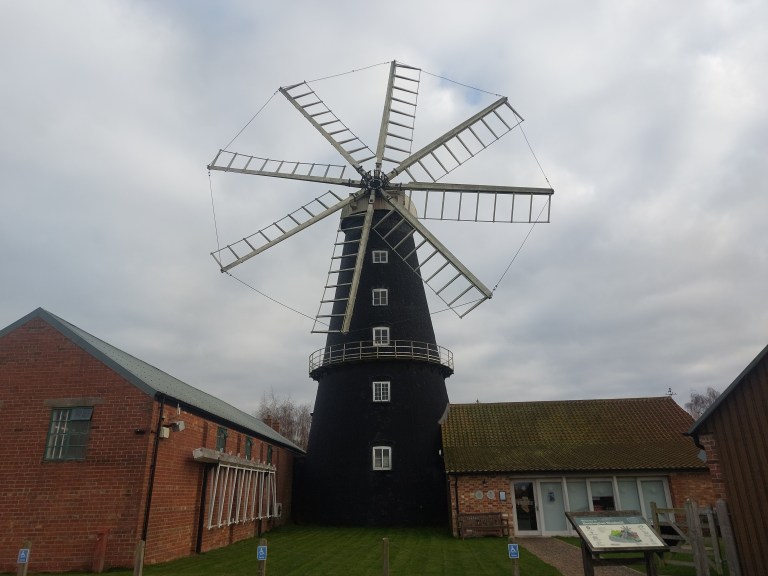
Heage Windmill was restored in 2002, but the Grade II* listed building required further work due to weather-related erosion to the exterior stonework and increased damp inside the building. Following consultation with Historic England, the Heage Windmill Society secured £30,000 in funding from the Association for Industrial Archaeology (AIA) and the Headley Trust for the works to go ahead. Work on the sails and caps was carried out in 2023, and now repair work on the stone tower has been completed.
Grade II* listed Meopham Windmill, which was built around 1820, had fallen into disrepair. Kent County Council purchased the mill, known for its rare six-sided design, in 1959. A £300,000 restoration programme has seen it reconstructed with new mechanisms, revitalised grounds, and its sweeps restored. The funding for the restoration came from a collaboration between KCC, Meopham Windmill Trust, Suffolk Millwrights, and the local community.
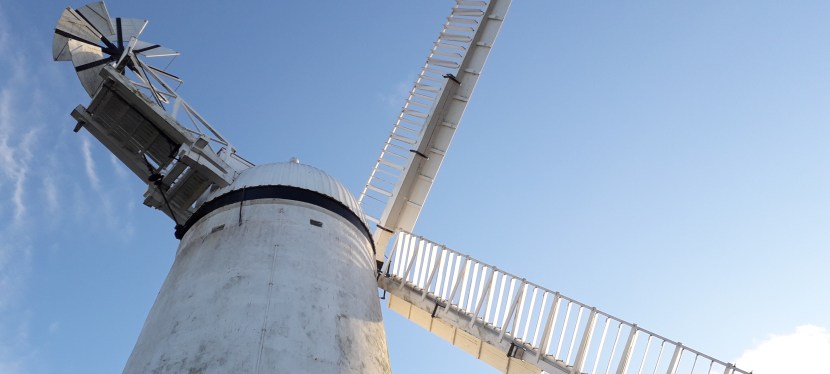
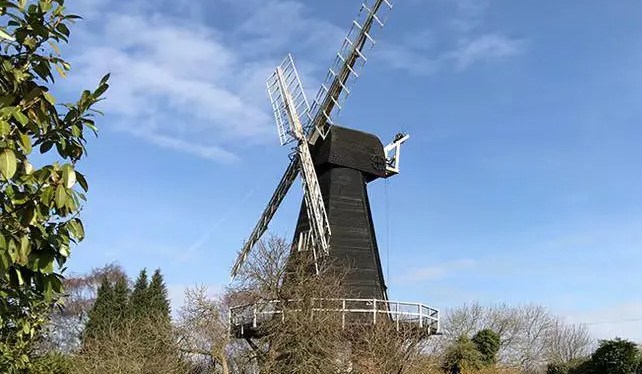
Finally, the Grade II listed White Mill in Sandwich, Kent, had its four sails restored and reinstated in September. The windmill was built in 1760 and served the community as a working mill until the 20th Century, before it became disused in 1957. The White Mill Rural Heritage Centre said the landmark was partly restored in the 1960s, but over the past five years it had undergone more extensive works, and that repairing the historic industrial machinery was a “major testament to the power of volunteering and the important role it plays in the community”.
Further details on these restoration projects can be found on these links:
The Mills Archive Trust need your help locating the records of past millers and millwrights, preserving them in their archive, and making them accessible to modern craftsmen. With this in mind they have launched a new crowd funding appeal – ‘Caring for an Icon’.
The Trust are looking to preserving these records in their archive and make them accessible to modern craftsmen, thereby helping to train the next generation. In order to do that they need to raise significant sums to safe guard the future of these archives.
The Mills Archive Trust is the custodian of the history of mills and milling. They safeguard the stories, skills, and traditions that mills embody. This expertise allows the Trust to protect, interpret, and open access to this rich history. Mills shaped the foundations of the modern world, and the Trust ensure’s that their legacy continues to inspire.
A millwright at work. Image courtesy of Mills Archive Trust.
This year, SPAB’s National Mills Weekend will take place on 10 and 11 May. It will focus on the way that mills past and present have been recorded in pictorial form with the theme ‘Mills in Time’.
The weekend is an annual celebration promoted by the Mills Section of SPAB. Across the country hundreds of mills – including some not normally open to the public – will be taking part.
This year, SPAB are encouraging everyone (owner, volunteer, neighbour, or visitor) to share and display images of participating mills. These can be recent photographs or artworks (including embroideries, collages, films, or videos), or paintings, or drawings, and even old maps, postcards, or posters. To share your images go to the #NationalMillsWeekend Facebook page. Please remember to credit the copyright owner and photographer where known.
SPAB-owned Fladbury Mill and Kibworth Harcourt Post Mill, which aren’t normally open to the public, will also be open for the weekend. To book go to the SPAB website.
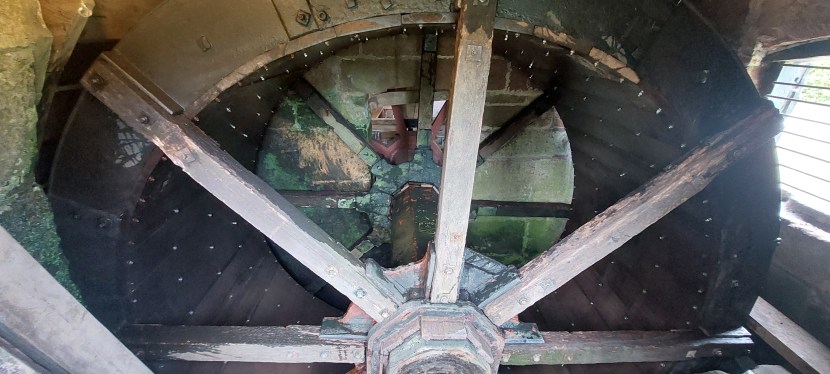
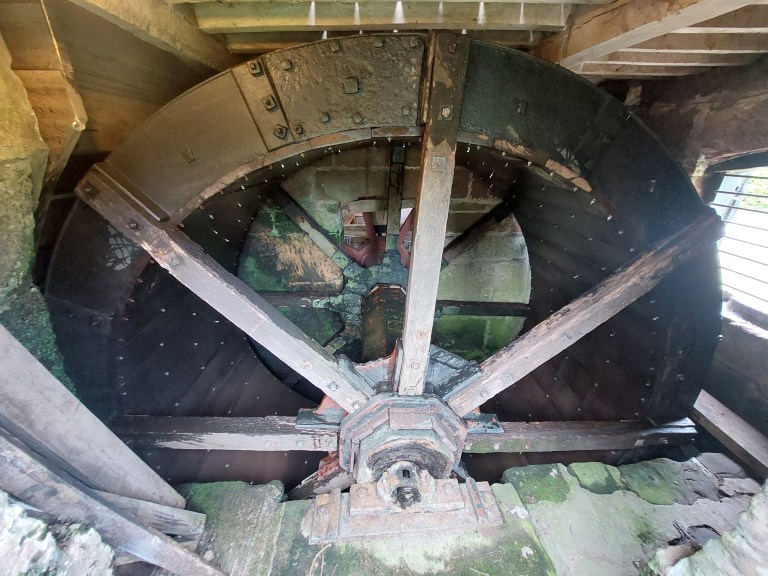
The waterwheel at Stretton Watermill, Cheshire. Image copyright Dr Michael Nevell.
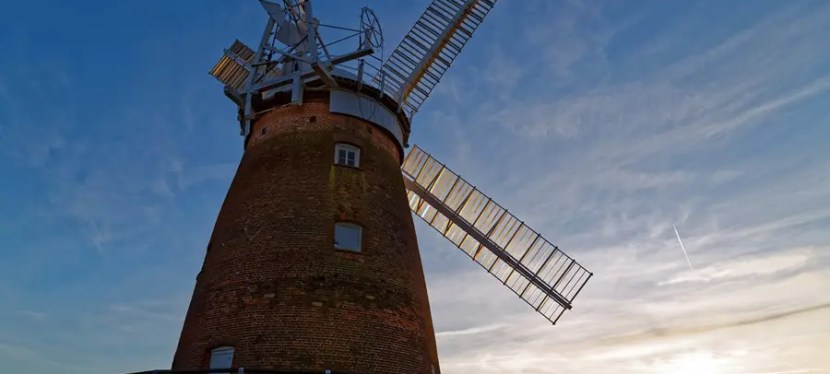
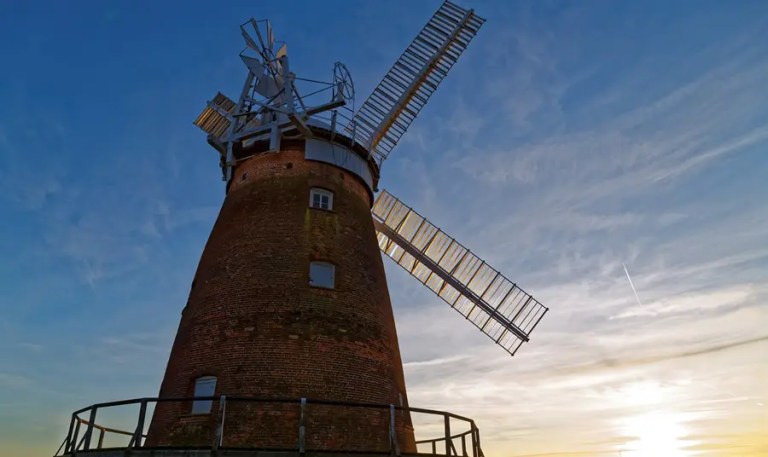
The National Lottery Heritage Fund and Historic England have given grant funding worth £1.6 million (£1.3 million from The National Lottery Heritage Fund and £300,000 from Historic England) for the restoration of Thaxted Windmill in Essex.
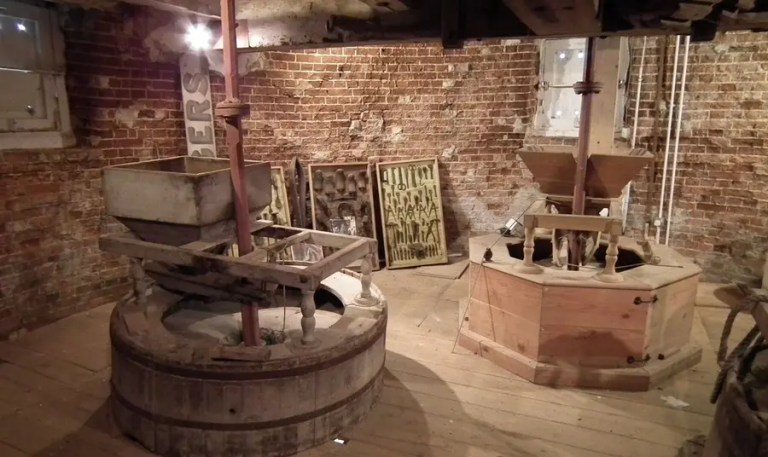
The Stone Floor at Thaxted Windmill. Credit: Trustees of Thaxted Windmill.
The project will repair and restore the building and its millwrighting machinery, improve visitor access, and enable volunteer involvement and community engagement. Repairs to the brick tower will halt the decaying process and protect the building from water leaks. Windows, doors and wood panelling will be repaired. The Windmill mechanism, including the sails, winding gear and internal milling machinery, will be restored, enabling the historic windmill to grind grain once more.
In addition, there will be public open days, sensory experiences will be created, and the Windmill landscape will be managed for biodiversity.
The early new year is often a time for charities and musuems to undertake staff training and maintenance in the ‘off season’. Online, several organisation offer free training and briefing videos relevant for industrial heritage sites. Some of the recent offerings listed below provide an opportunity for armchair training.
The East-West Workshops on Industrial Archaeology aim to exchange ideas and knowledge among Western and Eastern colleagues to build a more international and diverse industrial archaeology. The workshops are organised jointly by the Institute for Cultural Heritage and History of Science and Technology (USTB, China), and the Association for Industrial Archaeology (AIA) together with its Young Members Board. Videos of all the workshops are available on the AIA’s YouTube Channel, including the latest event from November 2024 on ‘Weaving the Industrial Period’. Follow this link to view the workshops: https://www.youtube.com/channel/UCILr2TkRAOIfk_NKchshwZQ
On Thursday 21st November 2024 the ‘Craft of the Miller’ network held an online conference on ‘Managing Health & Safety Risks in Your Mill’. Jon Cook gave an introduction to highlight a number of key risks in a working mill, including hygiene, flour dust, vacuum equipment, and fire risks. Jippe Kreuning explored how to work with a stone crane and how to operate it safely to lift a set of millstones. You can catchup with the recordings from the conference here: https://network.molens.nl/
Finally, Historic England have a range of heritage webinars to watch with topics from flooding, embodied carbon, and renewabler energy, to heritage building skills, roofs, and windows. The Historic Environment Webinars strand includes a session on the role and work of the Canal & River Trust form November 2024. Follow this link to view the webinars: https://historicengland.org.uk/services-skills/training-skills/training/webinars/recordings/#technicaltuesdays
The dealines for several grant streams suitable for Industrial Heritage museums and sites occur in early 2025. To catch up with what is available for industrial heritage sites and museums explore the following websites.
Foyle Foundation Small Grants The Small Grants Scheme is provided by the Foyle Foundation to support smaller, grass-roots, and local charities in the UK with projects that have the potential to make a significant difference to their work. Grants range from £2k to £10k and the closing date for applications is 31 January. Find outr mor eby followign this link: https://foylefoundation.org.uk/how-to-apply/small-grants-scheme-guidelines/
The Heritage Alliance, whilst not a funding body in itself, co-manages the Heritage Funding Directory with the Architectural Heritage Fund. This free resource for the sector includes a directory listing funding sources for heritage projects across the UK (and internationally), and includes some helpful guidance on fundraising. It is regularly updated, so its worth visiting regularly.
Finally, the Association for Industrial Archaeology runs several annual grant and award schemes specifically for industrial archaeology and heritage, with closing dates at the end of January and the end of March. Follow this link for further details: https://industrial-archaeology.org/aia-awards/
Join SPAB on Saturday 30 November, 10am – 4.45pm , for a day of online talks about windmills and watermills that are currently or have been in the past listed on the Heritage at Risk Register.
What happens when a mill is added to the Heritage at Risk Register? What steps can you take to protect a mill from different risks? And why do some restored mills remain at risk? This is a unique opportunity to hear from a range of mill professionals – including volunteers and millwrights. You’ll have a chance to have your questions answered and will receive a recording of the talks after the event.
Milsl Archive Trust volunteers learning new archibing skills. Image couresy fo the Mills Archive Trust.
The Mills Archive Trust’s ‘Living Heritage’ appeal is designed to keep alive the legacy of millers and millwrights found within the Trust’s archives, sharing this knoweldge with the public and providing life-changing experiences for their volunteers.
The Mills Archive Trust is a permanent repository for the documentary and photographic records of traditional and contemporary mills and milling, as well as similar structures dependent on traditional power sources, in the UK and beyond. It makes that material freely available for public inspection and use in research and learning.
Their latest appeal is designed to help volunteers acquire the skills needed to catalogue archives relating to specific millers and wind and watermill restorers and experts, such as David Nicholls (1938-2020), and Alan Stoyel. Not only does that help to save these archives and improve public access to them, but the skills acquired help many volunteers to find work within the hertiage sector.
The Mills Archive is one of the world’s great mill collections. It has rescued over three million documents and images that might otherwise have ended up in a landfill site. It is an Aladdin’s cave filled with memories and is free to use. The collections show the rich and diverse crafts, buildings, machinery, equipment, and people involved with mills in the UK and around the world. There is an urgent need to record and make public the technical details of these crafts and the potential impact of the loss of this aspect of our shared cultural heritage.
The National Mills Weekend for 2024 will take place on 11 & 12 May 2024. Run once again by SPAB, this year’s theme will be ‘Enjoy Your Mill – Get Involved’. If you own or manage a mill and would like to take part in National Mills Weekend, please submit your details by 1st March using the link to the online form at the bottom of this page.
SPAB will use this information to update their Visit a Mill page on their website. If information is received after the deadline, SPAB cannot guarantee that your entry will be updated in time for National Mills Weekend.
More details of the event will be available on the SPAB website on the National Mills Weekend page in the spring. You will be able to download an information pack and a poster from the website. If you have any questions in the meantime, please email millsinfo@spab.org.uk.