Local Communities Invited to Submit Their Traditions to a New ‘UK Living Heritage’ Inventory

The UK Government has launched a call for submissions to the UK’s first-ever national inventory of Intangible Cultural Heritage (ICH). Also known as Living Heritage, the resulting inventory will help to celebrate cultural traditions and highlight their contribution to communities and the economy. It is the first major step following UK ratification of the 2003 UNESCO Convention for the Safeguarding of the Intangible Cultural Heritage.

DCMS said living heritage encompasses practices passed down through generations, with examples ranging from tartan weaving and dry-stone walling, to cèilidh dancing or Gloucestershire’s cheese-rolling, Eisteddfodau, or Burn’s night suppers. It could also include traditions brought to the UK by immigrant communities, such as the Notting Hill Carnival and steel-drumming, it said.

Heritage Minister Baroness Twycross said activities such as Highland Dancing, and the carving of Welsh love spoons “from the rich tapestry of UK culture and identity. These crafts, customs and celebrations are often what makes people feel proud of who they are, where they come from and where they live. They also boost local economies and businesses. Whatever living heritage communities value, we want to hear about it. I encourage people to get together and share their traditions through this national conversation. “

Submission must be made by the communities practicing the living heritage under the following seven categories:

  • Culinary Practices
  • Oral expressions
  • Performing Arts
  • Social Practices
  • Nature, Land and Spirituality
  • Crafts
  • Sports and Games

Details on how to submit, including support and advice, can be found at http://www.livingheritage.unesco.org.uk. Submissions for the inventory close Friday 27 March 2026. If you would like to attend a DCMS information session to learn more about making a submission to the inventory, click here.

More details here: https://www.gov.uk/government/news/from-cheese-rolling-to-bagpiping-uk-launches-search-for-traditions-that-define-our-communities

Stroudwater Textile Trust is Looking for Guides, Demonstrators, and Welcomers

The Stroudwater Textile Trust are looking for volunteers at their two museums near Stroud. There are many ways of getting involved in volunteering with the Stroudwater Textile Trust. From welcoming visitors to their mills to sparing a few hours to work at home or to help restore historic machine, your support is really important to the Trust, and you will find volunteering both enjoyable and rewarding.

The Trust offers training in using both hand looms and power looms, as well as wider training. The museums are open from April to September on weekends and occasional weekdays. Information about the Trust is on our website, or e-mail chair@stroudtextiletrust.org.uk.

To get involved follow this link: https://www.stroudtextiletrust.org.uk/volunteering/

The Stroudwater Textile Trust is a Registered Charity run entirely by volunteers. The Trust was established in 1999 by local people wanting to promote awareness of the historic woollen industry in the Stroud valleys, to preserve some of its important machinery and to celebrate contemporary textiles. The Trust runs a fully-accredited museum at Dunkirk Mill in Nailsworth with a working waterwheel, and also a weaving shed at Gigg Mill nearby, which has a recently-restored vintage power loom. We also arrange visits to St Mary’s Mill in Chalford from time to time, where there is a Tangye steam engine. Dunkirk Mill and Gigg Mill are open regularly through the spring and summer months.

Volunteers at Stroudwater Textile Trust. Image courtesy of Stroudwater Textile Trust.

Friends of Chain Bridge Forge Launch Crowd-Funding Appeal to Teach Teenagers Blacksmithing Skills Using VR

The Friends of Chain Bridge Forge have lunched a crowd-funding appeal to teach traditional Blacksmithing to young individuals aged 13-16, blending heritage craftsmanship with cutting-edge virtual innovation. Through collaboration with the National Saturday Club, and led by experienced Blacksmith Ryan Atkin, participants will develop foundational skills in metalwork and have the chance to craft unique handmade items.

This new project follows on from 2024’s successful National Saturday Club, where Chain Bridge Forge trained young people in blacksmithing. To donate to the new VR project follow this link: https://www.spacehive.com/forging-futures-skills–vr-fusion.

Chain Bridge Forge is a short walk from Spalding town centre, alongside the Welland river and is open for bespoke commissions or blacksmithing workshops. The Forge has its origins in the mid-1700s, but the current building was constructed in the early nineteenth century. In the 1980s, nearing retirement and with the building in a poor state of repair, the then blacksmith, Mr Dodd, approached the South Holland District Council (SHDC) to take on the forge. After two years of discussions the site was purchased from him by SHDC for the nominal fee of £1, on September 20th 1988. In 2011 The Friends of Chain Bridge Forge were formed and took over the Forge on a 25 year lease. The Heritage Lottery Fund subsequently awarded the Forge £50,000 to restore the site and make it accessible, which opened in 2012. This award was followed by a further £10,000 to record the history of the community.

Follow this link for more news about the forge: https://chainbridgeforge.co.uk/

Teenagers being taught balcksmithing skills. Image courtesy of Friends of Chain Bridge Forge.

North East Industrial Heritage Network Meeting, 9 December, Now Booking

The next in-person North East Industrial Heritage Network meeting will be held at Hopetown Museum, Darlington, on Tuesday 9th December 2025, from 11am to 1pm. This will be followed, after lunch (there is a cafe on site), by a tour of the site (2pm to 3pm). The themes for the 2025-26 IHN meetings are conservation and maintenance.

All IHN members and friends are very welcome to attend. To book a free place follow this link:

Hopetown Musuejm encompasses the original North Road Station in Darlingotn, which opened in 1842 on the route of the Stockton & Darlington Railway. The listed station was purchased in the 1970s by a consortium consisting of the local council and tourist board, Darlington museum’s service and local businesses. It was transformed into a railway museum, the North Road Station Museum, which opend in 1975. The museum was refurbished in 2007, and reopened in 2008 as the Head of Steam – Darlington Railway Museum. After securing £35 million of funding, between 2022 and 2024 the museum, and surrounding heritage buildings across 7.5 acres, were transformed into a brand new visitor attraction, Hopetown Darlington. The name takes inspiration from the old Hopetown foundry works associated with the railways.

The station at Hopetown, Darlington. Image courtesy of Historic England.

South Wales & West England Regional Industrial Archaeology Conference (SWWERIAC) Announced for April 2026

The Worcestershire Industrial Archaeology & Local History Society is hosting the South Wales & West England Regional Industrial Archaeology Conference (SWWERIAC) on Saturday 18th April 2026 at Avoncroft Museum of Historic Buildings, Stoke Heath, Bromsgrove B60 4JR.

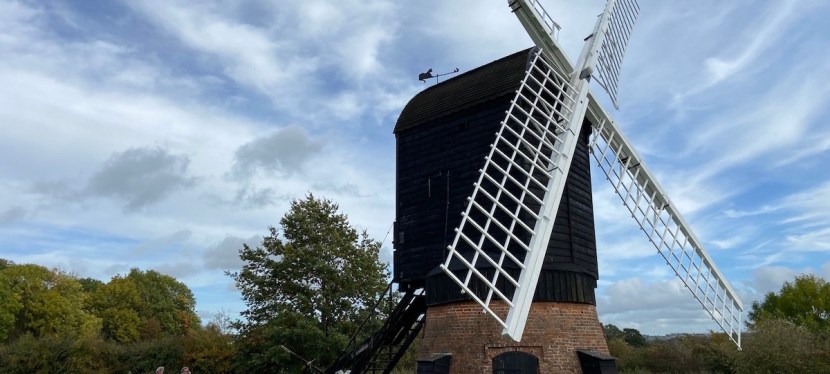
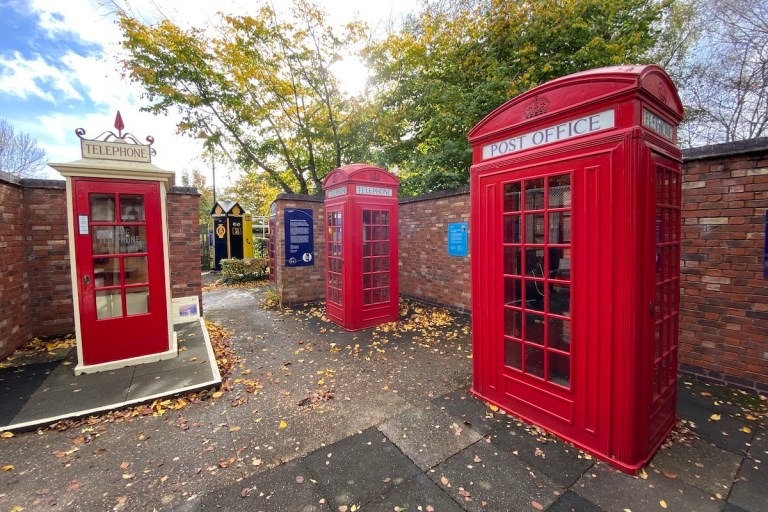
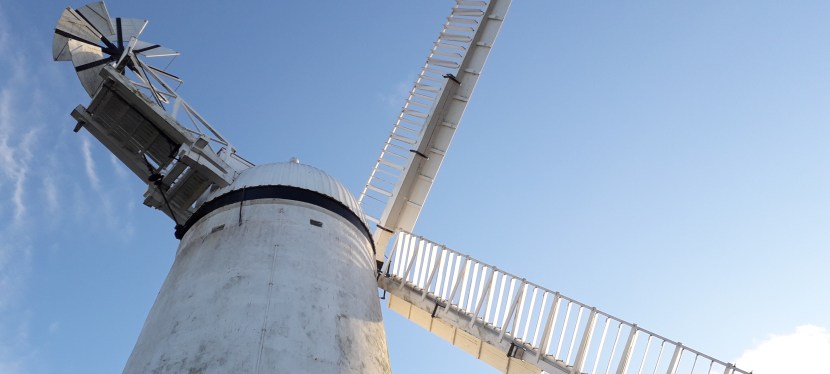
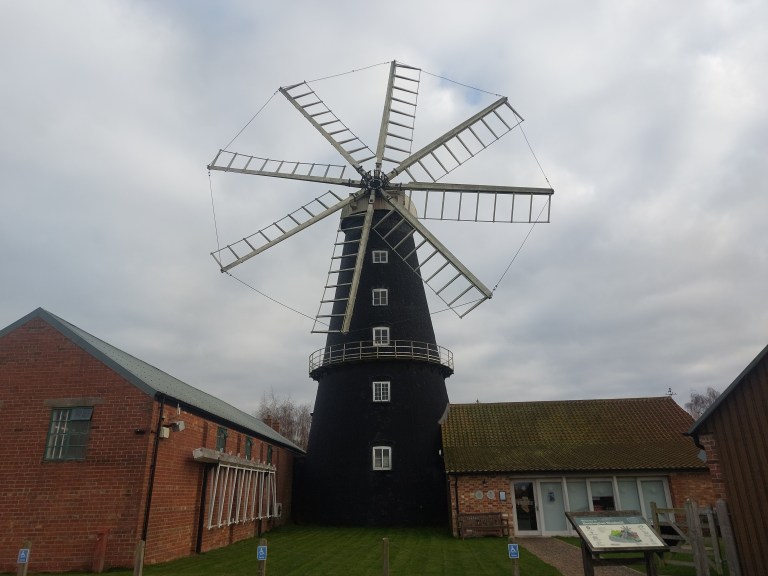
Get set for a day of engaging talks from leading speakers and a chance to explore Avoncroft’s remarkable open-air collection. The museum, home to over 30 rescued and reconstructed historic buildings spanning seven centuries, provides a unique backdrop. Highlights include the UK’s National Collection of Telephone Kiosks, working historic windmill, and a selection of timber-framed, brick, and prefabricated structures including a chain shop, nail workshop, sawmill, and icehouse. This inspiring setting promises a rich blend of learning, discussion, and heritage discovery.

Tickets cost £28 per person and include access to the museum’s entire collection, 30-minute dedicated tours, a buffet lunch including cold meats, new potatoes, crusty bread, and a selection of salads and cheese with unlimited hot and cold soft drinks plus free parking.

Society chairman Dr John Beale said “Avoncroft is home to 30 historic buildings and structures across a 19-acre site. For this reason, we have scheduled a 2-hour lunch break so that delegates can see the museum exhibits either self-guided and/or the dedicated tours of the 19th century windmill and the National Telephone Kiosk Collection. This marks a departure from the traditional arrangement of offsite visits as there is so much to see at Avoncroft.”

Get your tickets by completing an online or Microsoft Word booking form available at
https://wialhs.org.uk/swweriac2026/ or contact conference@wialhs.org.uk

Part of Avoncroft’s National Collection of phone boxes. Image corutesy of Avoncroft Musuem of Historic Buildings.

Places Still Available for South West and Cornwall & Devon Industrial Heritage Network Meetings

There are still free places available for the next two Industrial Heritage Network meetings in November. These meetings are an opportunity to chat in-person with volunteer and professionals from a variety of industrial heritage sites in each region.

To book a place on the South West Industrial Heritage Network meeting, at Crofton Beam Engines, on Friday 7th November foillow this link: https://www.eventbrite.co.uk/e/1827645881029?aff=oddtdtcreator

To booka palce on Cornwall & Devon Industrial Heritage Network meeting, at Coldharbour Mill, on Thursday 6th November follow this link: https://www.eventbrite.co.uk/e/1827645881029?aff=oddtdtcreator

Citizen Canal Heritage Survey Project Calls for Volunteers

The Canal & River Trust (CRT) is appealing for people interested in the history of canals to volunteer to map and record the heritage of Yorkshire’s 250-year-old canals, as part of a national survey. The heritage survey will chart how the canal system has changed over the past 30 years, by updating and augmenting a survey of canals completed in the early 1990s by British Waterways and Historic England (then English Heritage).

Over the course of several weeks earlier this year, CRT ran a pilot of the heritage survey on the Leeds & Liverpool Canal. Teams of volunteers used an app developed specifically to survey a range of heritage assets situated along the canal between Leeds and Liverpool. This work included looking at locks and lock cottages, bridges, aqueducts, tunnels, wharfs, warehouses, and stables. The project is now being rolled out across the 2,000-mile network of canals that span England and Wales, with the Yorkshire survey the latest area to be studied.

Carrying out the volunteer-led survey of the CRT’s network of canals, and the historic setting around them, is expected to take four years. The project is supported by funds raised by players of People’s Postcode Lottery.

More details here: https://canalrivertrust.org.uk/news-and-views/news/discover-the-fascinating-heritage-of-yorkshire-and-north-easts-waterways

Canal warehouses on the Leeds Liverpool Canal at Manchester Road Wharf, Burnley. Image copyright Dr Michael Nevell

Grants for Two Mining Industrial Heritage Sites

Two mining industrial heriatge sites have recently received grants towards conservation and community engagement.

The headstocks at Woodhorn Museum, Ashington, has received extra money from Northumbrian County Council for the continuing conservation work at the industrial site. The £1.4m grant is in addition to earlier funds for the restoration of the site, including nearly £1m from the UK Government’s ‘Heritage at Risk’ support scheme. Further details can be found here: https://www.chroniclelive.co.uk/news/north-east-news/additional-14-million-agreed-save-32416167

The National Coal Mining Museum for England, Wakefield, has received a grant in the first round of the re-imagined Esmée Fairbairn Communities and Collections Fund. £98,561 will be used to celebrate the role of Miners’ Welfare by bringing together heritage, community, health, academic partners, and people living with marginalisation, mental and physical ill-health. This fund supports projects using museum collections to improve inclusion and equitable working with community partners. Further details can be found here: https://www.ncm.org.uk/news/funding-miners-welfare/

The headstocks at Woodhorn Museum. Image courtesy of North East Museums Development Trust.

South East Industrial Heritage Network Meeting Now Booking for 3rd October

The next in-person South East Industrial Heritage Network meeting will be held at the Amberley Museum, West Sussex, on the 3rd October, from 11am to 1pm. This will be followed, after lunch (there is a splendid cafe on site or please bring your own), by a tour of the site (2pm to 3pm). The themes for the 2025-26 IHN meetings are conservation and maintenance.

The Amberley Museum is an open-air industrial heritage museum at Amberley, near Arundel in West Sussex. The museum was founded in 1978 and is owned and operated by Amberley Museum and Heritage Centre, a not-for-profit company and charity, with the support of an active Friends organsiation. The museum occupies a former chalk pit, and includes exhibits relating to quarrying, transport, metal working, and communications. For further details follow this link: https://www.amberleymuseum.co.uk/

To book a free place at the network meeting please follow this link:

All IHN members are very welcome to attend.

Amberley Museum entrance. Image copyright Dr Michael Nevell.

Historic England Publish Report on the Local Listing of Buildings

In 2019, the Ministry of Housing, Communities & Local Government (MHCLG) announced a campaign to develop or revise local heritage lists across England. Historic England’s new overview advocates for local heritage listing as a proactive, locally-led, tool that can support place-shaping and community empowerment, helping to deliver high-quality, unique places to live and work. The new report is intended to support Historic England and Central Government in developing policy and guidance to support Local Planning Authorities (LPAs), and others, in the production and revision of local heritage lists.

Historic England defines a local heritage list as ‘a list or register of assets (primarily but not exclusively historic) which are of importance to a particular place and the community who live and work there. Buildings included on local heritage lists are classified in the planning system as ‘non designated heritage assets’ (NDHAs).’ The concept of such local heritage lists goes back to the 1930s, often as a bottom-up approach to recognising heritage through the local community. They have recieved greater prominence in the last decade as one of the ways in which NDHAs can be formally identified, so that their significance can be taken into account in planning applications affecting the asset, or its setting.

With thousands of surviving industrial buildings across England not formally protected through listed building legislation, local listing provides an effective way of recognising these buildings’ importance to their local communities.

Download the report here: https://historicengland.org.uk/research/results/reports/38-2025?local