
Europa Nostra UK : Shrewsbury Flax Mill Free Webinar, 24 April 2025

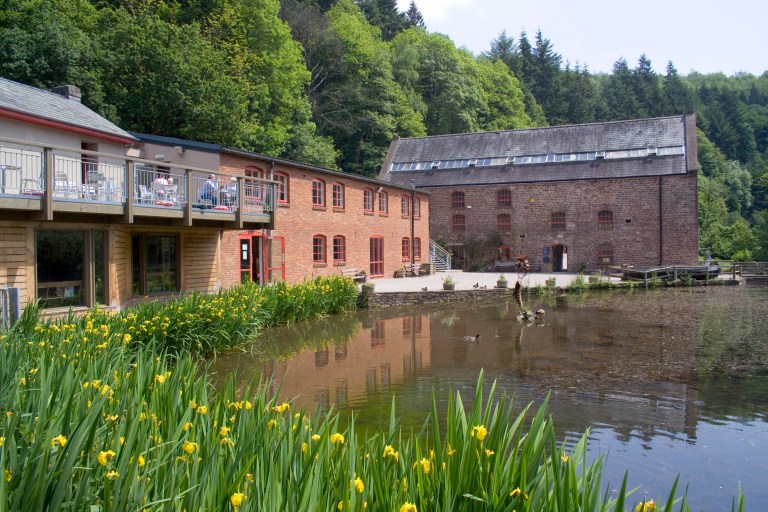
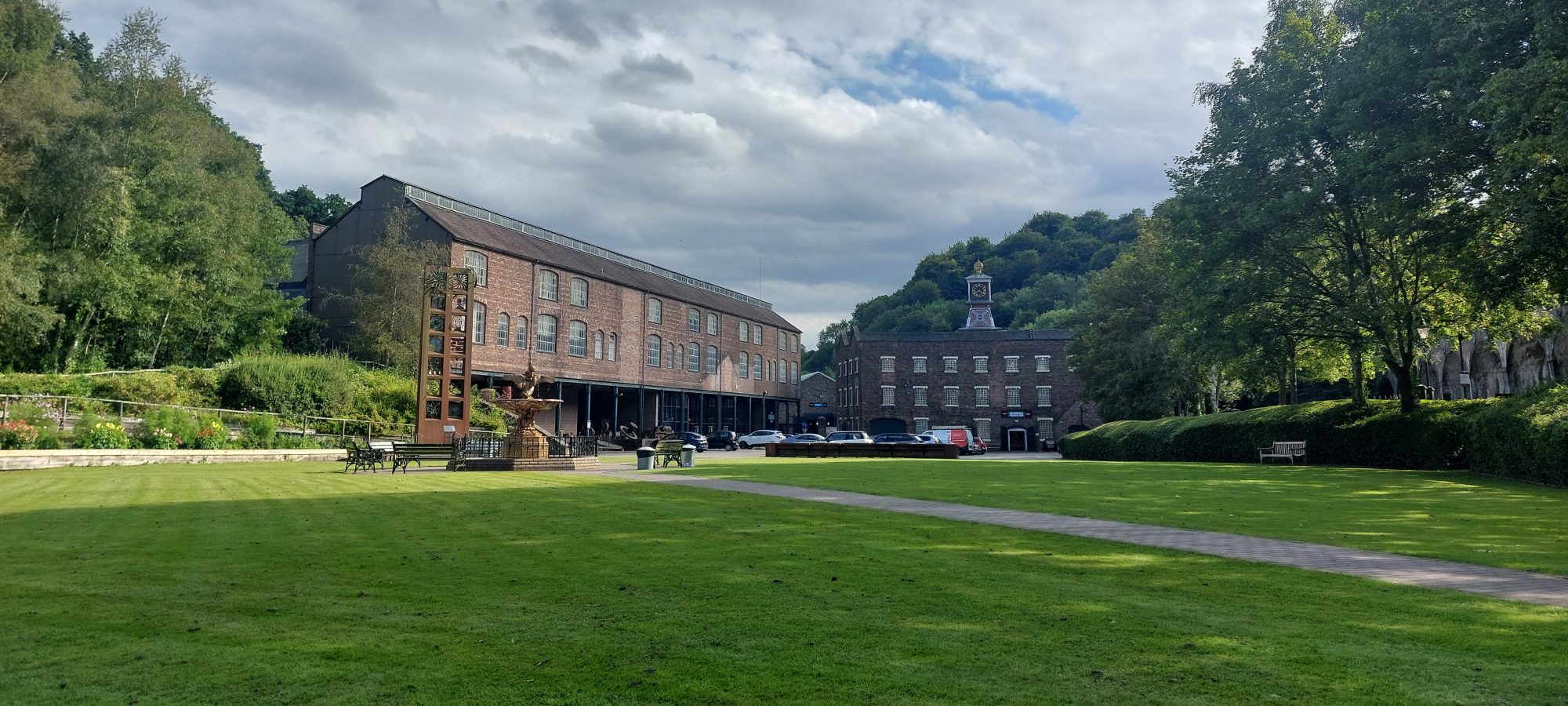
Shrewsbury Flaxmill Maltings recently won a European Heritage Award/ Europa Nostra Award 2024 for Conservation and Adaptive Reuse.  A free webinar has been orginsed with the architects who led the project, Geoff Rich and Tim Greensmith, who will share with the fascinating story of the project.

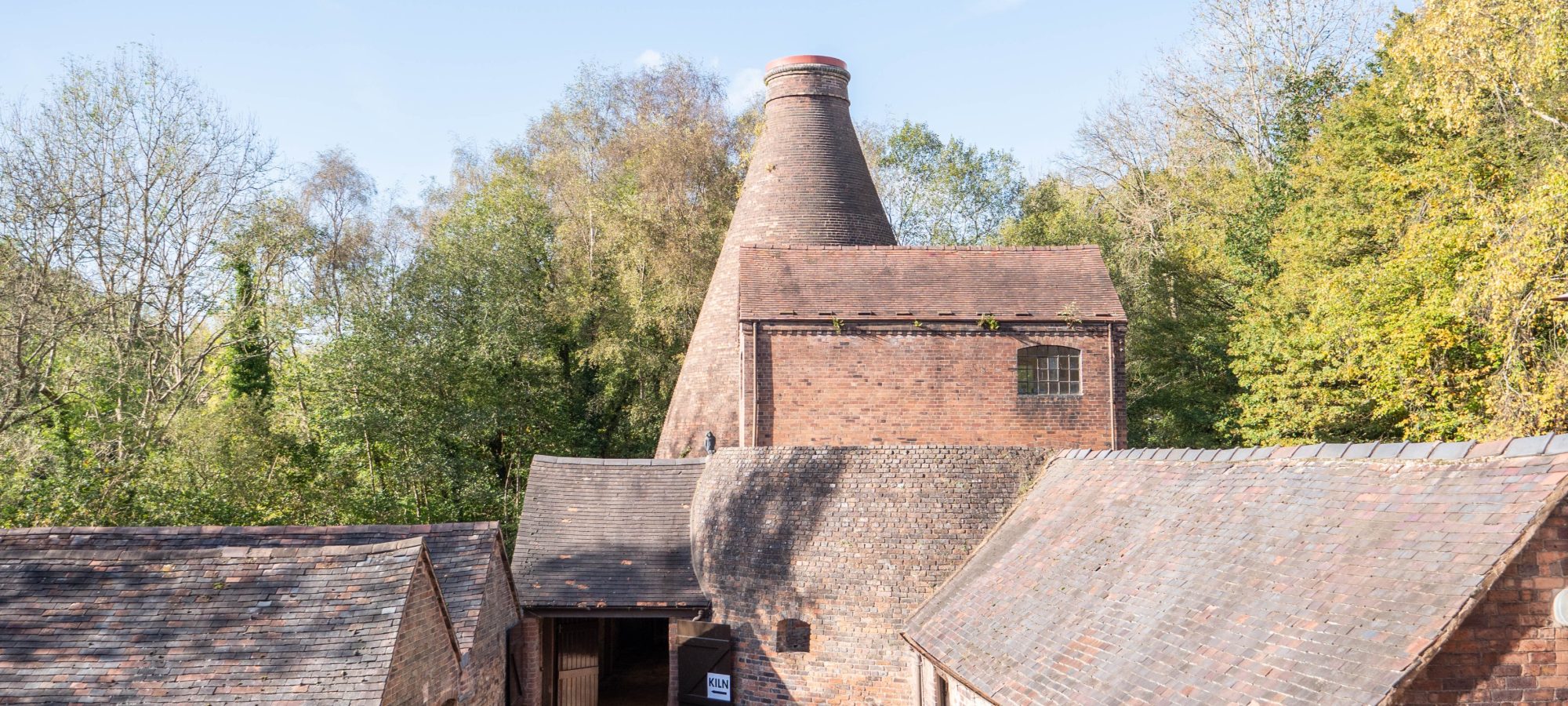
Established as a Flax mill in 1797, the site of Shrewsbury Flaxmill Maltings includes the world’s first iron-frame building which has been described as the ‘grandparent of skyscrapers’. Its combination of cast iron beams and columns, brick arches, and cast iron ties made its construction fireproof, while large windows admitted natural light for its numerous employees. A century later, it was converted into a maltings through a second state-of-the-art design, with windows either blocked up or made smaller, boiler houses demolished, a timber hoist and new tower added, and a large kiln built.

The brief for this project called for an exemplar of sustainable refurbishment to support the next 100 years of use for a building with a particularly innovative design heritage. Feilden Clegg Bradley Studios (FCBStudios) have conserved the enduring elements of both uses to provide four floors of flexible working space, while weaving in a contemporary layers to accommodate a visitor centre and café.

The online meeting will end with a Q&A session. Please find more information about the project and the speakers below. To register please follow the link on Eventtbrite (though hurry as the webinar is at 5pm on the 24 April!): 

Museum Renewal Fund Opens & Timetable for MEND Round 5

Arts Council England (ACE) has opened a new £20 million fund to support local authority museums. ACE have also published the timetable for Museum Estate Development Fund (MEND) Round five.

The Museum Renewal Fund targets museums owned and directly maintained by local authority funding, or with a governance link to a local authority. The programme is intended to help museums meet the shortfall between operating costs and income throughout their 2025-26 budget, where the shortfall results in reduced programming, footfall, and days open to the public. 

Museums can apply for a minimum of £10,000 up to a maximum of £1million. The application deadline is 22 May with outcomes expected by 26 June latest. The funding period runs from August 4 to 31 January 2026.

ACE have also released the timetable of Round 5 of the Museum Estate Development Fund (MEND). This capital fund targets non-national Accredited museums and local authorities based in England. It covers funding to undertake vital infrastructure and urgent maintenance backlogs which are beyond the scope of day-to-day maintenance budgets.

The total fund is worth £25million and grants range from £50,000 to £5million. Expressions of Interest for Round 5 open at 9am on Monday 12 May 2025 with a deadline of Thursday 5 June.

For further details of both fund ing streams, including the application processes, follow this link: https://www.artscouncil.org.uk/our-open-funds

Mills Archive Trust Archival Skills Webinars

On 24 May and 7 June, between 2:00 pm and 4:00 pm, the Mills Archive Trust will be hosting a two-part webinar series covering the fundamental skills needed to protect and share archival records.

For over two decades, the Trust’s UK accredited archive has preserved the history of the traditional and modern milling industry. They want to share these skills, whether you are an individual collector or part of an organisation.

The first session will cover how to organise and catalogue archival records. The second session will help you preserve them, including old documents or digital files, from decay and make them accessible online. To join the Caring for Your Collection webinars and for more information, visit new.millsarchive.org/caring-for-your-collection/. For more information, email friends@millsarchive.org.

English Heritage Hunting for Shrewsbury Flaxmill Bell as Site Opens to the Public

As English Heritage prepares to welcome visitors to the Flaxmill Maltings building in Shrewsbury, Shropshire, a hunt for the missing bell has been launched. Matt Thompson, the curatorial director of English Heritage, commented that “we believe the bell went missing in the late 1980s or early 1990s, when Shrewsbury Flaxmill Maltings was left derelict. Whilst it is possible that the bell could have been melted down, it is more likely that someone took it as a souvenir of this imposing, historic building which – at the time – looked close to ruin”

The empty bellcoate at Shrews Flaxmill Maltings. Image copyright Dr Michael Nevell.

Shrewsbury Flaxmill Maltings is known as the grandparent of the skyscraper, the building being the world’s first multistorey, iron-frame building, with the design paving the way for modern high-rise buildings. The site opened in 1797 as a flax mill and then, from 1897 to 1987, was used as a maltings. It also served as a temporary army training unit and barracks during the second world war. A third of the 800 workers at the flax mill were under 16 and some as young as nine. Shrewsbury itself was too small to provide that number, so children were brought in from as far afield as London and Hull, mostly from the workhouses. Often orphans, the children were given housing, food and clothes but not paid wages. The missing bell would have called the children in from the apprentice house nearby.

Originally operated by a pull rope, the bell changed to an electric chiming mechanism after the second world war, but was lost when the building was left derelict after the closure of the business in 1987. Believed to be around 60cm (24in) high, the bell is cast with the year “1797” on it. The bellcote has been restored but remains, for the moment, empty.

Shrewsbury Flaxmill Maltings opened on 1st April 2025 as English Heritage’s first new paid-for site in 21 years.

Morte details here: https://www.english-heritage.org.uk/about/search-news/shrewsbury-flaxmill-maltings-bell-return-appeal/

Shrewsbury Flaxmill Maltings is open to the public as an English Heritage site from April 2025. Image copyrigth Dr Michael Nevell.

Walthamstow Pumphouse Museum and Markfield Beam Engine Announce Merger

Walthamstow Pumphouse Museum and Markfield Beam Engine and Museum have merged under a new umbrella organisation, the Heritage and Communities Trust. The merger, which was finalised on 31st January 2025, brings together two of Greater London’s well-known industrial heritage sites.

Both museums will retain their individual names and distinct identities while benefiting from shared resources, expertise, and a unified governance structure. This strategic partnership creates the largest dedicated industrial heritage charity within Greater London in terms of public benefit and multi-site operation.

The flywheel of the pumping engine at Markfield. Image courtesy of Heritage & Comunities Trust.

The merger builds upon years of collaboration between the two listed Victorian-era sewage pumping stations, which are located approximately 45 minutes apart on foot along the River Lea. Both museums will continue to offer free entry to visitors, maintaining their commitment to accessibility and community engagement. “By joining forces, we’re creating a stronger, more resilient organisation that can better preserve and celebrate our shared industrial heritage,” said Abdullah Seba, Chief Executive of the Heritage and Communities Trust. “Our visitors will benefit from enhanced programming, improved facilities, and a more comprehensive understanding of London’s industrial past.”

The newly formed Heritage and Communities Trust will oversee both museums as well as two attractions at the Walthamstow Pumphouse Museum: The Tool House (a community maker space) and Supperclub.tube (a pop-up dining experience in a decommissioned Victoria Line carriage), with plans for further growth in the future. The Board of Trustees for the Heritage and Communities Trust includes representatives from both original museums to ensure continuity and balanced governance. Both museums will remain free to enter, continuing their position as the only free-entry industrial heritage museums in Greater London.

Walthamstow Pumphouse was built for Walthamstow Urban District Council and extended in 1896 to accommodate the current engine. It was closed around 1970. The museum opened in 1997 when a group of local enthusiasts came together to restore the Grade II listed Marshall engines and form the Friends of the Pumphouse. Markfield Beam Engine was built by the Tottenham Local Health Board in the 1880s and began its working life in 1888. It closed in 1964. In 1984 a Trust took on responsibility for the engine. In 2007 Haringey Council regenerated Markfield Park and restored the Grade 2 listed Engine Hall. The Trust restored the beam engine to full working order in 2008.

The Walthamstow Pumphouse Museum is open every Sunday from 10:30 am to 16:00 pm. Visit the website here. Markfield Beam Engine is open on selected Sundays and Bank Holiday Mondays. Visit the website here.

The Walthamstow Pumphouse. Image courtesy of Heritage & Communities Trust.

Woodbridge Tide Mill Launches Appeal to Renovate Exterior

Woodbridge Tide Mill Museum, in Suffolk, is appealling for online donations to raise money for major restoration of the exterior of the listed mill. The museum, in Suffolk, has said the effects of being on the riverfront has meant weatherproof paint needs applying. Museum trustees are hoping that online donations will help them reach a £60,000 fundraising target for the restoration project by September.

John Carrington, Tide Mill Charitable Trust Chairman, said: “Visitor income is insufficient to maintain the Mill and so the trustees must use grant applications and fundraising.” The tide mill, built in 1793, is the fourth to be located on the site. The earliest date for a mill building is from 1170. The structure is one of only a handful of working tide mills left in Britain.

More details about the mill can be found here. The Woodbridge Tide Mill Museum summer opening hours start on the 1st April. To donate to the restoration appeal follow this link: https://www.gofundme.com/f/850-year-old-iconic-lady-in-urgent-need-of-a-face-lift

Woodbridge Tide Mill, Suffolk. Image courtesyt of Woodbridge Tide mill museum.

Seven Industrial Museums Share £7.25m as Part of £270m Package of Support for Museums and Heritage Venues

Land of Iron, North Yorkshire. Image copyright Dr Michael Nevell

Museums, arts venues, libraries, and heritage attractions in urgent need of financial are to recieve significant Government funding. The ‘Arts Everywhere Fund’ totals £270m, and is to be shared between organisations the UK Government deems in most urgent need of financial support. It consists of both new and renewed funds for the sector.

As part of this package of support, five Industrial Heritage museums and sites will share grants from the 5th round of MEND support worth £7,253,849. These sites are:

  • Bletchley Park – £2,451,350
  • Land of Iron – £655,907
  • London Museum of Water & Steam – £2,626,277
  • Queen Street Mill – £813,115
  • Wheal Martyn Clay Works – £707,200

The £270m package of support will be targeted at organisations in urgent need of financial support to keep them up and running, carry out vital infrastructure work, and improve long term financial resilience. The support includes: 

  • A fifth round of the Museum Estate and Development (MEND) Fund worth £25 million
  • A new £20 million Museum Renewal Fund offering much-needed support to 29 civic museums  
  • An additional £120 million to continue the Public Bodies Infrastructure Fund
  • An additional £15 million for Heritage at Risk through Historic England 
  • A new £4.85 million Heritage Revival Fund
  • A 5% increase to national museums and galleries budgets  
  • Confirmation that DCMS will be providing £3.2 million in funding through the Museums and Schools Programme, the Heritage Schools Programme, the Art & Design National Saturday Club and the BFI Film Academy. 

The Association for Independent Museums (AIM) Director Lisa Ollerhead said, “We very much welcome this significant investment. It is fantastic news for the sector, not least given the pressure the public purse is under.  It also underlines the important role museums and heritage organisations play in strengthening our communities, boosting our economy and providing strong foundations for our creative industries.” 

The full announcement can be found here: https://www.gov.uk/government/news/major-investment-to-boost-growth-and-cement-britains-place-as-cultural-powerhouse

The weaving shed at Queen Street Mill, Burnley, Lancashire. Image copyrighht Dr Michael Nevell.

The Balkerne Water Tower, ‘Jumbo’, Recieves £8m NLHF Grant

North Essex Heritage (NEH), which has a 150 year lease on the Balkerne Water Tower, Colchester’s last intact listed water tower, has recieved an £8m grant from the National Lottery Heritage Fund. Affectionately known ‘Jumbo’, the money will help conservere the water tower and open it up to the public as a heritage attraction. The work to secure the future of the water tower will start in spring 2025 and be completed in mid 2027, when Jumbo will be open to the public for the first time in its 143 year history.

The grant will be used to make the 40m (131ft) tower fully accessible to the public for the first time as a heritage and events space. Simon Hall, chair of North Essex Heritage, the site’s leaseholders, said “This breathtaking support from the National Lottery Heritage Fund is a game-changer for our project and our city.”

The 131ft tall Grade II* Listed tower was originally constructed using 1.2m locally produced bricks in 1883. It could hold up to 1,000 tonnes of water when it was in use. It was used for its original purpose until 1984 and has been empty ever since.

Further details here: https://www.savejumbo.org.uk/

The Balkerne Water Tower, known as ‘Jumbo’. Image courtesy of North Essex Heritage

Thaxted Windmill Recieves £1.6m for Restoration Work

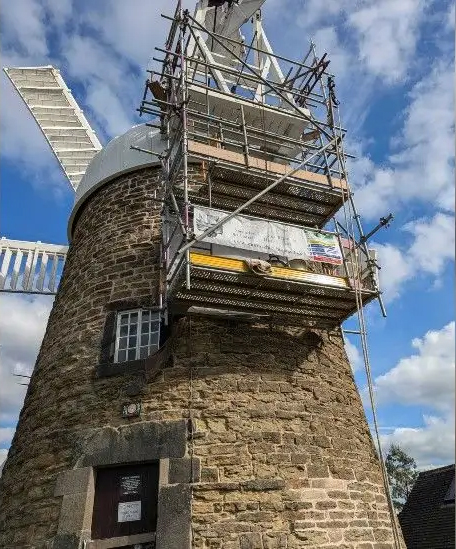
The National Lottery Heritage Fund and Historic England have given grant funding worth £1.6 million (£1.3 million from The National Lottery Heritage Fund and £300,000 from Historic England) for the restoration of Thaxted Windmill in Essex.

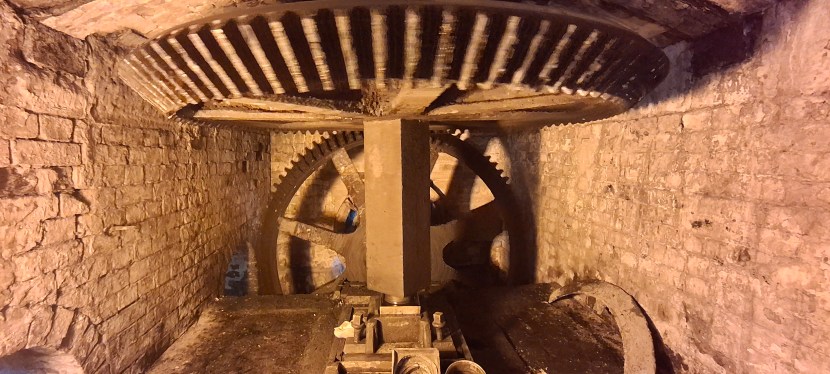
The Stone Floor at Thaxted Windmill. Credit: Trustees of Thaxted Windmill.

The project will repair and restore the building and its millwrighting machinery, improve visitor access, and enable volunteer involvement and community engagement. Repairs to the brick tower will halt the decaying process and protect the building from water leaks. Windows, doors and wood panelling will be repaired. The Windmill mechanism, including the sails, winding gear and internal milling machinery, will be restored, enabling the historic windmill to grind grain once more.

In addition, there will be public open days, sensory experiences will be created, and the Windmill landscape will be managed for biodiversity.

For further details follow this link: https://www.heritagefund.org.uk/projects/thaxted-windmill-conserved-its-community

Thaxted Windmill, Essex. Credit: Acabashi, Wikimedia Commons.

Canal & River Trust Launch Emergency Appeal After Winter Storms Damage

The Canal and River Trust, who cares for a 2,000-mile network of canals and navigable rivers in England and Wales, has launch an emergency appeal for funds to help the network recover from the ‘devastating and widespread’ damage inflicted by a series of winter storms in late 2024 and early 2025.

The Trust reports that Storm Bert’s high winds and torrential rain left boats adrift and flooded locks across the country in December 2024. Shortly after, at the beginning of January 2025, high winds and flooding risks returned as Storm Darragh hit the UK. This triggered a rare Red Warning from the Met Office, and felled over 400 trees along the network, blocking navigable waterways, damaging lock gates, and causing landslips. The charity estimates that it will cost hundreds of thousands of pounds to repair the canals and rivers affected.

Storms and flooding not only destroy towpaths and damage historic locks. They can also pollute and damage the habitats of the wildlife in and around the canal network. CRT teams have been working around the clock to deal with the impacts of these storms but the charity needs further funds to deal with future storm events.

For more details on how to donate online, follow this link: https://canalrivertrust.org.uk/support-us/our-campaigns/perfectstorm

Landslip on the the Huddersfield Narrow Canal in Saddleworth as a result of Storm Darragh, Janaury 2025. Image coutersy of Canal & River Trust.