Welcome to the Industrial Heritage Networks and Support website. This site is maintained and updated by the Ironbridge Gorge Museum Trust who run the project and the networks. We aim to support industrial heritage in England through networking, information exchange, guidance, and training. Please explore the website and please contribute! For more information you can … Read more Welcome to the IHNs website!
The next in-person North East Industrial Heritage Network meeting will be held at Hopetown Museum, Darlington, on Tuesday 9th December 2025, from 11am to 1pm. This will be followed, after lunch (there is a cafe on site), by a tour of the site (2pm to 3pm). The themes for the 2025-26 IHN meetings are conservation and maintenance.
All IHN members and friends are very welcome to attend. To book a free place follow this link:
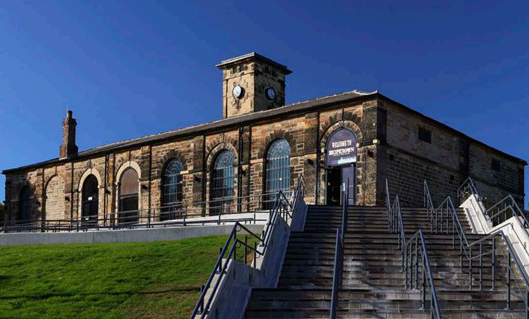
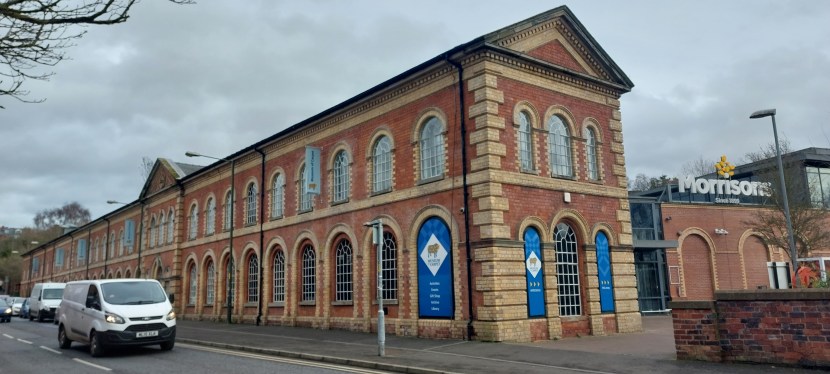
Hopetown Musuejm encompasses the original North Road Station in Darlingotn, which opened in 1842 on the route of the Stockton & Darlington Railway. The listed station was purchased in the 1970s by a consortium consisting of the local council and tourist board, Darlington museum’s service and local businesses. It was transformed into a railway museum, the North Road Station Museum, which opend in 1975. The museum was refurbished in 2007, and reopened in 2008 as the Head of Steam – Darlington Railway Museum. After securing £35 million of funding, between 2022 and 2024 the museum, and surrounding heritage buildings across 7.5 acres, were transformed into a brand new visitor attraction, Hopetown Darlington. The name takes inspiration from the old Hopetown foundry works associated with the railways.
The station at Hopetown, Darlington. Image courtesy of Historic England.
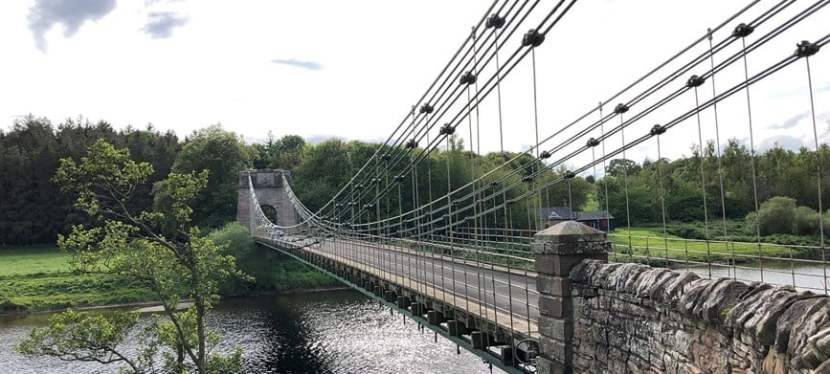
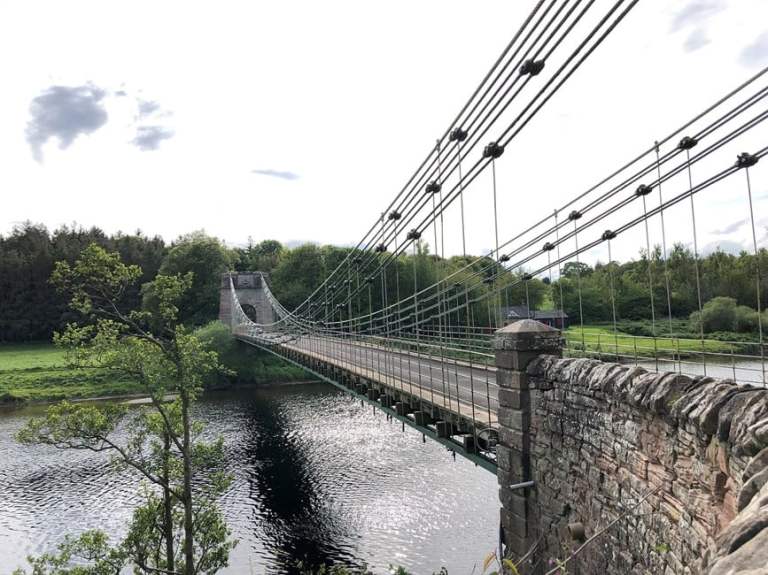
Opened in 1820 and listed Grade I (https://historicengland.org.uk/listing/the-list/list-entry/1042214), the Chain Bridge is the world’s oldest vehicular bridge and connects England and Scotland spanning the River Tweed. A second webinar dealing with the refurbishment scheme will be held on the 9 December 2025.
Union Chain Bridge, spanning the River Tweed. Copright Leon Walsh.
The Museum of Carpet in Kidderminster has announced that it will close on the 20th December 2025. The announcement earlier this month by the Chair of the Board of Trustees of the Carpet Museum Trust, adds another industrial heritage site in England to the closure list for 2025. For the Museum of Carpet, this was the culmination of a several years of rising energy prices, maintenance costs, loss of tenants, and reduced footfall.
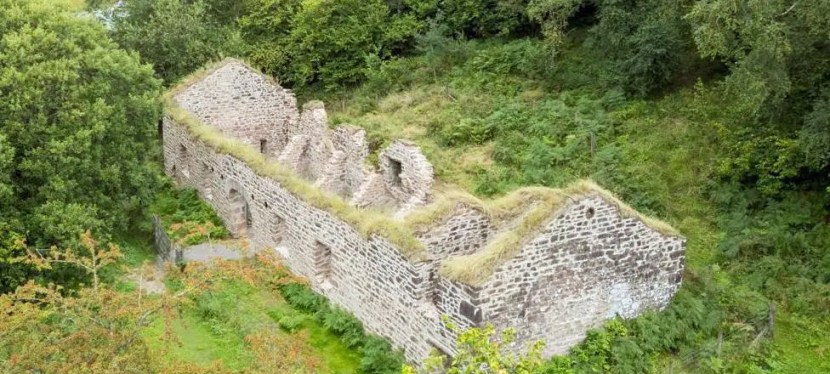
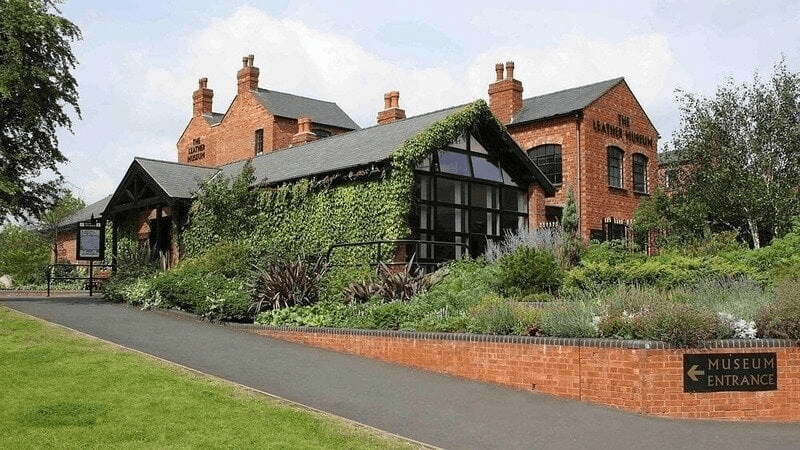
The Kidderminster carpet museum is the latest industrial site to announce its closure in 2025. Other museums and heritage sites to close this year, or announce imminent closure, include Alford Windmill, Cannock Chase Mining Museum, Castleton Museum, Otterburne Textile Mill, and the Walsall Leather Museum.
“It is with deep regret that the Carpet Museum Trust announces the closure of the Museum of Carpet, Stour Vale Mill, Kidderminster, on the 20th December 2025. After 13 years serving the public as a centre of learning, culture and heritage the museum has, like many similar institutions, faced significant financial challenges in recent years.
Despite the dedication of staff, volunteers, Friends, Trustees, Corporate Partners and supporters the combination of rising energy prices, maintenance costs, loss of tenants and reduced footfall have made it unsustainable to continue operations at its present site. Efforts to secure additional long term funding have been explored extensively with the help of Museums Development Midlands and the Arts Council. Unfortunately, no sustainable solutions have been found to overcome these financial challenges.
The Carpet Museum Trust, will continue to be responsible for the management of its archives, displays and collections. Arrangements are being made to preserve and relocate the Museum’s collection for future generations as necessary and they will be made public once details are finalized .In the meantime access to these collections and archive will remain a priority for the Trust – please make enquiries via email to collections@museumofcarpet.org.uk
If you feel you are able to help or assist in any way please get in touch with me as below. In the meantime up to December 20th we hope that the people of Kidderminster and Wyre Forest will take the opportunity to show their support and appreciation of what we have accomplished by visiting us along with their families.
Geoffrey Gilbert.
Chair of the Board of Trustees, Carpet Museum Trust
Email. gilberga51@gmail.com”
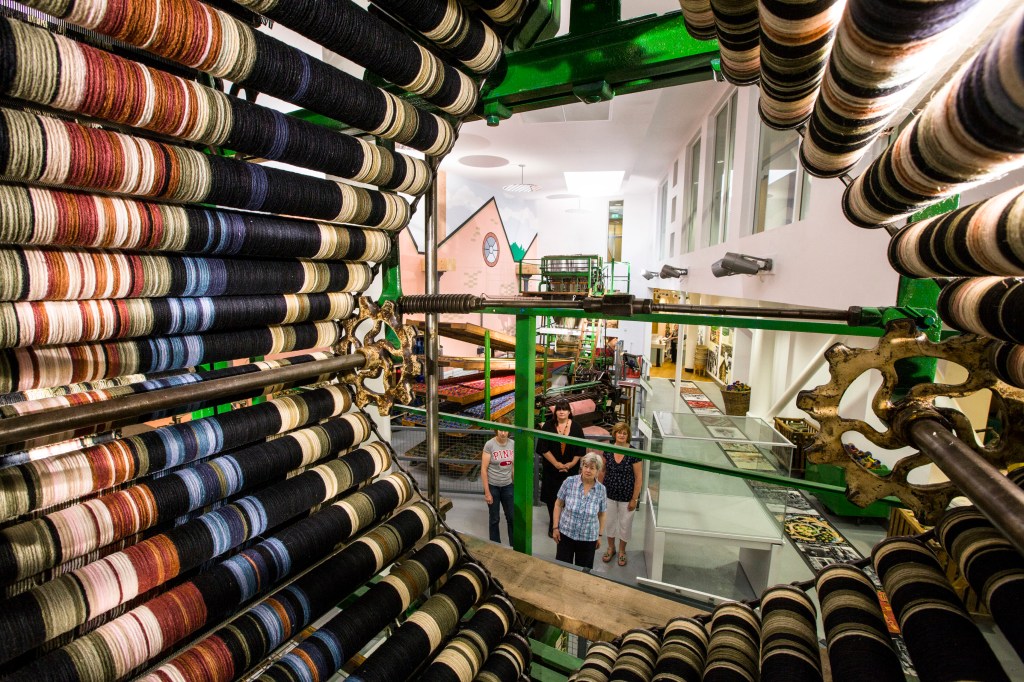
Kidderminster Museum of Carpet staff, volunteers, and weaving machine. Image coursey of Museum of Carpet.
The Worcestershire Industrial Archaeology & Local History Society is hosting the South Wales & West England Regional Industrial Archaeology Conference (SWWERIAC) on Saturday 18th April 2026 at Avoncroft Museum of Historic Buildings, Stoke Heath, Bromsgrove B60 4JR.
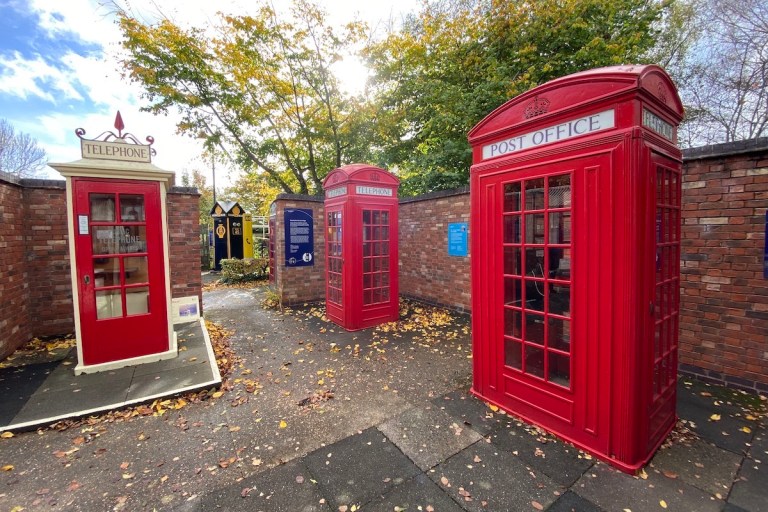
Get set for a day of engaging talks from leading speakers and a chance to explore Avoncroft’s remarkable open-air collection. The museum, home to over 30 rescued and reconstructed historic buildings spanning seven centuries, provides a unique backdrop. Highlights include the UK’s National Collection of Telephone Kiosks, working historic windmill, and a selection of timber-framed, brick, and prefabricated structures including a chain shop, nail workshop, sawmill, and icehouse. This inspiring setting promises a rich blend of learning, discussion, and heritage discovery.
Tickets cost £28 per person and include access to the museum’s entire collection, 30-minute dedicated tours, a buffet lunch including cold meats, new potatoes, crusty bread, and a selection of salads and cheese with unlimited hot and cold soft drinks plus free parking.
Society chairman Dr John Beale said “Avoncroft is home to 30 historic buildings and structures across a 19-acre site. For this reason, we have scheduled a 2-hour lunch break so that delegates can see the museum exhibits either self-guided and/or the dedicated tours of the 19th century windmill and the National Telephone Kiosk Collection. This marks a departure from the traditional arrangement of offsite visits as there is so much to see at Avoncroft.”
Historic England has published the 2025 Heritage at Risk Register. There are 4,891 entries on the Register which covers archaeology, battlefields, buildings and structures, conservation areas, parks and gardens, places of worship, and wrecks. This year, 129 buildings and gardens were taken off the list for positive reasons such as grant funding and/or being repaired. However, 138 were added. 12 of the sites taken off the register are industrialstructures.
Claudia Kenyatta CBE and Emma Squire CBE, Co-CEOs of Historic England, said: “The heritage we see all around us impacts how we feel about our local places. The annual Heritage at Risk Register gives us the opportunity to celebrate the many benefits of bringing our historic buildings back into use.”
“The best way to protect our buildings is to reuse them, turning them into places of local connection and joy. The sites that have been saved and have come off the Register this year really highlight the benefits of working together in partnership, and with communities, to create positive, sustainable change. Together we can safeguard our heritage for future generations.”
Industrial sites removed from the ‘At Risk Register’ include:
Augill Smelting Mill, North Pennines
Bower Spring cementation furnace, Sheffield
Etherley Incline, Stockton & Darlington Railway, County Durham
No. 7 Bottle Shop, St Helens
Long Shop Museum, Leiston
John Taylor & Co Bell Foundry, Loughborough
Kingston Telephone Exchange, Ashdown Road, Kingston upon Thames
Newland Blast Furnace (Blacking Mill only) in Egton with Newland
Papplewick Pumping Station, Nottingham
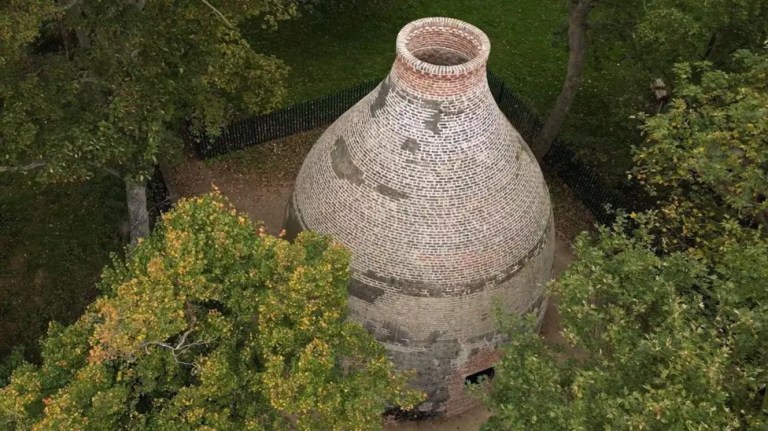
Rockingham Kiln (Swinton Pottery), South Yorkshire
Temple Works Gatelodge, Leeds
The Triangular Crane and Bumble Hole Boat Yard in Netherton
Industrial sites added to the ‘At Risk Register’ include:
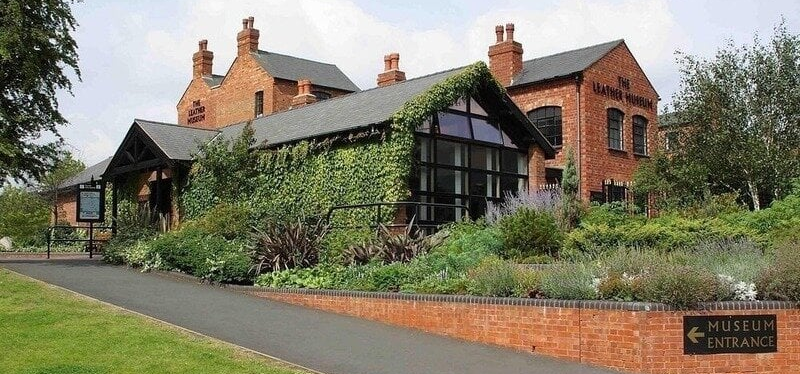
A campaign has been set up to persuade Walsall Council not to close the Walsall Leather Museum. In September Walsall Council announced that Walsall Leather Museum will close next year (2026), despite a stay of execution earlier this year. They have approved plans for finding and purchasing a new town centre building for the museum and to sell off the existing museum building, itself a former leather works in Littleton Street West, to the nearby Walsall College.
The petition, which was launched at the beginning of November, accuses the council of “silently stripping away a cherished historical community asset that belongs to all of us”, and adds that “this decision is being made behind closed doors, with no meaningful public consultation and no transparency about how or when these choices were or are made. They have no formal plans to provide an alternative building or protect the museum’s historic collections.”
If you were unable to join Historic England’s October 2025 industrial heritage webinar looking at the impact and legacy of our Stockton and Darlington Railway (S&DR) Heritage Action Zone, the recording is now available.
The free webinar explored the successes and challenges of the different strands of work undertaken, including designation, repair, re-use and community engagement, as well as looking at the project’s legacy, and the long-term future of the line. To watch the seminar follow this link: https://vimeo.com/1131317485/29e6719e55?share=copy&fl=sv&fe=ci.
New flood defences have been installed at Museum of Making, Derby. The protective barriers have been placed inside the old Silk Mill, now the Museum of Making, which was flooded by waters from the River Derwent to a depth of 0.7m during Storm Babet in 2023.
Alex Rock, director of commercial and operations at Derby Museums Trust, said “We’re delighted to add further protection to our building, and very grateful for the support of Derby City Council’s planning team and their engineering colleagues. Both departments have been crucial in securing the relevant permissions and funding from DEFRA for this work. It adds another layer of protection to two key operational areas, which means that should a flood event occur again – and it is worth bearing in mind that Storm Babet was forecast as a once-in-a-century event for Derby – then we’ll be able to shorten the period of closure. It protects the two areas of the ground floor that are most impacted by flood events.”
As part of Derby City Council’s ‘Our City Our River’ scheme, flood defences are also to be improved around the museum. Work is underway to demolsih disused office buildings on the eastern bank of the river, close to the museum, at Stuart Street and Phoenix Street. This will allow the construction of a new flood wall, floodgates, and a riverside green area to provide a controlled corridor for flood waters fromt eh River Derwent to pass through the city.
The de Havilland Aircraft Museum, London Colney, is currently seeking a new General Manager due to the retirement of the present incumbent. The full time paid post offers many opportunities to the right candidate.
The Museum is the first aviation museum in the UK, established in 1959, and is dedicated to preserving the heritage of Geoffrey de Havilland and his contribution to UK Aviation history. The de Havilland Aircraft Museum is staffed mainly by volunteers.
Please apply to Tim Crichton (email tim.crichton@dehavilland museum.co.uk) for further details if interested.
The Institution of Mechanical Engineers (IMechE) has awarded Sandfields Pumping Station, run by the Lichfield Waterworks Trust, with one of its Heritage Engineering Awards. This prestigious honour celebrates Sandfields’ vital role in bringing clean water to the Black Country and advancing public health during Britain’s industrial period.
John Wood, chairman of the IMechE Heritage Awards committee noted that: “Sandfields Pumping Station is not just another pumping station”, whlst Katy Shore-Kapsis, chair of the Lichfield Waterworks Trust, added: “This award is a huge honour for Sandfields and for everyone who has dedicated time and passion to keeping its legacy alive.
The plaque, unveiled in October 2025 by Matt Garside President of the IMechE, reads: “The Sandfields Pumping Station was the first built for the South Staffordshire Waterworks Company to provide clean water to the industrial towns of the Black Country. The Cornish beam engine, operational from 1873 to 1927, could pump up to 2 million gallons of water per day.”
The Lichfield Waterworks Trust now cares for the site and its volunteers carry out restoration projects as well as running guided tours and educational programmes. They are currently raising funds to get the Cornish Pumping Engine working again. Further details here: https://lichfieldwaterworkstrust.co.uk/
Sandfields Pumping Station, Litchfield. Image courtesy of Litchfield Waterworks Trust.










 Industrial Heritage Networks