Free Online Talks and Training Videos for Industrial Heritage Sites in Early 2025

The early new year is often a time for charities and musuems to undertake staff training and maintenance in the ‘off season’. Online, several organisation offer free training and briefing videos relevant for industrial heritage sites. Some of the recent offerings listed below provide an opportunity for armchair training.

The East-West Workshops on Industrial Archaeology aim to exchange ideas and knowledge among Western and Eastern colleagues to build a more international and diverse industrial archaeology. The workshops are organised jointly by the Institute for Cultural Heritage and History of Science and Technology (USTB, China), and the Association for Industrial Archaeology (AIA) together with its Young Members Board. Videos of all the workshops are available on the AIA’s YouTube Channel, including the latest event from November 2024 on ‘Weaving the Industrial Period’. Follow this link to view the workshops: https://www.youtube.com/channel/UCILr2TkRAOIfk_NKchshwZQ

On Thursday 21st November 2024 the ‘Craft of the Miller’ network held an online conference on ‘Managing Health & Safety Risks in Your Mill’. Jon Cook gave an introduction to highlight a number of key risks in a working mill, including hygiene, flour dust, vacuum equipment, and fire risks. Jippe Kreuning explored how to work with a stone crane and how to operate it safely to lift a set of millstones. You can catchup with the recordings from the conference here: https://network.molens.nl/

Finally, Historic England have a range of heritage webinars to watch with topics from flooding, embodied carbon, and renewabler energy, to heritage building skills, roofs, and windows. The Historic Environment Webinars strand includes a session on the role and work of the Canal & River Trust form November 2024. Follow this link to view the webinars: https://historicengland.org.uk/services-skills/training-skills/training/webinars/recordings/#technicaltuesdays

Museum Development Midlands ‘Recruiting Volunteers’ Training, January 2025

Museum Development Midlands (MDM) is running an evening online training session in January 2025 around how Museum Trustees can recruit volunteers.

Many of the Midland region’s museums rely on volunteers and since the Covid-19 pandemic it’s been increasingly tough for industrial museums across England to recruit and retain the volunteer capacity they need to operate. This reflects a wider picture across the voluntary sector with surveys suggesting that the majority of organisations are finding volunteer recruitment difficult. In this tough climate, what can museums do to attract and retain the committed, skilled, volunteers that they need?

This practical session of ideas and approaches to volunteer recruitment will be held on 20 January 2025, online, 6pm to 8.30pm. More details here.

Foyle Foundation Small Grants Deadline 31 January 2025

The Small Grants Scheme is provided by the Foyle Foundation to support smaller, grass-roots, and local charities in the UK with projects that have the potential to make a significant difference to their work. In the last three years recipients have included the Science Museum, the Mills Archive Trust, the Hull Maritime Foundation, and the Black Country Living Museum.

The Foyle Foundation was formed to implement the will of the late Christina Foyle. She was the daughter of William Foyle who, with his brother, founded the former family owned bookshop Foyles in Charing Cross Road, London. The Foyle Foundation will complete its grant giving programme in 2025, marking 25 years of giving to the fields of the Arts, Learning, Community Small Grants, State Schools Libraries and formerly Health.  The Foundation awards funding in two main areas:

ARTS and LEARNING charities predominantly via the Main Grants Scheme

SMALL CHARITIES of all descriptions (with a turnover of less than £150K per annum) via the Small Grants Scheme (grants between £2K and £10K)

The deadline for the final round of grants is 31st January 2025. Guidelines and application form here can be found here: https://foylefoundation.org.uk/how-to-apply/small-grants-scheme-guidelines/

Online Petition Started to Save Museum of Cannock Chase

The news that Cannock Chase Council is proposing the closure of the Museum of Cannock Chase in April 2025, as part of proposed budgets cuts for 2025/2026, has led to the establishment of an online petition against the closure.

The Council is holding a public consultation on the closure of the museum, and the council’s Prince of Wales theatre, which runs from the 29 November 2024 to the 2nd January 2025. The council released a report in November regarding the closure of the msuem and theatre which estimated that closing the two cultural venues would save £350k per annum. This report can be download by following this link (see pages 179 – 187):
https://www.cannockchasedc.gov.uk/council/meetings/agendas-reports-minutes/cabinet/2024-11-28

The Museum of Cannock Chase first opened in 1989 on the site of the former Valley Pit, a training pit for young coal miners. It covers the history of the Cannock Chase area across four galleries and also hosts a number of temporary exhibitions throughout the year. Although council-owned, it is operated by the charity Inspiring Healthy Lifestyles (IHL), who who also run the theatre, with a contract until 2027. Vistor numbers to the free musuem, before COVID, reached 46,500 in 2018/19. The number of visitors since the pandemic initially fell to 10,500 in 2021/22, but partially recovered to 21,000 in 2023/24.

The online petition notes that: ‘The museum’s collections tells over 300 years of history of the district and wider area and have become cherished resources. They have collected and safeguarded not only our industrial history but our social history, presenting and preserving the stories of people past and present – of those people who worked to create and shape our communities, and of the people who continue to do so. This entire collection is now at risk of being lost.’

The petition can be found here: https://www.change.org/p/save-the-museum-of-cannock-chase-protect-our-mining-heritage

AIM Launch Research to Explore How Land is Used by Museum and Heritage Organisations

A new piece of research has been launched by the Association of Independent Museums (AIM) to better understand how museums and heritage venues with outdoor space of any size are approaching land management in order to diversify their income streams, broaden their audiences, and contribute to sustainability goals. 

The research will explore how museums and heritage organisations (including industrial heritage sites) with outdoor space of any size, from rooftop terraces to those with thousands of acres, are using these spaces. The research will also consider the appetite for further support and funding for developing such outdoor spaces. The intended outcome is to compile some broad data about land ownership in the sector along with a set of robust case studies that can exemplify how organisations of varied size and resource are approaching land management.

A core element is an online survey, which is open to those in the museums and heritage sector with experience managing land or owning land. The survey is being carried out by marketing research company M·E·L Research for the Association of Independent Museums (AIM), National Museum Directors’ Council, Arts Council England, and the Welsh Government.

The online survey is open until Mid-December, and can be completed here.

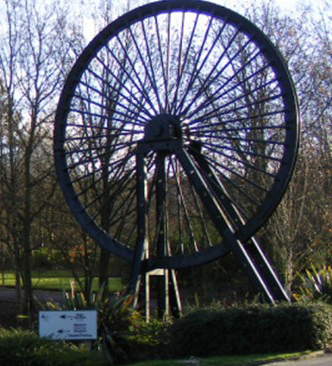
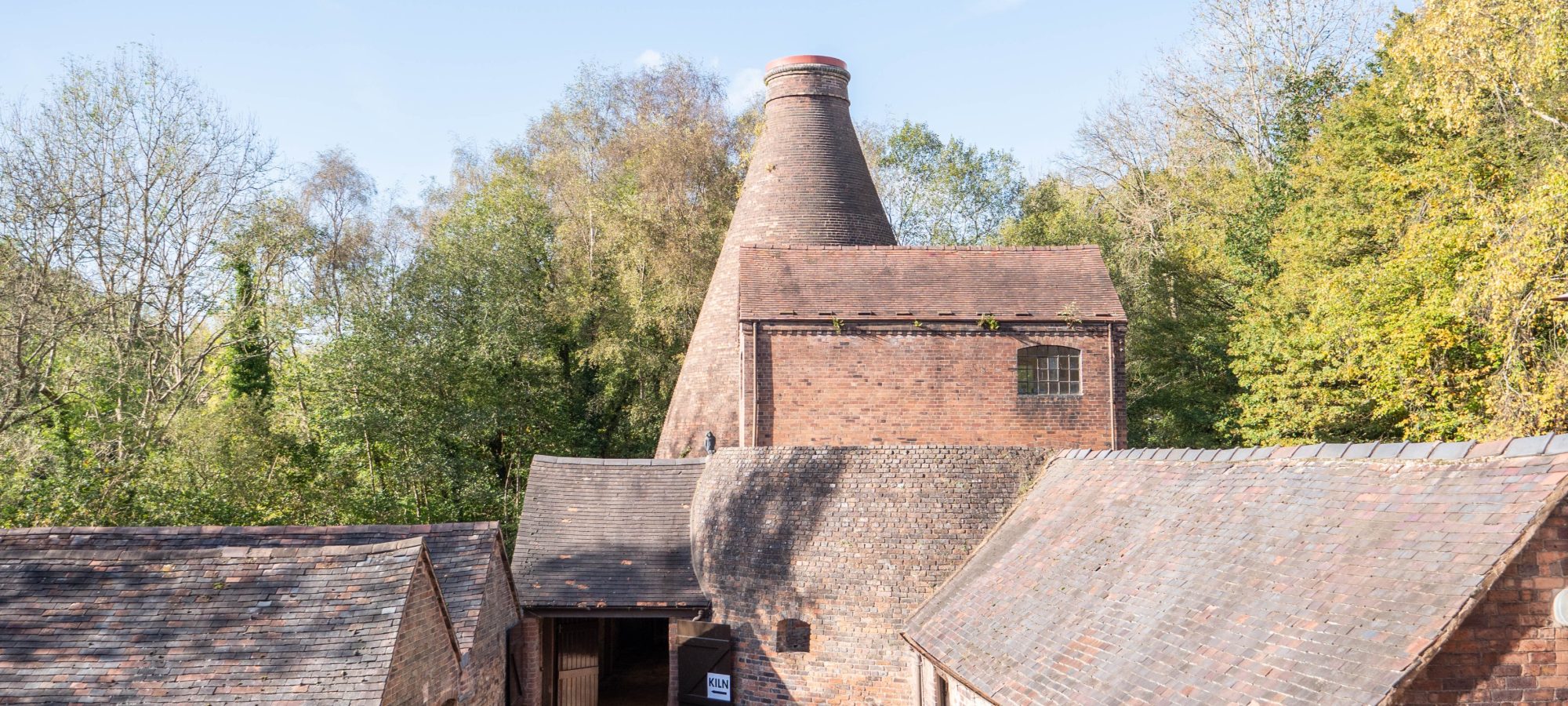
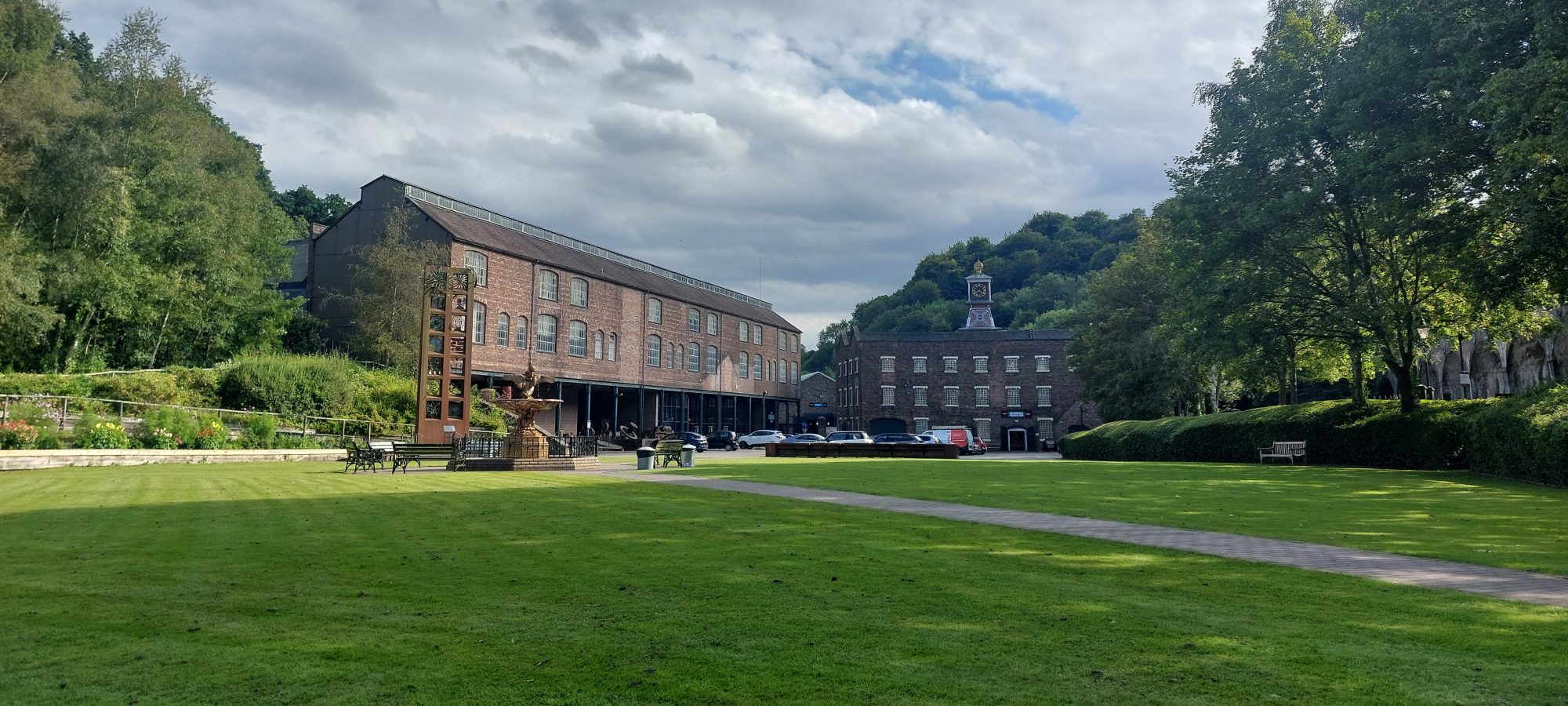
Part of the Blists Hill Victorian Town, Ironbridge Gorge Museum Trust. Image copyright: Dr Michael Nevell.

Catalyst Science Discovery Centre & Museum Awarded £1 Million NLHF Grant

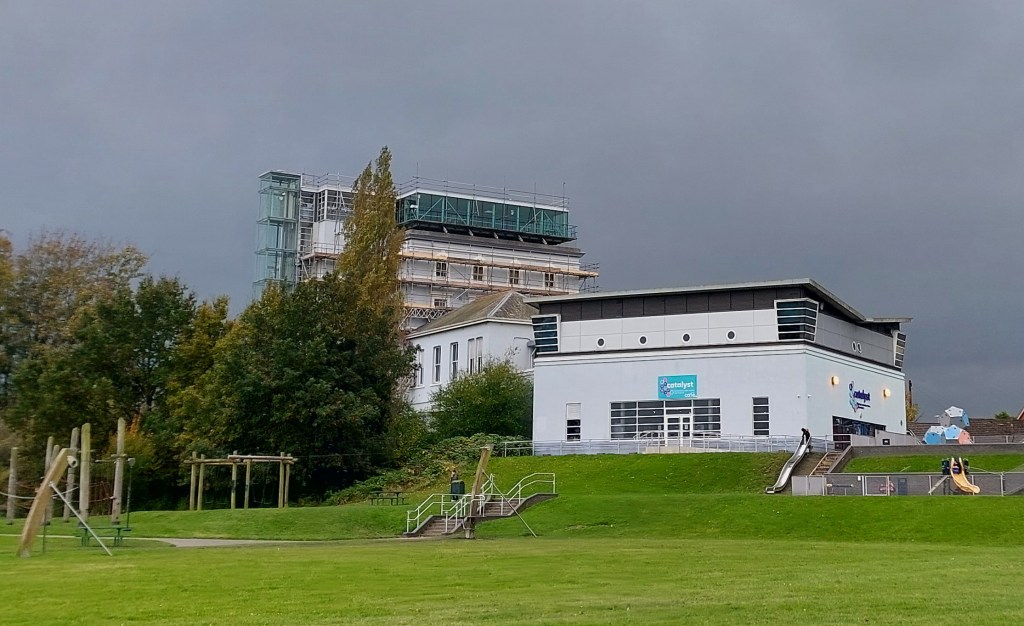
The Catalyst Science Discovery Centre and Museum in Widnes has been awarded a £1 million grant from The National Lottery Heritage Fund. This is to help it educate and excite an even wider audience about the relevance of chemistry, the town’s chemical heritage, and how this has shaped modern life today.

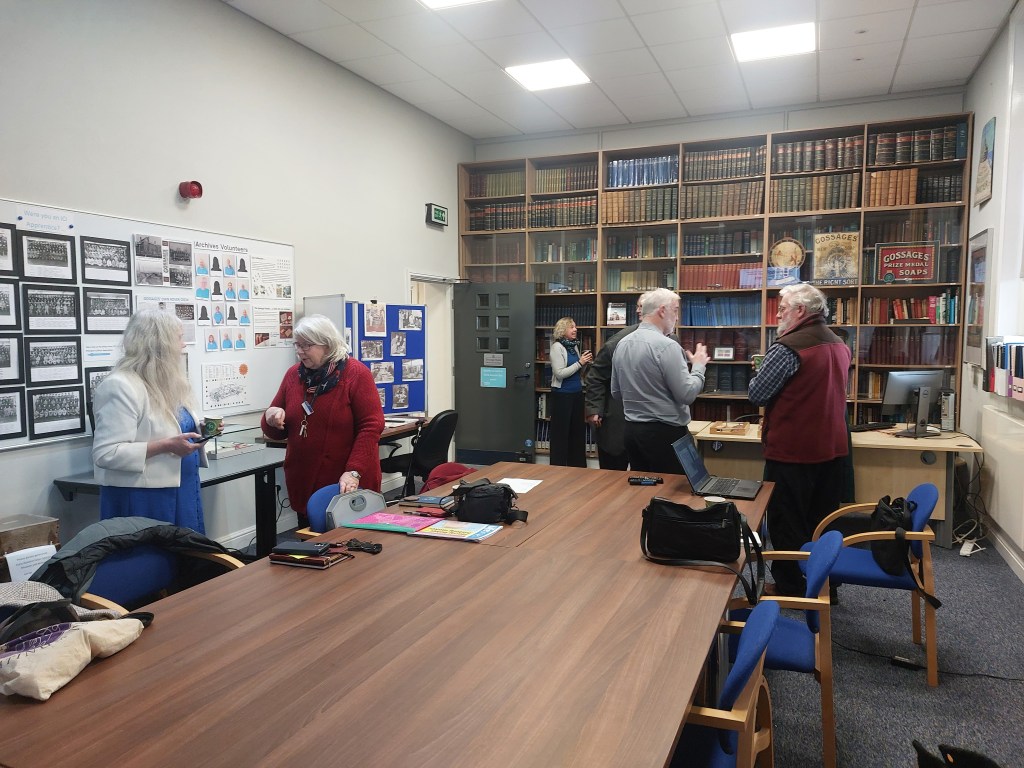
Delegates catching up at the North West IHN, October 2024. Copyright: Dr Michael Nevell

Half of the £1,009,930 National Lottery Heritage Fund grant will be used to refurbish two floors of the museum in order to showcase the history and heritage of the chemical industry from the 1800s to the present in a fresher, more engaging, and more accessible way. This includes the top floor Observation Gallery with its 360° views of the surrounding area including the River Mersey and two Halton bridges, which will be revamped with brand new interactive exhibitsd and audio handsets.

A proportion of the grant will be used to digitise the museum’s nationally important, and extensive, archive to both protect and make it more widely available. The remainder of the grant has been earmarked for an extensive activity plan including workshops, events, open days, and resources aimed at connecting audiences to the chemical industry in a new and meaningful way.

The Catalyst charity was launched in 1987. It celebrates the local chemical industry heritage and its influence at home and around the world with unique initiatives, hands-on experiences, and rich industrial heritage archives. The Discovery Centre and Museum welcomes visitors from the local area and beyond, with special events for schools, families, and SEN groups all year round. The museum hosted the North West Industrial Heritage Network meeting in October 2024.

For further details follow this link: https://www.catalyst.org.uk/catalyst-lottery-fund-win/

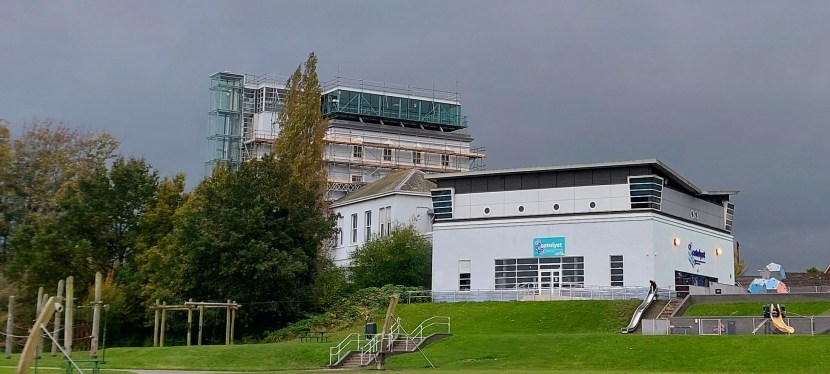
The Catalayst Science Discovery Centre andMseum, November 2024. Copyright: Dr Michael Nevell.

Museum Decarbonisation Case Studies

The National Musuem Directors’ Council (NMDC) has published the findings of a series of case studies looking at the actions and costs required to decarbonise museum buildings. It worked with a consulting engineer and a construction consultancy on a study of potential improvements to the energy performance of six different museum sites across the country, identifying where changes could be made to make buildings more efficient and reduce carbon emissions.

The National Museum Directors’ Council represents the leaders of the UK’s national collections and major regional museums. Aware that many museums haven’t yet carried out baseline surveys or carbon audits due to capacity and affordability, and that some who have done so can’t share results widely due to  commercial sensitivities, six museums agreed to share their findings publicly to increase sector literacy about potential improvements and outline costs. Each case study considers three categories: quick wins, maintenance, and capital projects, and within these demonstrates a range of potential carbon savings for individual measures – ranging from reviewing boiler controls or time schedules, to more ambitious interventions such as upgrading roof insulation, window repairs, or replacing gas boilers with Air Source Heat Pumps.The detailed case studies can be read by clicking the link here.

The importance of baseline carbon surveys to identify such measures cannot be overstated, as implementing these may mitigate potentially larger costs of more advanced maintenance or capital work, for which considerably more external funding is necessary.

*all carbon savings and costs are estimates. See case study document for full details.

Emergency and Risk Management Network: Extreme Environments Training for Museums, 5 November 2024

Join Museum Development Midlands (MDM) and Anita Hollinshead for this session exploring extreme environments and their impact on conditions in museums, collections, visitors, and staff on 5th November. The free workshop will include a number of case studies and measures that can be put in place to minimise risks.

Delegates will be encouraged to share their own experiences of extreme weather conditions, including high temperatures, flooding, and storms and the impact of climate change on collections management, all issues familiar on for industrial heritage sites. This workshop is part of MDM’s Emergency and Risk Management Network, helping museums prepare for emergency situations and develop skills in risk management and mitigation.

Places are limited to a maximum two delegates per organisation. Priority will be given to delegates from non-NPO and non-National museums in the Midlands which are Accredited or officially Working Towards Accreditation. You’re welcome to book a place if you are not from a priority museum, including non-Accredited museums, on the understanding we may ask you to release your place if the event becomes oversubscribed. Fololow this linbk to book the free trainbign session: https://www.eventbrite.co.uk/e/emergency-and-risk-management-network-extreme-environments-tickets-1028753909637?aff=oddtdtcreator

GLIAS to Show Historical Films of London’s Industrial History

The Greater London Industrial Archaeology Society in conjunction with the Cinema Museum and Huntley Film Archives are running an evening showing films from the John Huntley Archive about London’s Industrial Heritage. The event will take place on the 27th November 2024, presented by Amanda Huntley, and there will be an optional tour of the museum afterwards.

John Huntley (1921 – 2003) was an English film historian, educator, and archivist. Born in Kew, London, he started in the the film industry as a teaboy at Denham Studios around 1938. He later worked for the British Filn Institute from 1952 to 1974, first for the information department, but from 1955 in distribution. In 1984 he and one of his daughters, Amanda, set up Huntley Film Archives. This is an archive of documentary, educational, industrial, medical, travelogue, and feature films, containing films of the lives of ordinary people around the world. For more details on the archive follow this link: https://www.huntleyarchives.com/aboutus.asp

To book your £10 ticket for the event follow this link: https://ticketlab.co.uk/event/id/28012.

Tees Valley Museums Consortium Win ‘Best Museum Youth Group’ in Kids Family Friendly Museum Awards 2024

Tees Valley Museums Consortium has won one of this year’s ‘Kids in Museums’ awards for Best Museum Youth Group. The consortium’s Young People initiatives include their Young Producers strand. These are a group of 16-25 year olds who have a say and plan events and exhibitions at their museums. They currently have two active Young Producers groups – based at Hartlepool Art Gallery and Preston Park Museum. Further Young Producers are planned for the Stockton and Darlington Railway route and in Middlesbrough.

The Tees Valley Museums Consortium consists of the museum services of Stockton-on-Tees, Darlington, Hartlepool, Middlesbrough and Redcar & Cleveland. It was formed in 2017 to develop collaborative working for the purpose of delivering better services to the public. The five museum services of Tees Valley Museums Consortium hold extensive collections of art, archaeology, social, industrial and maritime history, as well as a wide array of world cultures. The museums work together to promote pride in the history of the Tees Valley.

Kids in Museums is an award-winning charity dedicated to making museums open and welcoming to all children, young people, and families. They support and champion family friendly organisations through wide-ranging initiatives, including the Family Friendly Museum Awards and Takeover Day. They invite heritage organisations to sign up to their Manifesto, which sets out simple guidelines for making museums easy to reach for all ages. For further details visit their website: www.kidsinmuseums.org.uk

For more details about the Tees Valley Museums Consortium and their Young People initiatives follow this link: https://teesvalleymuseums.org/young-people/