AIA Events in 2026: Norwich Annual Conference

The Association for Industrial Archaeology’s (AIA) 2026 conference will be based at Norwich, England, from the 4th to 9th September. The East Anglian counties of Norfolk, Suffolk, and Cambridgeshire have a rich history of Industrial Heritage including wind and water mills, maritime and port industries, agriculture, and the associated manufacture of agricultural machinery and food processing.

The 2026 programme will follow the usual format, starting on the Friday evening with an informal dinner followed by a talk introducing the Industrial Heritage of East Anglia. On Saturday there will be a full day of talks on local topics, presentations to and by award winners, and the Conference Dinner. On Sunday morning there will be AIA’s AGM followed by the Rolt Lecture. From Sunday afternoon until Wednesday lunchtime there will be a number of site visits across the three counties. Lunches, informal evening dinners and talks are included. Full details and booking will be available on the conference pages of the AIA website in due course. Recordings of the 2025 Bradford Conference are now available on the AIA YouTube channel.  

For more information, including booking details, please visit the events pages of the AIA website

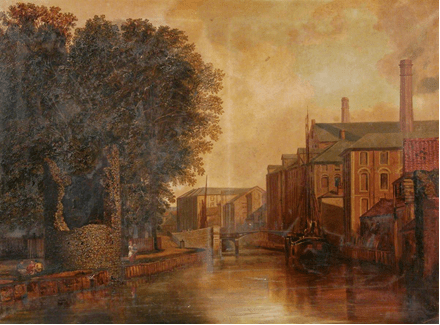
View of Carrow Works and the River Wensum, Norwich c 1870. The home of Colman’s Mustard (unknown artist). From the Norfolk Museums Collections

Get Involved With National Mills Weekend 2026: 9 & 10 May

To celebrate the National Mills Weekend 2026, 9th and 10th May, the SPAB Mills Section wants to build up a new and comprehensive picture of mills of all types throughout the UK and Ireland. This year’s theme, ‘Now and Then’, invites owners, volunteers, millwrights or anyone interested in the history of a mill to write about how one has evolved.

SPAB would like to understand a mill’s origins and how the structure and uses have changed over its lifetime. This can be a post mill, smock or tower mill, a watermill or tidemill, or an industrial mill. The mill must be located in the UK or Ireland. Up to four photos or drawings can accompany the text.

All submissions must be the writer’s own work, and photographs to be accompanied by the date and name of the photographer and their permission.  Or, if it is a historic photo, permission of the copyright holder. Drawings to be similarly annotated.

Entries may be edited, and selected submissions will be incorporated into a SPAB Mills Section publication in 2026. Entrants will need to grant copy and reproduction rights to SPAB in print or online.

The chosen entrants will receive a copy of the publication, which will be available for sale through the SPAB.

The deadline for submissions is Thursday 30th April 2026. All entries to be submitted via email to: nmwsubmissions@spab.org.uk

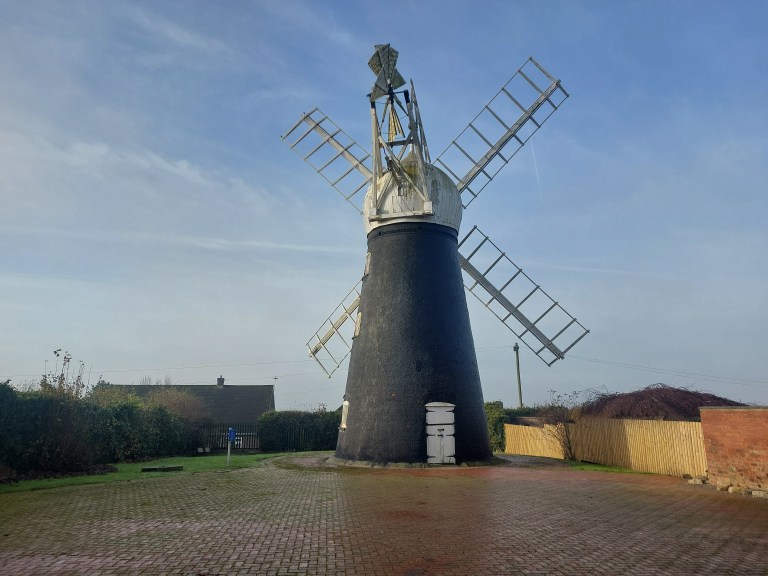
Heckington Windmill, Lincolnshire. Image copyright Dr Michael Nevell.

Kempton Steam Museum Awarded NLHF Grant to Connect New Audiences With the Story of London’s Clean Water

Kempton Steam Museum has been awarded a £90,000 grant from The National Lottery Heritage Fund (NLHF) to connect people of all ages with the role of clean water in London’s past and present. The project will enable an Audience Development Consultant to develop a strategy to increase visitor numbers and attract new audiences from the local community and beyond. It will also enable a Learning Consultant to develop digital learning materials targeted at Key Stage 1 and 2 that are accessible to all.

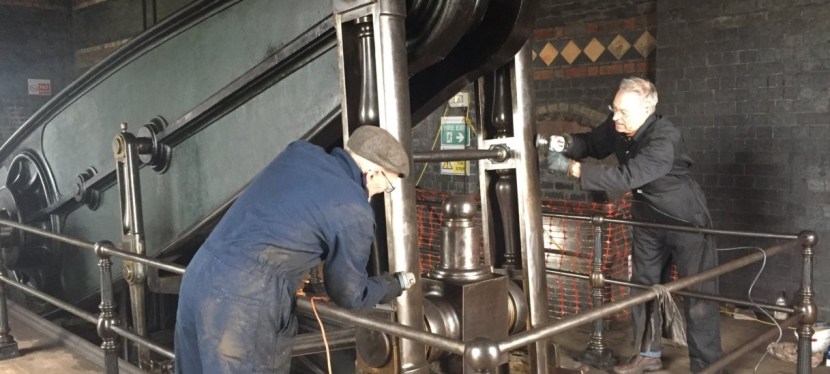
Kempton Steam Museum, located at the Kempton Park Pumping Station in southwest London, showcases the world’s largest operational triple-expansion steam engine and a rich collection of historical artifacts and technical drawings. Without this funding from the Heritage Fund, its stories would remain undiscovered by many.

Three new part-time members of staff will build capacity across the museum in a variety of ways. Firstly, to achieve Museum Accreditation by summer 2026, secondly, to implement strategies to increase visitor numbers and attract new audiences, and thirdly to manage volunteers. This initiative will expand our visitor demographic and foster stronger connections with underrepresented groups, local organisations, schools and families. In the long-term, the project will build a resilient and sustainable museum, strengthen the network of groups and organisations working together for the benefit of the local community in Hounslow and raise public awareness of the importance of clean water. Valerie Mills from Kempton Steam Museum said: “We are thrilled to have received this support from The National Lottery Heritage Fund to build a museum fit for the future!”

Kempton Steam Museum is an independent museum in London governed by the Kempton Great Engines Trust. The Trust, a registered Charity, was formed in 1995 with the aim to preserve the historic steam pumping engines at Kempton Park Pumping Station and make them accessible to the public. All restoration work and the running of the museum is undertaken entirely by a team of volunteers.

Kempton Steam Museum will be running Steam Weekends throughout the project. The museum is open from March to December offering special events throughout the year. You can follow @Kempton Steam Museum on Facebook, Instagram, and TikTok and or visit their website at https://kemptonsteam.org/

Industrial Sites Listed by Historic England in 2025

199 sites in England were newly protected by the DCMS on the recommendation of Historic England during 2025, including 173 listed structures, 21 scheduled monuments, and five parks and gardens. Ranging from a Neolithic burial mound dating to 3400 BC in the Yorkshire Dales to an exceptionally rare shipwreck lost in 1903 known as the Pin Wreck in Dorset, the newly protected sites include a number of industrial heritage structures.

Industrial heritage sites newly protected are:

  • Adams Heritage Centre, 17 Main Street, Littleport, Cambridgeshire
  • Cast-iron guideposts (finger posts), Ashley, Cheshire
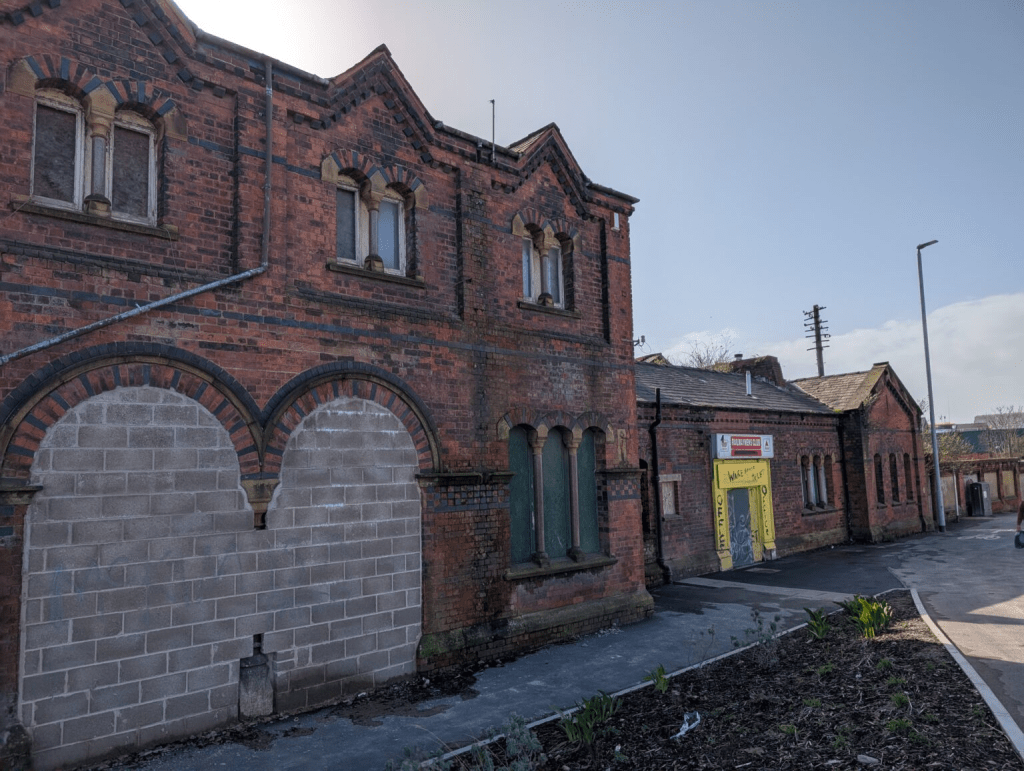
  • Cleveland Bay public house and proto-railway station, Durham
  • Cast-iron coal duty boundary markers, Essex
  • Cowran Bridge, Skellion Bridge and revetment walls to Cowran cutting on the Newcastle and Carlisle Railway
  • Drive Cottage and former motor garage, Devon
  • Electricity junction boxes, Worcester
  • Flockton Wagonway Viaduct, West Yorkshire
  • Havenstreet railway station building, Isle of Wight
  • K6 telephone kiosk, Barnsley
  • K6 telephone kiosk, St Andrews Street, Cambridgeshire
  • K8 telephone kiosk, Ferndown, Dorset
  • Manchester Bolton & Bury Canal milestones
  • Railway Overbridge, Swanage, Dorset
  • Sheringham Railway Station, Norfolk
  • Swanage locomotive shed, turntable pit and retaining wall, Dorset
  • Submarine telephone cable hauler and gantry at Enderby’s Wharf, Royal Borough of Greenwich
  • Turnbridge Mills (Hirst’s Mill), spinning block, Huddersfield, West Yorkshire
  • Weybourne Railway Station, Norfolk

Several industrial sites also recieved increased protection, including Draper’s Windmill, Kent, upgraded from II to II* listing. For further details of all new listings follow this link: https://historicengland.org.uk/whats-new/news/19-remarkable-places-granted-protection-in-2025/

.

AIA Grant & Award Deadlines for 2026

The Association for Industrial Archaeology have a variety of grants and awards for industrial archaeology and heritage available for 2026. These are to encourage improved standards of recording, research, conservation, and publication within the sector. 

The grants support industrial heritage and archaeology conservation projects in the UK, and research projects on industrial archaeology. They are open to non-members as well as members of the Association.

The awards are presented to an individual or groups who have made a significant contribution to industrial archaeology, for example in research, publication, recording or conservation. The awards attract local and national publicity, and the recipients are encouraged to publish their projects. Most awards have cash prizes and are usually presented annually at the AIA Conference, at which winners will be encouraged to talk about their work and present posters or displays on it if appropriate.

The deadline for the following categories is 31st January 2026 (more details in the links):

The AIA also offer Restoration Grants of up to £20,000. The deadline for these is the 31st March. More details in the link below:

Midland Mills Group Talk by Millwright Paul Selwood, 9 December 2025

The Midlands Mills Group is hosting a free online talk on 9 December 2025 by Millwright Paul Sellwood. He will be discussing his work as a millwright. Paul and his firm have been involved in many wind and water mill projects over the years, most recently in the Midlands, putting up the sails on Chesterton Windmill.

The Midland Mills Group invites anyone interested to join the event. The link and other relevant details are:

Join Zoom Meeting https://us06web.zoom.us/j/82695842305?pwd=ow7Zl6VSluVpuh2AgPzHJajDT14Bw2.1

Meeting ID: 826 9584 2305 Passcode: 728071

Chesterton Windmill undergoing repairs. Image courtesy of SPAB.

Foxton Canal Museum Launches Crowding Funding Campaign to Secure the Future of the Site

The Trustees of the Foxton Inclined Plane Trust have launched an urgent crowdfunding appeal to raise £20,000 by February so that the museum and site can open in 2026. A combination of rising costs, the long-term impact of COVID-19, and recent operational challenges—including lock closures that reduced visitor numbers this year—has left the Foxton Canal Museum, the beating heart of Foxton Locks and a vital guardian of Britain’s canal heritage, under threat. As a consequence, income has not kept pace with escalating expenses, making sustainability increasingly difficult.

The Museum tells the story of the Foxton Inclined Plane – a Victorian engineering marvel and a scheduled monument – and the people who shaped our waterways. Since its founding by the Foxton Inclined Plane Trust in 1982, the Museum has grown from a volunteer-led dream into a nationally recognized institution. It has hosted award-winning exhibitions, educational programs, and community events, becoming a hub for history, creativity, and learning.

From its humble beginnings – volunteers clearing overgrown inclines and rebuilding the boiler house – to achieving official museum status and welcoming thousands of visitors annually, Foxton Canal Museum has always been powered by passion and perseverance. Recent projects include Foxton Creates, a co-curated exhibition with local schools, and Ingenuity & Vision, exploring the 1950 Market Harborough Festival & Rally of Boats. The Museum also runs STEM workshops, artist residencies, and oral history projects, ensuring canal heritage remains relevant for future generations.

However, the Museum faces mounting financial pressure and without urgent support the Museum cannot guarantee opening in 2026.

To contribute to the Crowdfunding Appeal, and for more information about the site and the campaign to secure its future, follow this Link: https://www.crowdfunder.co.uk/p/save-foxton-canal-museum

Historic England Technical Tuesday Webinar: Chain Bridge Conservation, 25 November & 9 December

Historic England’s next free Technical Tuesday: Technical Conservation Webinar takes place tomorrow, 25 November, from 1300 – 1400 looking at the historical and technical challenges associated with the refurbishment of the Union Chain Bridge. To book follow this link: https://historicengland.org.uk/education/training-skills/training/webinars/technical-tuesdays/.

Opened in 1820 and listed Grade I (https://historicengland.org.uk/listing/the-list/list-entry/1042214), the Chain Bridge is the world’s oldest vehicular bridge and connects England and Scotland spanning the River Tweed. A second webinar dealing with the refurbishment scheme will be held on the 9 December 2025.

Union Chain Bridge, spanning the River Tweed. Copright Leon Walsh.

The Industrial Sites Saved as Historic England Publishes 2025 Heritage At Risk Register

Historic England has published the 2025 Heritage at Risk Register. There are 4,891 entries on the Register which covers archaeology, battlefields, buildings and structures, conservation areas, parks and gardens, places of worship, and wrecks. This year, 129 buildings and gardens were taken off the list for positive reasons such as grant funding and/or being repaired. However, 138 were added. 12 of the sites taken off the register are industrial structures.

Claudia Kenyatta CBE and Emma Squire CBE, Co-CEOs of Historic England, said: “The heritage we see all around us impacts how we feel about our local places. The annual Heritage at Risk Register gives us the opportunity to celebrate the many benefits of bringing our historic buildings back into use.”

“The best way to protect our buildings is to reuse them, turning them into places of local connection and joy. The sites that have been saved and have come off the Register this year really highlight the benefits of working together in partnership, and with communities, to create positive, sustainable change. Together we can safeguard our heritage for future generations.”

Industrial sites removed from the ‘At Risk Register’ include:

  • Augill Smelting Mill, North Pennines
  • Bower Spring cementation furnace, Sheffield
  • Etherley Incline, Stockton & Darlington Railway, County Durham 
  • No. 7 Bottle Shop, St Helens
  • Long Shop Museum, Leiston
  • John Taylor & Co Bell Foundry, Loughborough
  • Kingston Telephone Exchange, Ashdown Road, Kingston upon Thames
  • Newland Blast Furnace (Blacking Mill only) in Egton with Newland
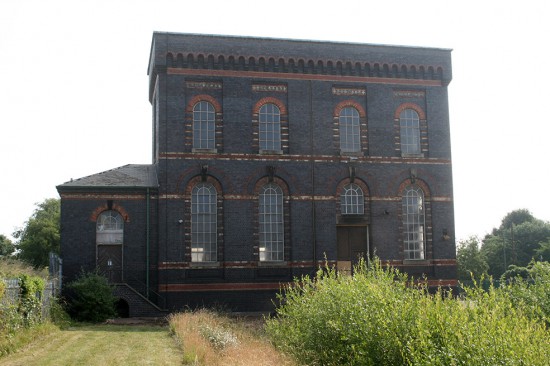
  • Papplewick Pumping Station, Nottingham
  • Rockingham Kiln (Swinton Pottery), South Yorkshire
  • Temple Works Gatelodge, Leeds
  • The Triangular Crane and Bumble Hole Boat Yard in Netherton

Industrial sites added to the ‘At Risk Register’ include:

  • Cromford Mills Buildings 26 and 21 (cottages)
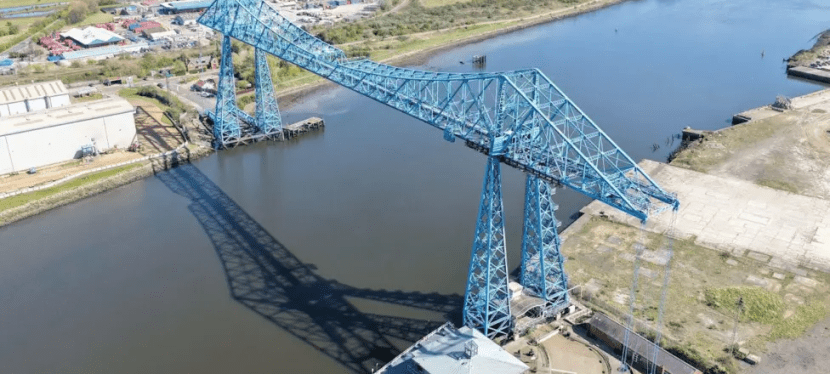
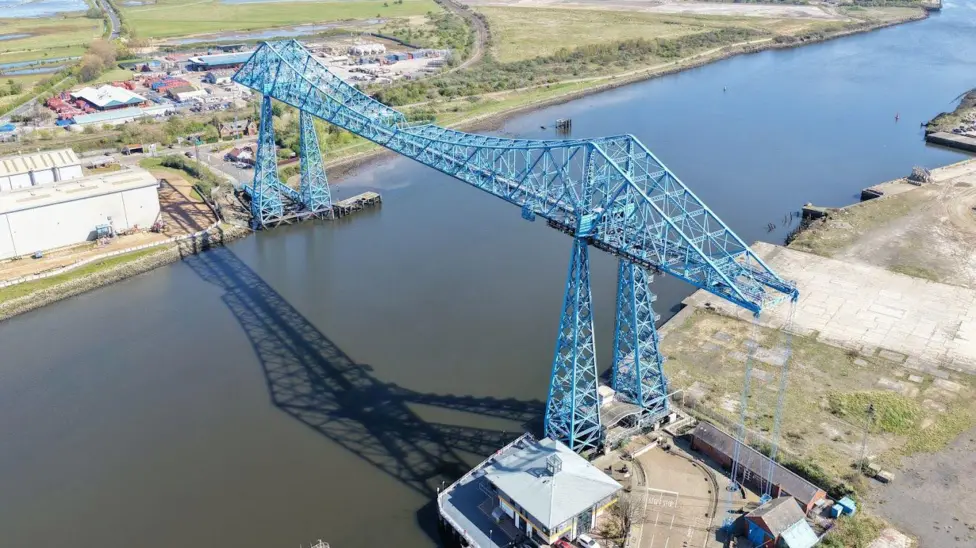
  • Teesside Transporter Bridge 

The full updated list for 2025 can be found here: https://historicengland.org.uk/listing/heritage-at-risk/findings/

Guidance on adding a site to the Herrtitage At Risk Register can be found here: https://historicengland.org.uk/listing/heritage-at-risk/suggest-addition-to-har-register/

The Rockingham Kiln (Swinton Pottery), South Yorkshire, has been removed from the ‘At Risk Register’ in 2025. Image courtesy of Historic England.
The Teesside Transporter Bridge was added to the ‘At Risk Register’ in 2025. Image courtesy of Historic England.

Historic England Stockton and Darlington Railway (S&DR) Webinar Now Live

If you were unable to join Historic England’s October 2025 industrial heritage webinar looking at the impact and legacy of our Stockton and Darlington Railway (S&DR) Heritage Action Zone, the recording is now available.

The free webinar explored the successes and challenges of the different strands of work undertaken, including designation, repair, re-use and community engagement, as well as looking at the project’s legacy, and the long-term future of the line. To watch the seminar follow this link: https://vimeo.com/1131317485/29e6719e55?share=copy&fl=sv&fe=ci.

The accompanying webinar on the various associated research projects can be viewed here – https://vimeo.com/1096891129/4d60158e04.

S&DR Darlington Lime Depot – cutaway reconstruction drawing showing how the Lime Depot was designed to operate. Illustration by Allan T Adams. © Historic England