Welcome to the Industrial Heritage Networks and Support website. This site is maintained and updated by the Ironbridge Gorge Museum Trust who run the project and the networks. We aim to support industrial heritage in England through networking, information exchange, guidance, and training. Please explore the website and please contribute! For more information you can … Read more Welcome to the IHNs website!
New flood defences have been installed at Museum of Making, Derby. The protective barriers have been placed inside the old Silk Mill, now the Museum of Making, which was flooded by waters from the River Derwent to a depth of 0.7m during Storm Babet in 2023.
Alex Rock, director of commercial and operations at Derby Museums Trust, said “We’re delighted to add further protection to our building, and very grateful for the support of Derby City Council’s planning team and their engineering colleagues. Both departments have been crucial in securing the relevant permissions and funding from DEFRA for this work. It adds another layer of protection to two key operational areas, which means that should a flood event occur again – and it is worth bearing in mind that Storm Babet was forecast as a once-in-a-century event for Derby – then we’ll be able to shorten the period of closure. It protects the two areas of the ground floor that are most impacted by flood events.”
As part of Derby City Council’s ‘Our City Our River’ scheme, flood defences are also to be improved around the museum. Work is underway to demolsih disused office buildings on the eastern bank of the river, close to the museum, at Stuart Street and Phoenix Street. This will allow the construction of a new flood wall, floodgates, and a riverside green area to provide a controlled corridor for flood waters fromt eh River Derwent to pass through the city.
Historic England, with support from CIfA, are running a workshop on ‘How to write a carbon reduction plan’. Several dates are available with limited places on 30 October 2025, but further workshop places available on 17 and 26 November.
The workshop has been designed to support organisations, such as industrial heritage sites and museums, to build on their carbon footprint report by writing a basic plan for carbon reduction whilst also engaging with staff, volunteers, and visitors.
The Industrial Heritage Support project is running a free online seminar on 22 May 2025 focussing on climate change and Net Zero. The seminar is designed to give an overview of Net Zero adaptation strategies on industrial heritage sites in England. This is a follow-up seminar from an event on climate change and industrial heritage sites run in 2023.
The seminar will include a short presentation from Historic England covering their latest research and advice on reaching Net Zero in the Heritage sector. This will be followed by three industrial heritage site case studies from Cromford Mills, the National Mining Museum in Wakefield, and the Ironbridge Gorge Museum Trust discussing practical and future steps as these sites to achieve Net Zero. The seminar will finish with a discussion and questions.
The seminar is free and will run from 10:30am to 12 noon. To book via Eventbrite click here
On the 24th February 2025, the Carbon Lieteracy Project will be holding an online Shareable Courses Launch Event. At the event they will be launching six ready-to-use Carbon Literacy courses that can be used to deliver internal Carbon Literacy training within archives, heritage organisations, libraries, theatres, public leisure/culture trusts, and across the cultural sector.
The online launch event is free, and will involve the course creators and people who have been delivering the courses. There will be presentations about the creators’ ambitions for the courses, how to access them, and how they can be used. One of the six new courses is for Heritage Organisations. This course is an affordable, flexible, and sector-specific training programme for heritage organisations based in the UK.
The Shareable Course for Heritage Organisations is built on the success of the Carbon Literacy for Museums Toolkit. Developed by Historic England and Historic Buildings and Places, the course aims to support the wider heritage sector, from organisations that manage heritage sites to those who provide heritage services. Book your place here.
The Canal and River Trust, who cares for a 2,000-mile network of canals and navigable rivers in England and Wales, has launch an emergency appeal for funds to help the network recover from the ‘devastating and widespread’ damage inflicted by a series of winter storms in late 2024 and early 2025.
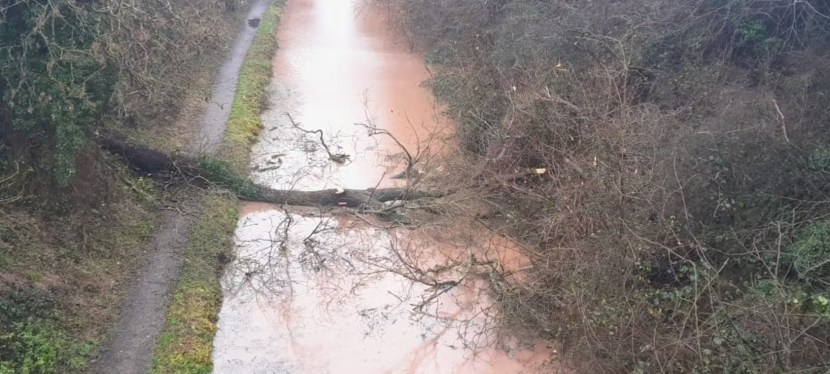
The Trust reports that Storm Bert’s high winds and torrential rain left boats adrift and flooded locks across the country in December 2024. Shortly after, at the beginning of January 2025, high winds and flooding risks returned as Storm Darragh hit the UK. This triggered a rare Red Warning from the Met Office, and felled over 400 trees along the network, blocking navigable waterways, damaging lock gates, and causing landslips. The charity estimates that it will cost hundreds of thousands of pounds to repair the canals and rivers affected.
Storms and flooding not only destroy towpaths and damage historic locks. They can also pollute and damage the habitats of the wildlife in and around the canal network. CRT teams have been working around the clock to deal with the impacts of these storms but the charity needs further funds to deal with future storm events.
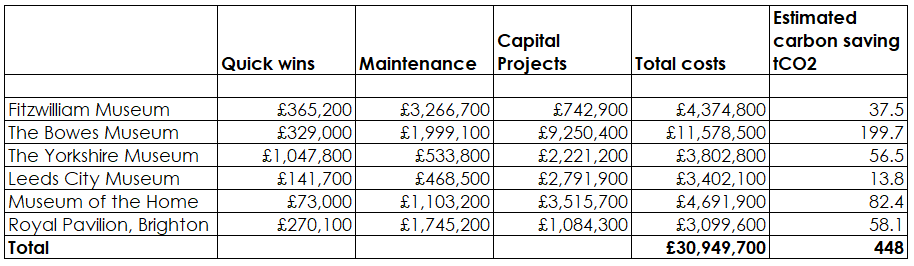
The National Musuem Directors’ Council (NMDC) has published the findings of a series of case studies looking at the actions and costs required to decarbonise museum buildings. It worked with a consulting engineer and a construction consultancy on a study of potential improvements to the energy performance of six different museum sites across the country, identifying where changes could be made to make buildings more efficient and reduce carbon emissions.
The National Museum Directors’ Council represents the leaders of the UK’s national collections and major regional museums. Aware that many museums haven’t yet carried out baseline surveys or carbon audits due to capacity and affordability, and that some who have done so can’t share results widely due to commercial sensitivities, six museums agreed to share their findings publicly to increase sector literacy about potential improvements and outline costs. Each case study considers three categories: quick wins, maintenance, and capital projects, and within these demonstrates a range of potential carbon savings for individual measures – ranging from reviewing boiler controls or time schedules, to more ambitious interventions such as upgrading roof insulation, window repairs, or replacing gas boilers with Air Source Heat Pumps.The detailed case studies can be read by clicking the link here.
The importance of baseline carbon surveys to identify such measures cannot be overstated, as implementing these may mitigate potentially larger costs of more advanced maintenance or capital work, for which considerably more external funding is necessary.
*all carbon savings and costs are estimates. See case study document for full details.
Join Museum Development Midlands (MDM) and Anita Hollinshead for this session exploring extreme environments and their impact on conditions in museums, collections, visitors, and staff on 5th November. The free workshop will include a number of case studies and measures that can be put in place to minimise risks.
Delegates will be encouraged to share their own experiences of extreme weather conditions, including high temperatures, flooding, and storms and the impact of climate change on collections management, all issues familiar on for industrial heritage sites. This workshop is part of MDM’s Emergency and Risk Management Network, helping museums prepare for emergency situations and develop skills in risk management and mitigation.
Places are limited to a maximum two delegates per organisation. Priority will be given to delegates from non-NPO and non-National museums in the Midlands which are Accredited or officially Working Towards Accreditation. You’re welcome to book a place if you are not from a priority museum, including non-Accredited museums, on the understanding we may ask you to release your place if the event becomes oversubscribed. Fololow this linbk to book the free trainbign session: https://www.eventbrite.co.uk/e/emergency-and-risk-management-network-extreme-environments-tickets-1028753909637?aff=oddtdtcreator
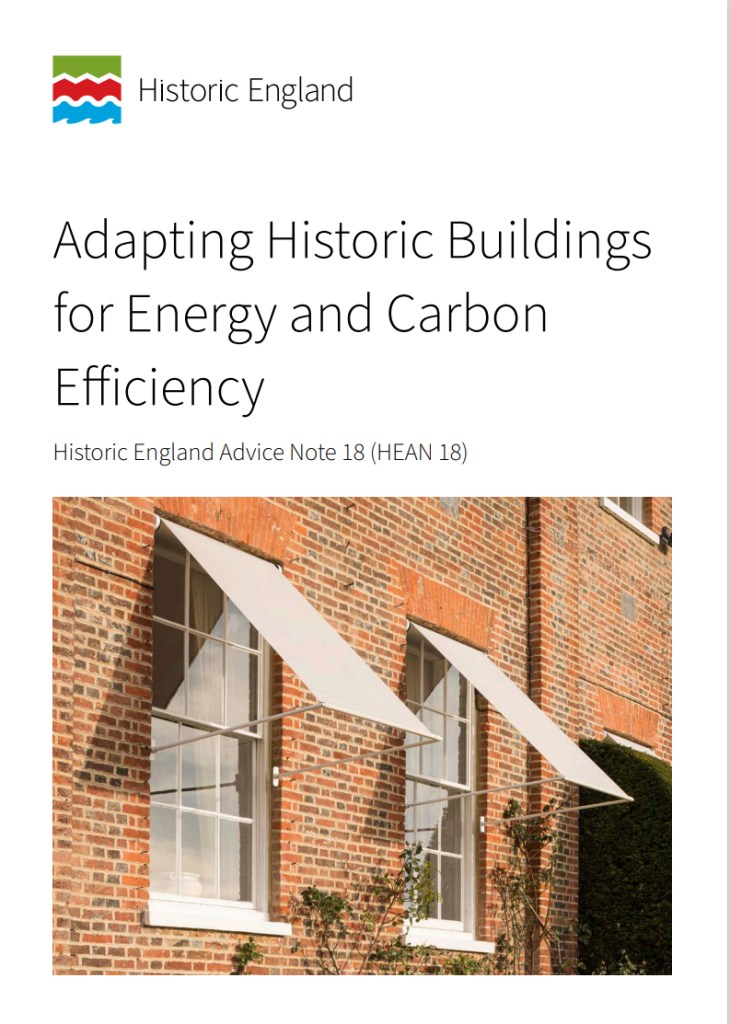
Historic England has published new advice on balancing climate action with building adaptation. The new advice note ‘Adapting Buildings for Energy and Carbon Efficiency’ is aimed primarily at local authorities, heritage consultants, and those involved in the planning process. It makes clear that historic properties can be retrofitted with energy-efficient measures such as heat pumps, solar panels, and insulation.
The guidance is intended to “provide clarity and support consistent decision-making” for proposals to reduce carbon emissions and improve the energy efficiency of historic buildings, while conserving their significance. It reflects current planning policy and covers:
Advice on what permissions, such as listed building consent, are needed for some of the common changes required to decarbonise and improve the energy efficiency of historic buildings
Advice to assist local planning authorities – and other parties involved in the planning process – in determining proposals to decarbonise and improve the energy efficiency of historic buildings to enable positive climate action. Some typical building adaptations in response to climate change impacts are also included
Signposting to other relevant information, advice, and guidance.
Brew Up! brings together people who work with industrial collections in the North of England, from mill engines to computers, from agricultural to glass; a chance to learn and share. Join us to connect with colleagues across the region, discuss issues unique to industrial collections and find key advice and insight from experienced professionals.
Run by Museum Development North, this session at the Lion Salt Works in Northwich will focus on the theme of environmental responsibility. Covering topics from green fuels to greening your site, this day will be especially useful for industrial heritage and archaeology sites and groups. It runs from 10:00–15:30. To book follow this link:
Flooding outside the Museum of Making (Derby Old Silk Mill), Derby, October 2023. Image courtesy of Derby Museums.
The growing impact of Climate Change for the industrial heritage sector was underlined by the impact of Storm Babet in October 2023. A rapid online survey of the immediate impact of the storm was undertaken in the last week of October and the first week of November 2023 for the IHSO project, indicating that it had the largest impact on industrial heritage sites in England since the flooding caused by storms Ciara and Dennis, both in February 2020.
Storm Babet, the second named storm of the 2023-24 autumn and winter season, was an intense cyclone that affected large parts of north-western and western Europe from the 16th October, when it was given a name, to the 22nd October 2023, when it dissipated. It crossed Britain from south-west England to north-east Scotland from the 18th to the 20th October. According to data gathered by the Met Office: ‘heavy, persistent and widespread rain…affected much of England, Wales and Northern Ireland from 18th to 20th, with 100mm falling fairly widely [double the average monthly rainfall for England]…Babet also brought some very strong winds, gusting at over 50Kt (58mph) across north-east England and much of Scotland’. (2023_08_storm_babet_v1.docx (metoffice.gov.uk).
The impact in England and Wales was not as severe as north-east Scotland but was still extensive, with flooding across Yorkshire, the East Midlands, and the Humber area, as well in Suffolk, and around Stafford and Wrexham. Its impact on industrial heritage sites in England was felt in three ways. The most severe impact was through flooding episodes. The ground floor of the Grade II Listed Museum of Making (Derby Museums | Derby Museums) (the Old Silk Mill), in the centre of Derby, was flooded by the adjacent River Derwent on 21st October to between 0.5m and 0.7m. The redesign of the museum building at the beginning of the 2020s incorporated elements to protect the building and its archives from flooding by the adjacent River Derwent. Evenso, Derby Museum estimate that the damage runs into the tens of thousands of pounds, and the museum will not re-open until well into 2024. Other industrial heritage sites affected by flooding included the heritage narrow gauge Amerton Railway in Stafford, the National Tramway Museum at Crich in Derbyshire, and the Claverton Pumping Station near Bath, on the Kennet and Avon Canal. For the latter this was the third time this year that parts of the site had been flooded by the River Avon, from which water is pumped up to the canal.
Secondly, the impact of intense rainfall was also seen in several landslip events on the canal network. A landslide occurred on the Worcestershire & Birmingham Canal by the Shortwood Tunnel west portal (near the village of Tardebigge, Worcestershire), whilst a 50m of canal bank collapsed due to flooding along the Grand Union Canal in central Leicester from the adjacent river Soar (https://canalrivertrust.org.uk/news-and-views/news/counting-the-cost-of-climate-change).
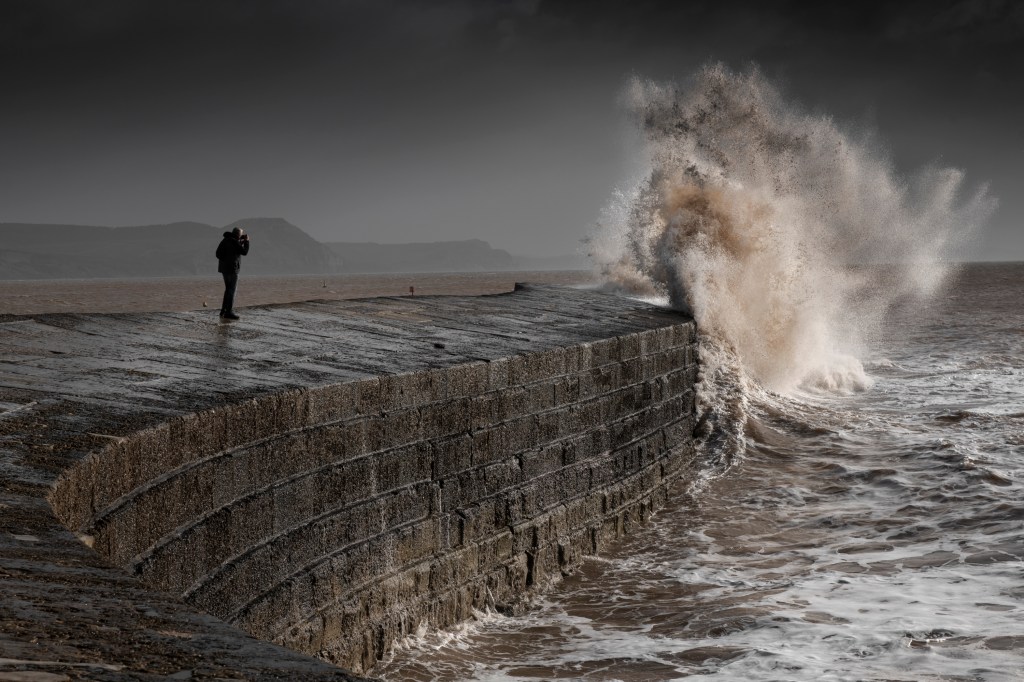
Thirdly, the impact of winds was seen at several industrial heritage sites along the north-east coast of England. In South Shields, the storm dislodged the dome of the Tyne South Pier lighthouse and sections of railings and decking were also destroyed at Sunderland’s Rock Pier by large waves in conjunction with the high winds.
The IHSO project has been gathering data on the impact of climate change on Industrial Heritage sites and monuments since January 2020, and each winter and summer of this decade has brought notable weather extremes. Current Met Office projections down to 2050 suggest that there Britain will experience an increase in winter storm intensity, an increase in the length of dry spells, and an increase in temperature extremes as the climate continues to warm. Since many industrial heritage sites lie in areas vulnerable to flooding, such as river valleys or along the coast, these sites are most at risk. However, all industrial heritage sites need to develop further their disaster management plans, especially early warning of weather events, and to think in detail about adaption options.